
Have a Question?

How Rising Fuel Costs Could Affect In-Home Support and How INS LifeGuard Can Help
INS LifeGuard • April 24, 2026

Rising fuel prices are becoming a real concern for in-home support services across Australia.
Ageing Australia has warned that higher fuel costs are already affecting aged-care staffing and home support delivery, with concerns that older Australians could miss critical services if providers and workers are not supported. The organisation has called for urgent, targeted government action and priority access to fuel for aged-care workers and providers, particularly where care is delivered in the home or in regional and remote communities.
For people relying on Support at Home or the NDIS, this matters because in-home care depends on workers and providers being able to travel consistently, safely and affordably. When transport costs rise, pressure can flow through to service availability, scheduling and continuity of care.
Why this matters for Support at Home participants
Under Support at Home, the price of a service reflects the full cost of delivering that service, including transport and administration. Providers continue to set their own prices in the first year, with government price caps due to apply from 1 July 2026.
That means rising fuel costs can place additional pressure on home support delivery, especially where workers travel long distances or services are already stretched. For older Australians living at home, that can create uncertainty around:
- how consistently services can be delivered
- whether support workers can cover all scheduled visits
- how quickly help can be arranged when plans change
- how confident families feel when a loved one lives alone
Why this matters for NDIS participants
The same pressure can affect NDIS participants, particularly where supports depend on provider travel, community access, or in-home visits. The NDIS funds support through Core Supports, Capacity Building Supports and Capital Supports, and assistive technology can sit in different parts of a plan depending on the item and the participant’s needs. The NDIA also publishes pricing arrangements and AT code guides for providers and participants.
For participants and families, rising travel costs can place extra pressure on routines, transport budgets, service coordination and peace of mind when support workers or therapists need to travel to deliver care.
Why this matters
When fuel costs rise, the effects can go beyond transport budgets.
For people relying on in-home support, higher travel costs can place added pressure on service delivery, scheduling and continuity of care. That can mean less flexibility in covering visits, greater disruption to regular support routines, and added stress for participants, families and carers who depend on reliable support.
For older Australians and people living with disability, that uncertainty can affect more than logistics; it can also affect confidence, independence and peace of mind at home.
When visits become harder to schedule, more expensive to deliver, or less predictable, people may find themselves relying more heavily on home-based safety supports and
personal alarm systems to help maintain independence.
That is where the right technology can help strengthen reassurance without replacing the care people still need.
How INS LifeGuard can help
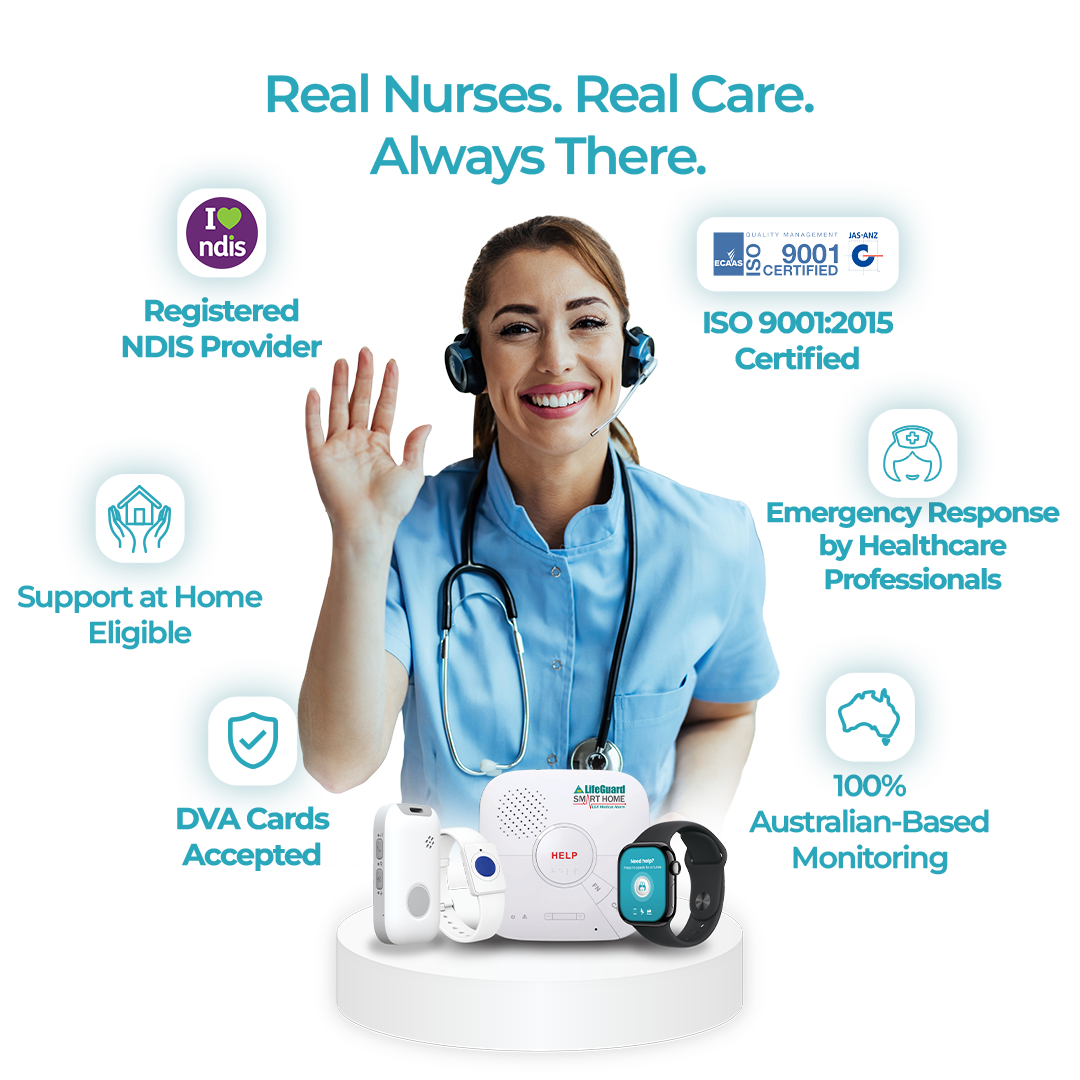
INS LifeGuard supports both Support at Home participants and NDIS participants with personal alarm solutions monitored by real nurses 24/7.
When in-person support becomes harder to deliver or more expensive to provide, INS LifeGuard can help provide:
- fast access to help at the press of a button
- 24/7 nurse-monitored emergency response
- in-home and mobile alarm options
- telehealth and health monitoring on eligible plans
- additional monitored safety accessories
- support for family and carers via the free INS LifeGuardian® Connect app
As Australia’s only nurse-monitored personal alarm provider, INS LifeGuard adds an extra layer of reassurance for older Australians, NDIS participants, families and providers when routines change or support is delayed.
NDIS-funded Personal Alarm Options
INS LifeGuard is a registered NDIS provider supporting participants Australia-wide with personal alarm and monitored safety solutions.
Personal alarms may be considered under the NDIS if they relate to the participant’s disability, help them pursue their goals, and meet the NDIS test for funded support. Depending on the participant’s plan and circumstances, funding may sit under Core Supports or Capital Supports, particularly where assistive technology is involved.
INS LifeGuard is a registered NDIS provider offering low-risk, low-cost assistive technology for participants Australia-wide. We work closely with support coordinators, plan managers, occupational therapists, allied health professionals and NDIS agencies to help deliver practical safety solutions that support everyday independence.
Monitoring services may also be included where they support the participant’s disability-related needs and goals.
Unlike standard alarm services, INS LifeGuard’s 24/7 Emergency Response Centre is staffed by qualified nurses and healthcare professionals rather than general call centre operators. That means participants, families and support teams gain access to a service built around clinical judgement, real-time assessment and more informed escalation when needed.
Personal alarm options that support safer independent living
INS LifeGuard offers a range of solutions to suit different needs at home and in the community, including:
These options can help people maintain confidence and safer independent living, even when face-to-face support is less consistent.
Additional safety and support features
When a personal alarm is monitored by INS LifeGuard, additional NDIS safety and support features may also be available, including:
- 24/7 Medical & Emotional Support — support for both physical and emotional wellbeing
- Telehealth & Health Monitoring — available on the Premium Monitoring Plan, either with the INS LifeGuardian® Watch plan including an Apple or Samsung smartwatch, or by using the INS LifeGuardian® App with a compatible BYO smartwatch
- Fall Detection — selected devices also offer automatic alerts for falls
- Family & Carer App — alerts for alarms and critical events via INS LifeGuardian Connect®
- Welfare Checks — post-hospital and regular welfare checks for added peace of mind
- Client Portal — update client and family information remotely
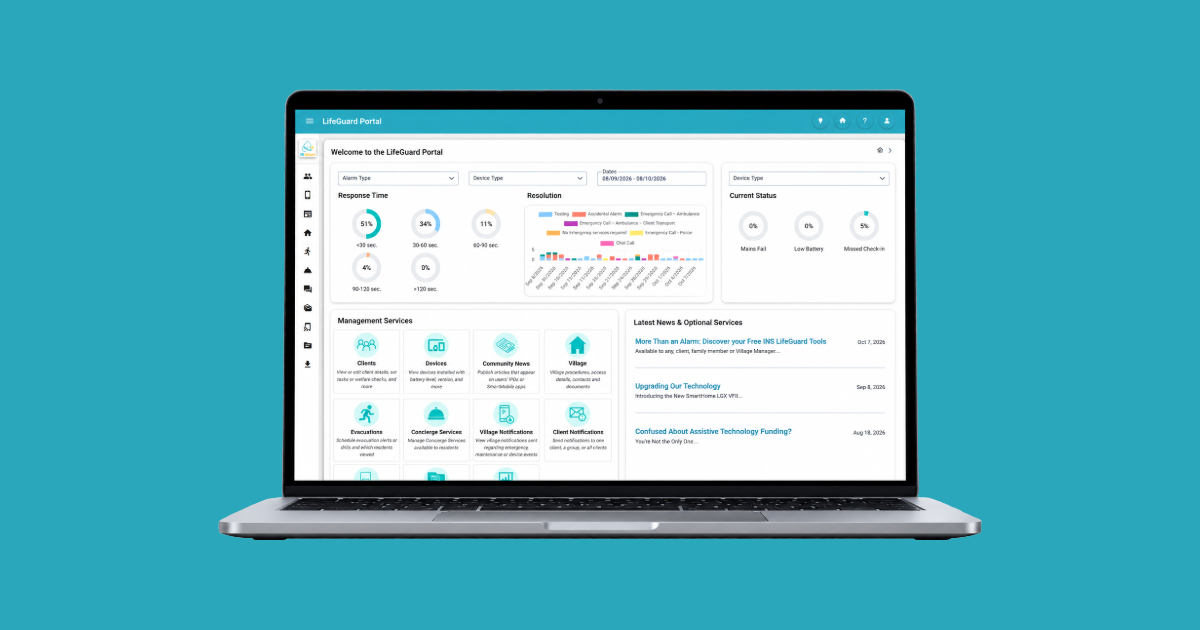
- Managers Portal — access reports, manage services and send alerts
Additional monitored add-ons
INS LifeGuard can also support safer living at home with a range of additional monitored add-ons, including:
- Security Key Holder — fixed or portable options to help emergency responders access the home faster and more safely when needed
- Fixed Wireless Call Point — an extra call point for higher-risk areas such as bathrooms, bedrooms and ensuites
- Special Needs Transmitter — an alternative alarm option for people who may be unable to press a standard button
- Smoke Detector — a monitored home safety add-on for extra reassurance
- Seizure Mat — an additional monitoring option for people living with seizure-related safety needs
- Chair and Bed Exit Mat — alerts when a person leaves a chair or bed, helping support falls, wandering or transfer-safety risks
For eligible Support at Home participants, some of these additional safety accessories may also be considered under the Assistive Technology and Home Modifications (AT-HM) scheme, where they are linked to an assessed need and included in the participant’s support plan. The AT-HM scheme provides separate funding for assistive technology and home modifications, and the official AT-HM list includes categories relevant to safety supports such as personal emergency alarm systems, environmental emergency alarm systems, locks, and safety equipment for homes and other premises.
Funded pathways may still be available
For some eligible participants, personal alarms and certain additional safety accessories may be fully or partially funded through Support at Home, including the AT-HM scheme where appropriate. Ongoing monitoring may also be funded separately through a participant’s Support at Home care budget where approved and documented in the support plan.
INS LifeGuard also supports NDIS participants with personal alarm solutions and monitored safety supports, helping participants maintain confidence, safety and independence at home and in the community.
Supporting safety when routines change
A personal alarm does not replace in-home care, allied health support, or community access.
But when rising fuel costs place pressure on service delivery, a reliable personal alarm and monitored safety setup can provide an important extra layer of protection.
For participants, families and providers, that can mean:
- greater reassurance at home
- quicker access to help
- more confidence when support schedules change
- added safety between visits
Learn more
If you’d like to understand how personal alarms may be funded through Support at Home, read our guide.
You can also download our easy-to-follow Support at Home information sheet for a simple overview of devices, accessories and funding pathways.
For more information about NDIS-funded personal alarm options, or to discuss the right solution for your needs, speak with the INS LifeGuard team.
Whether you’re a provider, participant, or family member, our friendly team is here to help.
Call INS LifeGuard on 1800 636 226 or visit our website to find out more.
About
INS LifeGuard is the only 24/7 nurse on-call personal and medical monitoring in Australia. We provide monitoring technology for both in the home and on the go and can also monitor other provider's equipment. Our services are suitable for anyone wanting support to stay independent such as the elderly, those with medical conditions and disabilities plus enhancing safety and security for lone workers.