
Have a Question?

How to Get a Personal Alarm Funded Through Support at Home
INS LifeGuard • April 24, 2026

Looking for a personal alarm funded through Support at Home? This guide explains how Support at Home personal alarm funding works, including AT-HM funding for devices and additional safety accessories, ongoing monitoring options, what to ask during assessment, and how INS LifeGuard supports both providers and participants. Support at Home replaced the Home Care Packages Program on 1 November 2025, and the AT-HM scheme provides separate funding for assistive technology and home modifications people need to live safely and independently at home.
What is Support at Home funding for personal alarms?
Personal alarm support may be fully or partially funded through Support at Home, depending on the participant’s assessment, support plan, and financial circumstances. In general, the device and setup may be funded through the Assistive Technology and Home Modifications (AT-HM) scheme, while ongoing monitoring may be funded through the participant’s Support at Home care budget where it is included in the support plan and approved by the provider. The service list sits across clinical supports, independence, and everyday living, each with different participant contribution arrangements.
Why INS LifeGuard is different
Managing Director Claude Rafin explains why nurse-led emergency response matters and why not all monitoring services are the same.
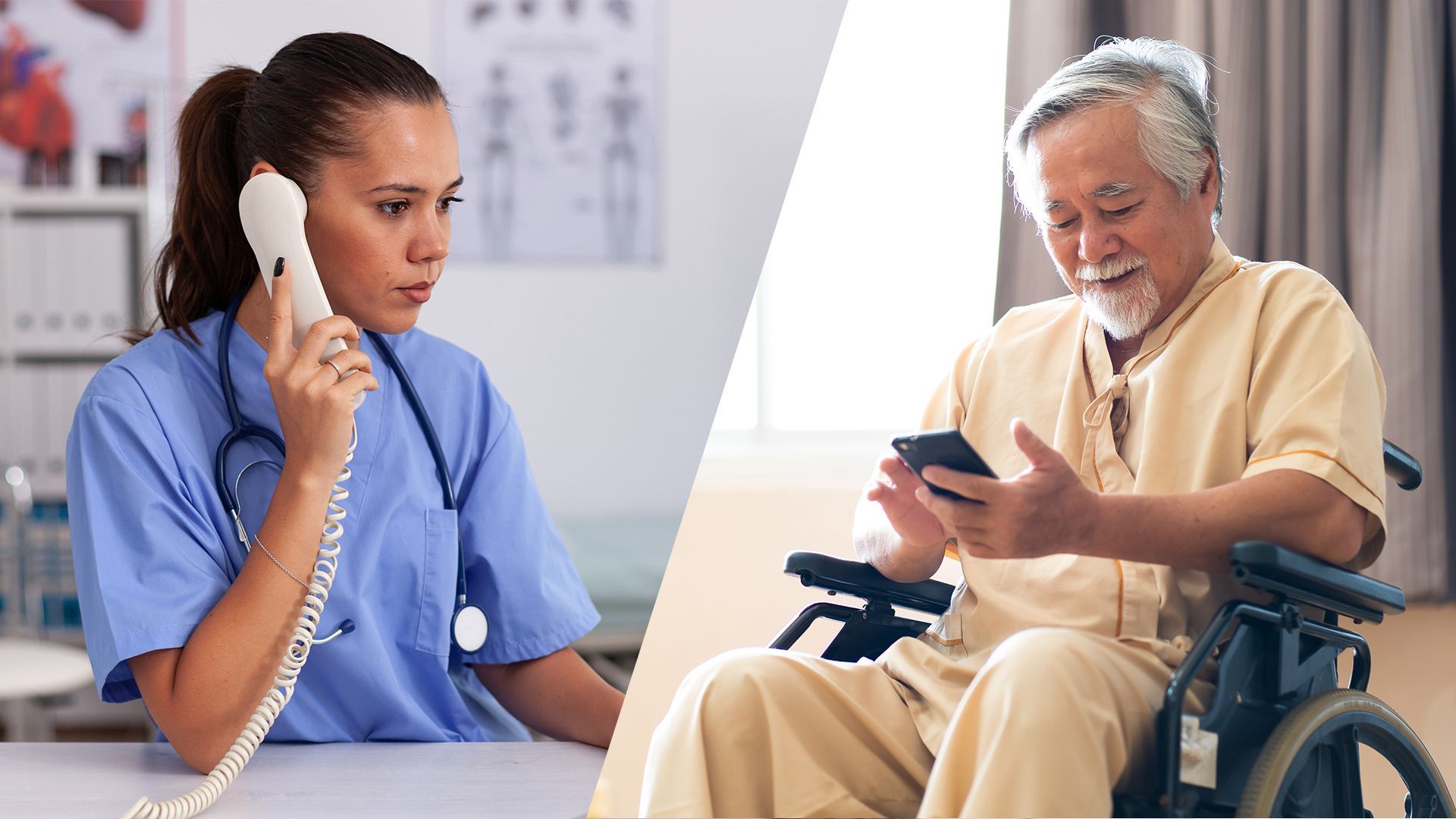
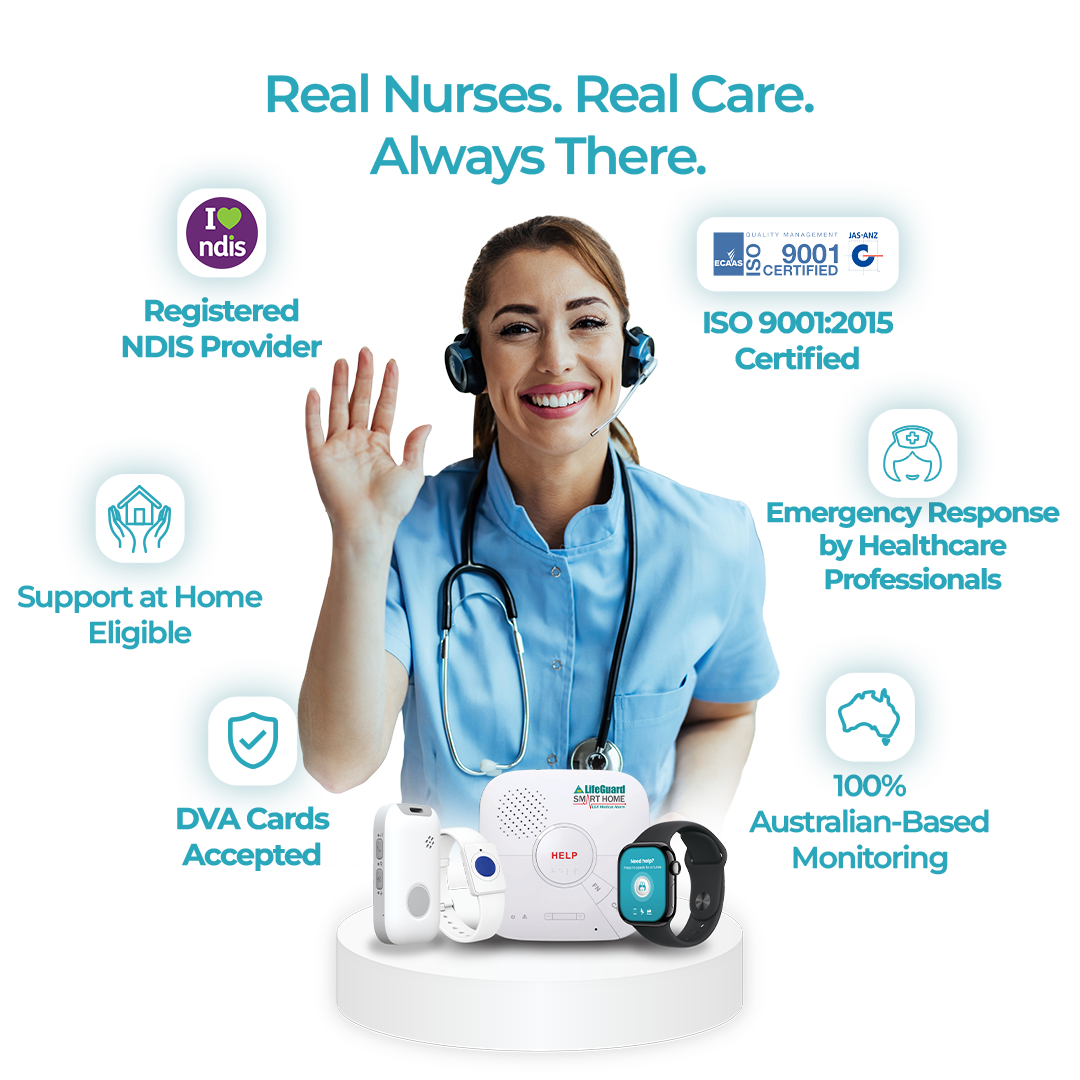
Unlike traditional alarm services that connect to a standard call centre, INS LifeGuard connects clients directly to an Emergency Response Centre staffed by qualified nurses and healthcare professionals.
As Australia’s only nurse-monitored personal alarm provider, INS LifeGuard may also be easier to justify for ongoing funding where the monitoring service supports clinical needs or safe independent living goals.
How funding works
1. Get assessed
Start through My Aged Care and complete an aged care assessment.
2. Fund the device
The personal alarm device and setup may be funded through the AT-HM scheme, depending on the participant’s support plan. The AT-HM scheme provides separate funds for assistive technology and home modifications, rather than requiring people to save up from ongoing quarterly budgets.
3. Fund the monitoring
Ongoing monitoring may be funded through the Support at Home care budget, where it is approved by the provider and included in the support plan.
4. How to ask for it
When completing a My Aged Care assessment, it helps to be specific about the support needed.
For example:
“I require a nurse-monitored personal alarm system, like INS LifeGuard, because of my [health condition / falls risk / safety needs].”
Already assessed? Ask your provider whether INS LifeGuard can be added to the support plan and whether funding can be applied to both the device and ongoing monitoring.
Already have a personal alarm? INS LifeGuard can also monitor selected compatible equipment supplied by other providers.
Can a personal alarm be fully funded?
For some eligible participants, yes.
In other cases, a contribution may apply depending on:
- the type of support
- the participant’s assessment
- their financial circumstances
Most Support at Home participants contribute to independence and everyday living services depending on their circumstances, but they do not contribute to clinical supports, such as nursing care. AT-HM products and equipment attract a contribution rate equivalent to the independence category, while prescription and wraparound services fall under clinical supports and require no contribution.
Already on a Home Care Package?
If a participant transitioned from a Home Care Package, they may still be able to access funded personal alarm equipment through the current pathway.
In many cases, unspent package funds are used first, and further AT-HM funding may then be allocated if needed. The AT-HM guidelines include specific arrangements for older people transitioning from the Home Care Packages program.
Choose the right personal alarm
INS LifeGuard offers a range of monitored personal alarm options for different needs.
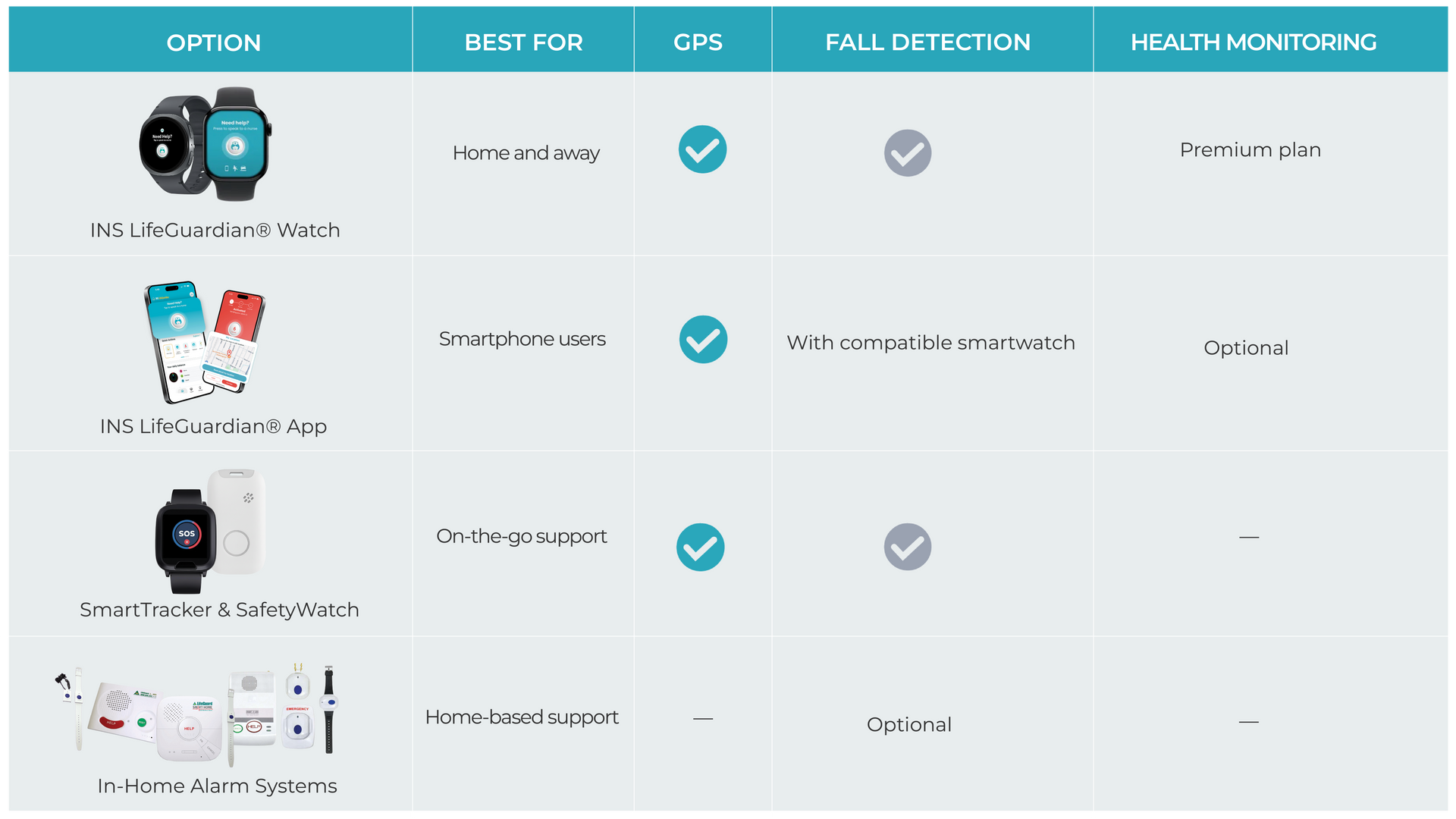
App fall detection is available when paired with a compatible smartwatch. Available on Apple iPhone with Apple Watch. On Android, fall detection is currently available only when paired with a compatible Samsung Watch.
All options connect to INS LifeGuard’s 24/7 Emergency Response Centre staffed by qualified nurses and healthcare professionals.
Premium Monitoring Plan
Available with the INS LifeGuardian® Watch, or with the INS LifeGuardian® App paired with a compatible BYO smartwatch.
Features include:
- Fall Prevention Monitoring (Apple only)
- Continuous Health Data Monitoring
- Alerts for Abnormal Readings
- Nurse alerts for critical readings
- Optional monthly nurse health review
Additional safety accessories that may also be funded
Support at Home funding can include more than the main personal alarm device.
Where there is an assessed safety or clinical need, some additional accessories may also be considered under the AT-HM scheme, provided they are on the AT-HM list and documented in the participant’s support plan. The AT-HM scheme provides separate funding for assistive technology and home modifications, and the AT-HM list is the official list of products, equipment, and modifications available through the scheme.
The AT-HM list includes categories relevant to safety supports, including personal emergency alarm systems, environmental emergency alarm systems, locks, and safety equipment for homes and other premises. AT-HM funding may be used only for items on the list for which an assessed need is documented in the participant’s support plan.
Depending on the participant’s needs, additional safety accessories may include:
- Security Key Holder — may support faster and safer home access for emergency responders when emergency entry is an assessed need
- Fixed Wireless Call Point — an additional call point for higher-risk areas such as bathrooms, bedrooms or ensuites
- Special Needs Transmitter — an alternative alarm option for people who may be unable to press a standard button
- Monitored Smoke Detector — may be appropriate where smoke detection forms part of a monitored safety system
- Seizure Mat — may be considered where there is a documented monitoring or safety need
- Chair and Bed Exit Mat — may be considered where there is a falls, wandering, or transfer-safety risk
Not every accessory will be suitable for every person, and funding depends on the participant’s assessment, support plan, and provider approval. AT-HM generally funds the equipment itself, while ongoing monitoring and service costs are usually considered separately through the participant’s Support at Home care budget if they are approved and documented in the plan.
Funding note
Additional safety accessories may be funded through the AT-HM scheme where they are linked to an assessed need, fit within the AT-HM list, and are included in the participant’s support plan. AT-HM funding tiers are $0–$500, $0–$2,000, and $0–$15,000 or more, depending on the person’s needs.
Because AT-HM items are generally part of independence supports, some participants may need to make a contribution depending on their financial circumstances. By contrast, participants do not contribute to clinical supports, such as nursing care.
Support for family and carers
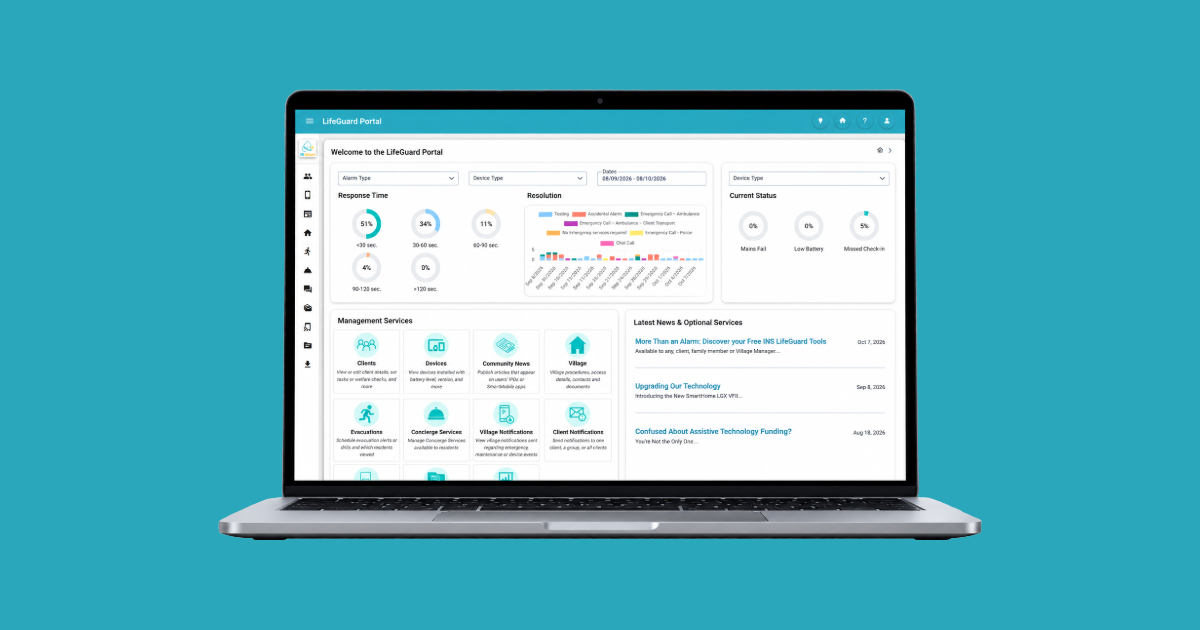
Support for family and carers is available via the free INS LifeGuardian® Connect app.
Clients control whether family members or carers can access or edit their information.
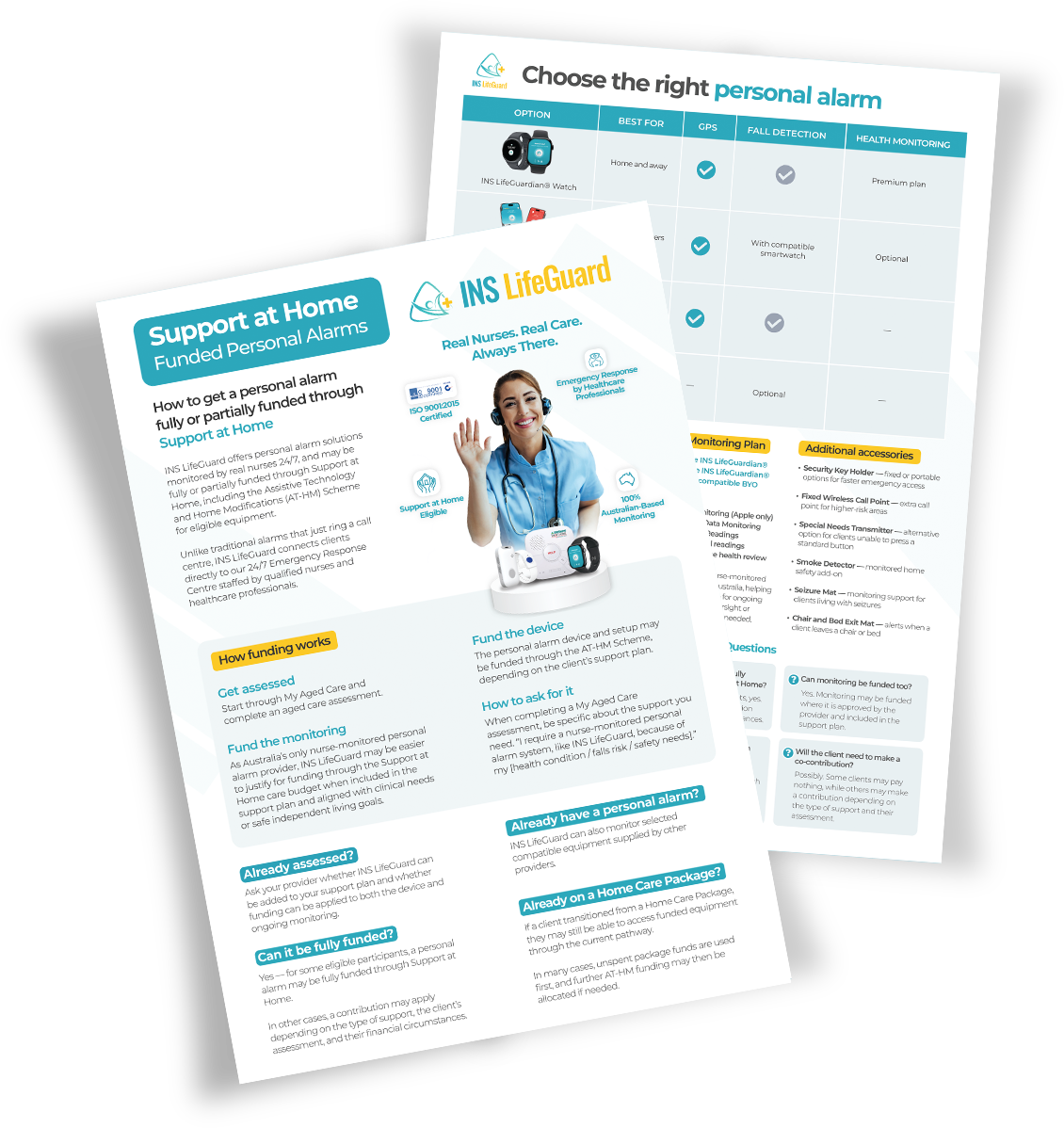
Download Your Free Support at Home Personal Alarms Guide
Looking for a simple guide to funded personal alarms under Support at Home?
This free information sheet explains how personal alarm funding works, including AT-HM funding for devices and additional safety accessories, ongoing monitoring options, and the steps providers and recipients can take to access the right support.
Ideal for providers, participants, families and care teams who want a clear overview to download and keep on hand.
Frequently asked questions
Can a personal alarm be fully funded through Support at Home?
For some eligible participants, yes. Others may have a contribution depending on their circumstances.
What is the difference between AT-HM and Support at Home funding?
The device may be funded through AT-HM, while monitoring may be funded through the Support at Home care budget.
Can monitoring be funded too?
Yes. Monitoring may be funded where it is approved by the provider and included in the support plan.
Will the participant need to make a co-contribution?
Possibly. Some participants may pay nothing, while others may contribute depending on the type of support and their assessment.
Can additional safety accessories be funded through Support at Home?
In some cases, yes. Accessories such as monitored safety add-ons or emergency access supports may be considered through the AT-HM scheme where they match an item category on the AT-HM list, are linked to an assessed need, and are included in the participant’s support plan. Ongoing monitoring is generally considered separately through the participant’s Support at Home care budget.
Have questions?
Whether you’re a provider, participant, or family member, our friendly team is here to help.
Contact INS LifeGuard on 1800 636 226 or visit our website.
Speak to our team to learn more about funded personal alarm options, Support at Home pathways, and the right INS LifeGuard solution.
About
INS LifeGuard is the only 24/7 nurse on-call personal and medical monitoring in Australia. We provide monitoring technology for both in the home and on the go and can also monitor other provider's equipment. Our services are suitable for anyone wanting support to stay independent such as the elderly, those with medical conditions and disabilities plus enhancing safety and security for lone workers.