
Have a Question?

Fall Prevention in Aged Care: Strategies, Management and Medical Alert Systems
INS LifeGuard • August 21, 2026
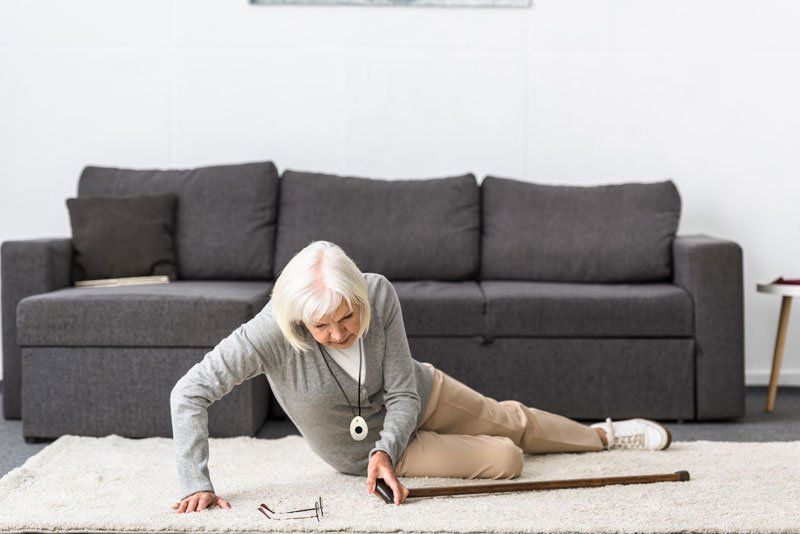
Falls are not simply an inconvenience or an inevitable part of getting older. They are a major health and safety issue for older Australians and an important focus for aged care providers, healthcare professionals, families and carers.
According to the Australian Institute of Health and Welfare (AIHW), falls are the leading cause of injury hospitalisations and injury deaths in Australia.
In 2024–25, falls resulted in approximately 253,800 hospitalisations, accounting for 43.4% of all injury hospitalisations in Australia.
The consequences can also be fatal. In 2023–24, falls caused 6,722 deaths, representing 42.6% of all injury deaths in Australia. The impact is particularly significant for older Australians, with 95% of deaths from falls occurring among people aged 65 and over.
These figures demonstrate why fall prevention in aged care deserves serious attention.
A fall can result in fractures and other injuries, hospitalisation and, in some cases, death. But the consequences aren't always physical. A fall can also affect an older person's confidence, mobility, and willingness to continue everyday activities independently.
Effective falls prevention in aged care therefore involves much more than removing trip hazards.
It means understanding each person's individual risks, supporting strength and balance, monitoring changes in mobility and gait, creating safer environments, considering health and medicines, and having an appropriate plan for what happens if a fall does occur.
For INS LifeGuard, this reflects a broader philosophy centred on four outcomes:
Health. Safety. Connection. Independence.
Responding quickly when someone falls matters.
But sometimes the greatest achievement is the emergency that never happened.
How Common Are Falls Among Older Australians?
The likelihood and consequences of falls increase significantly with age.
While more recent AIHW data provides national figures for fall-related hospitalisations and deaths, AIHW's 2019–20 report on falls in older Australians provides a detailed breakdown specifically for people aged 65 and over.
That report found that among older Australians:
- falls accounted for 77% of injury hospitalisations
- falls accounted for 71% of injury deaths
- older Australians were eight times as likely to be hospitalised from a fall as Australians aged 15–64
- older Australians were 68 times as likely to die from a fall as Australians aged 15–64
- 1 in 2 hospitalised falls occurred in the home
- 1 in 5 occurred in a residential aged care facility
- 60% of hospitalised falls occurred on the same level, including slips, trips and stumbles
- 50% of hospitalised falls involved a fracture
- Older Australians admitted to hospital following a fall had an average hospital stay of 9.5 days.
These figures come from the 2019–20 age-specific AIHW analysis and provide useful context about how falls affect older Australians. More recent national AIHW data shows that falls continue to be a major health issue, remaining the leading cause of injury hospitalisations and injury deaths in Australia.
More recent AIHW estimates also show that fall-related injuries cost Australia's health system approximately $5.4 billion in 2023–24.
These aren't simply statistics. Behind every number is a person whose health, independence and everyday life may be affected.
That's why preventing falls where possible, identifying changes in risk and ensuring an appropriate response when a fall occurs are all important parts of fall management in aged care.
Understanding the Fall Cycle
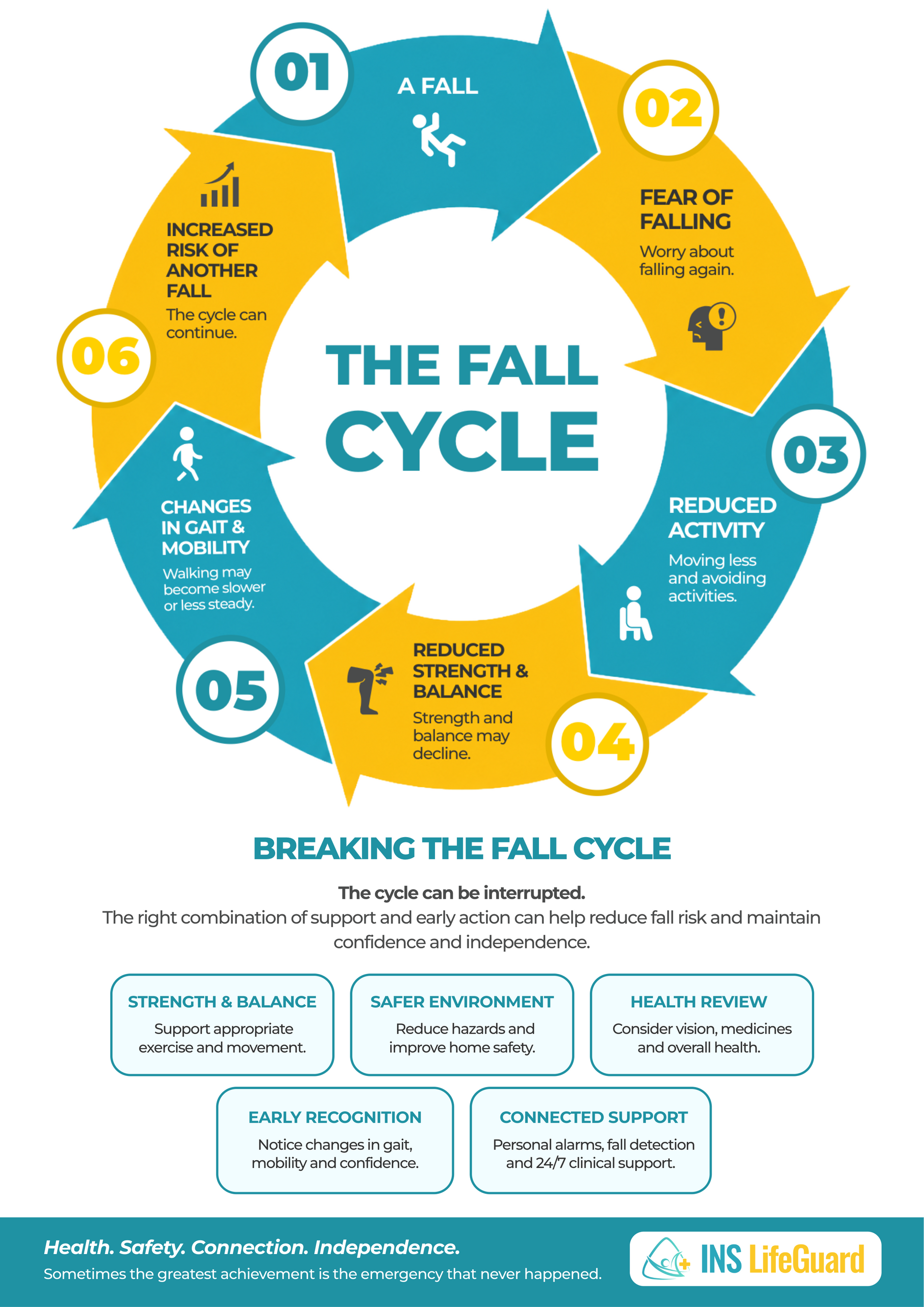
A fall can affect more than someone's immediate physical health. For some older people, fear of falling can reduce activity, which may contribute to declining strength, balance, and mobility. Over time, this can increase the risk of another fall.
Understanding this cycle is important because falls prevention isn't only about responding after someone has fallen. Supporting strength and balance, creating a safer environment, recognising changes in gait or mobility, and addressing individual health risks can all form part of a broader prevention strategy.
Why Is Falls Prevention in Aged Care Important?
Falls rarely have one single cause.
An older person's risk can be influenced by their health, physical ability, medicines, environment and previous falls, and several contributing factors may be present at the same time.
Potential risk factors can include:
- reduced strength or balance
- changes in mobility or gait
- vision problems
- certain medicines or combinations of medicines
- dizziness
- cognitive changes
- inappropriate footwear
- environmental hazards
- poor lighting
- previous falls.
The Aged Care Quality and Safety Commission states that many falls can be prevented through a combination of interventions tailored to each older person's risks and needs.
This is an important principle.
For aged care providers, effective falls prevention isn't about applying the same checklist to everyone. It is about understanding the individual and identifying appropriate strategies based on their circumstances, preferences and level of risk.
What Does Fall Prevention in Aged Care Involve?
Current Australian aged care guidance supports person-centred and evidence-based approaches to reducing falls and fall-related harm.
For residential aged care, strategies identified by the Aged Care Quality and Safety Commission include regular assessment of personal and environmental risk factors, individualised falls-prevention planning, worker education, tailored supervised exercise and medicine reviews where appropriate.
A comprehensive approach can include the following.
1. Assess Individual Fall Risk
Effective fall management in aged care begins with understanding the individual.
Falls risk isn't necessarily static. It can change following illness, hospitalisation, a change in medicines, declining vision, changes in mobility or a previous fall.
Assessment may consider factors such as:
- previous falls
- balance and mobility
- changes in gait
- muscle strength
- vision
- footwear and foot health
- cognitive function
- medicines
- continence
- environmental hazards
- use of mobility aids.
The appropriate assessment and interventions will depend on the person's individual circumstances and should involve suitably qualified healthcare professionals where required.
2. Create a Safer Environment
Environmental hazards can contribute to falls in residential aged care and in someone's own home.
Practical considerations can include:
- keeping walkways clear
- reducing clutter and trip hazards
- providing appropriate lighting
- addressing slippery or uneven surfaces
- ensuring frequently used items are easy to reach
- considering stairs, steps and changes in floor level
- making bathrooms and wet areas safer
- ensuring mobility aids are accessible and appropriate.
Tailor environmental changes to the individual rather than using them as a substitute for assessing other possible causes of falls.
Related guide: How to Prevent Falls at Home →
3. Support Strength, Balance and Mobility
Remaining physically active can play an important role in maintaining mobility, strength and balance.
For residential aged care, current guidance recommends tailored, supervised exercise for older people who wish to participate, with programs appropriate to their health, abilities and preferences.
Physiotherapists, exercise physiologists and other allied health professionals may be involved in assessing mobility and developing appropriate strategies.
The objective isn't simply to restrict someone's movement because they might fall.
Maintaining mobility and independence is itself an important part of health, confidence and quality of life.
Related guide: 7 Balance Exercises for Seniors →
4. Consider Vision and Other Health Changes
Vision plays an important role in balance and safely navigating our surroundings.
Changes to eyesight can make it harder to identify obstacles, see changes in floor level, or move safely in low-light environments.
Regular eye checks and appropriate management of vision problems can therefore form part of a broader falls-prevention approach.
Other health changes may also affect balance or mobility.
New dizziness, weakness, changes in walking, confusion or declining function shouldn't simply be dismissed as a normal part of getting older.
Related guide: 4 Common Eye Conditions in Seniors: Protecting Your Vision as You Age →
5. Review Medicines Where Appropriate
Some medicines, or combinations of medicines, may contribute to fall risk.
Medicine reviews may therefore form part of an individualised falls-prevention approach. Current aged care guidance includes regular medicine reviews, where appropriate, as a strategy for preventing falls in residential aged care.
People shouldn't stop or change prescribed medicines themselves because they're concerned about falling.
Discuss questions or concerns about medicines with an appropriate healthcare professional.
6. Involve the Older Person in Their Falls Prevention Plan
One of the most important principles of modern falls prevention in aged care is keeping the older person at the centre of decisions about their care.
A falls-prevention strategy shouldn't simply be imposed on someone.
Current aged care guidance emphasises interventions that reflect the older person's goals and preferences and respect their dignity of risk.
That balance matters.
Preventing falls is important, but eliminating every activity that carries some degree of risk can also reduce independence, confidence and quality of life.
The goal should be to manage risk thoughtfully while supporting people to continue doing the things that matter to them wherever possible.
7. Train Staff to Recognise Changes
Aged care staff can play an important role in recognising changes that may indicate someone's risk of falling has increased.
Sometimes those changes may initially appear relatively small.
Has someone's walking changed?
Are they suddenly more unsteady?
Have they started avoiding activities they previously enjoyed?
Are they having difficulty getting out of a chair?
Have they experienced a recent fall or near miss?
Recognising change provides an opportunity for appropriate assessment and intervention.
And increasingly, technology may provide another source of information about those changes.
Can Gait Monitoring Help Identify Falls Risk?
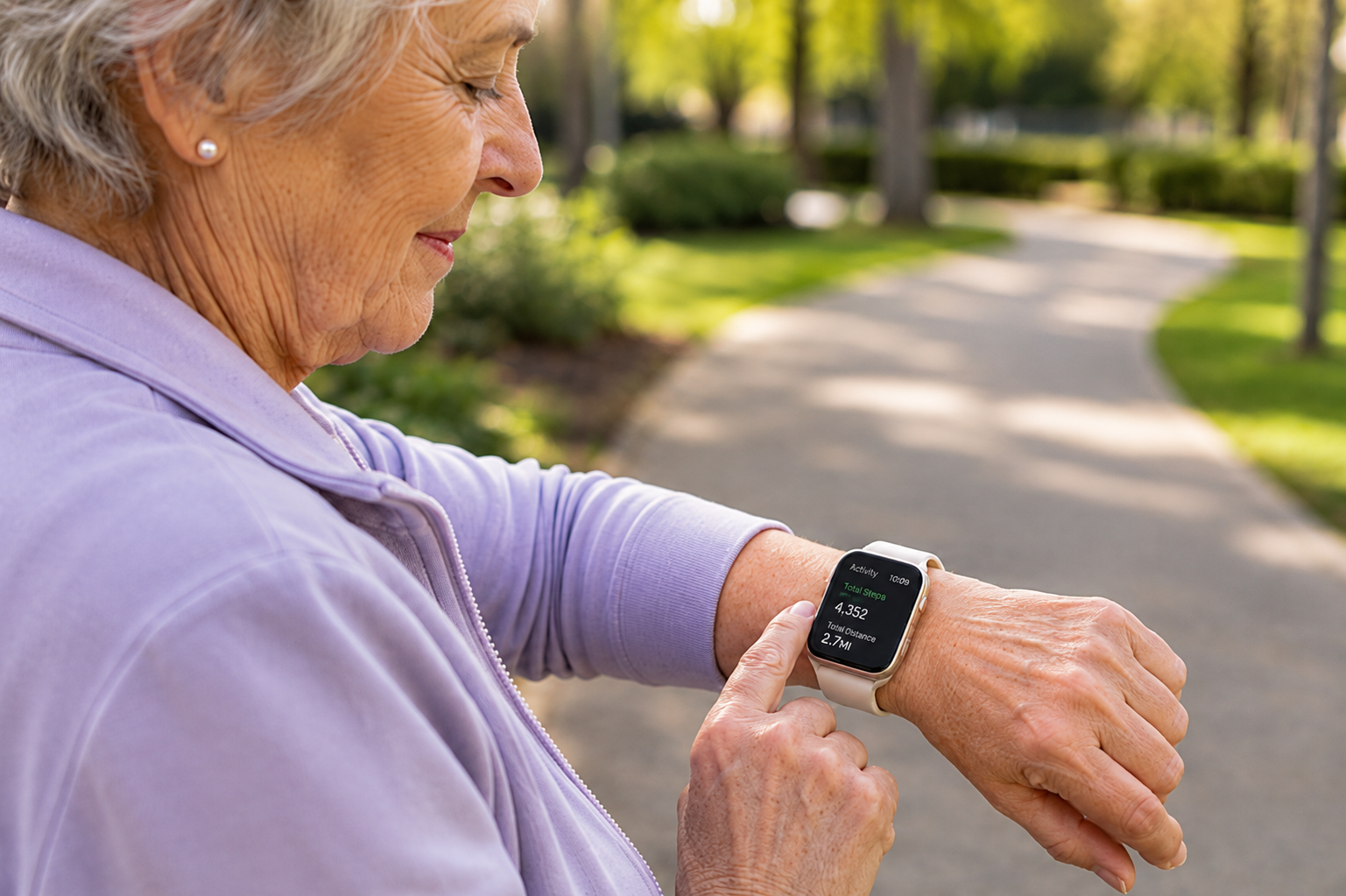
How someone walks can provide useful information about their mobility.
Changes in gait, including walking speed, stride and stability, can sometimes be associated with changes in mobility and falls risk.
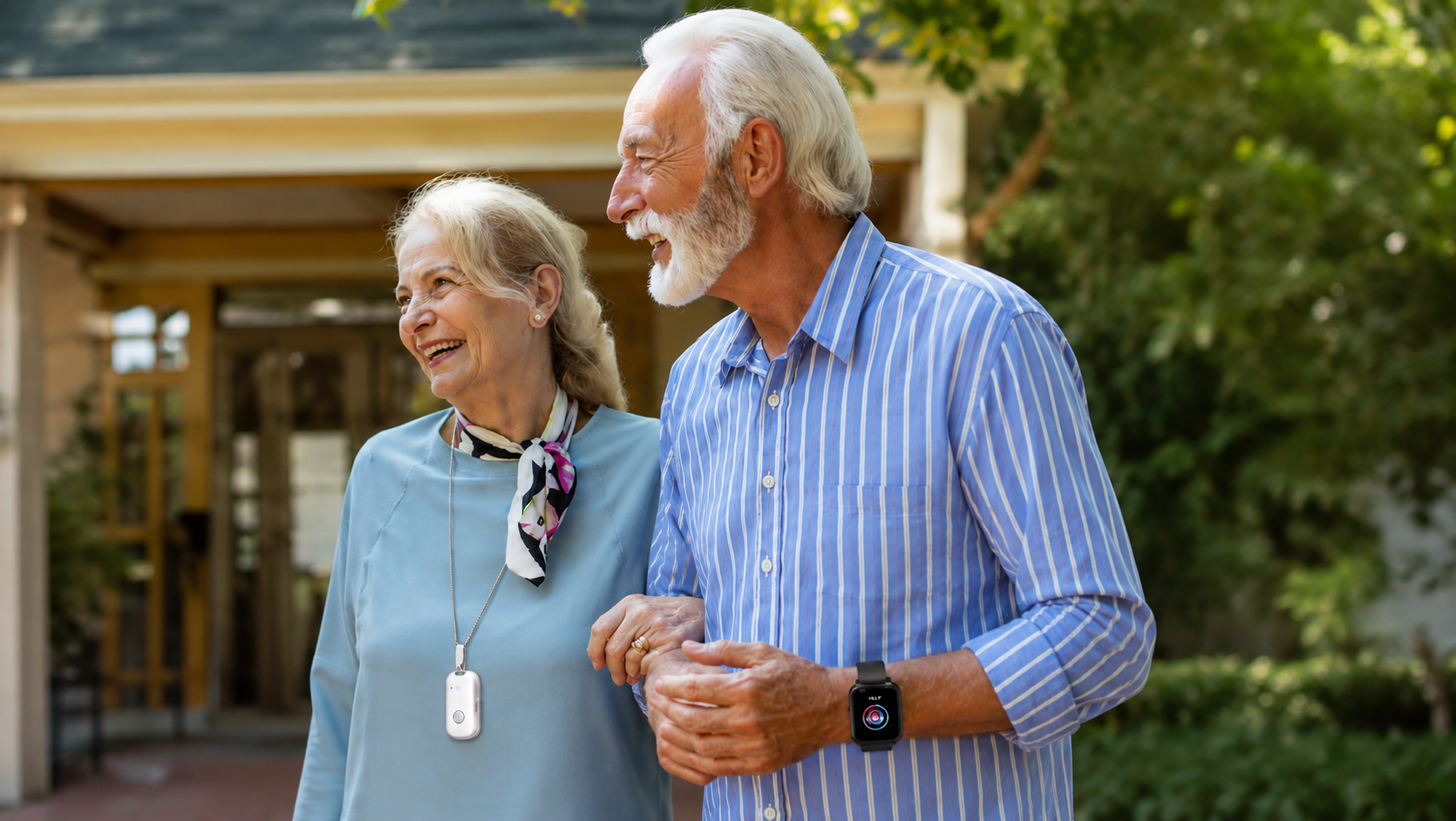
INS LifeGuardian® can provide information about gait and steadiness through the Premium plan, using compatible Apple Watch technology.
There are two ways to access it: pair the INS LifeGuardian® app with an Apple Watch you already own, or get a watch provisioned directly through INS LifeGuard as part of the INS LifeGuardian® Watch service.
This creates an opportunity to think beyond technology that simply waits for someone to press an emergency button.
When changes can be identified and appropriately interpreted, that information may support earlier assessment or intervention.
It doesn't mean a smartwatch can guarantee that a fall will be prevented.
Rather, connected technology can be one part of a broader prevention strategy involving the individual, carers, and appropriate healthcare professionals.
This is an important distinction in the INS approach:
Technology notices. Clinicians interpret. Compassion determines what happens next.
What Should Happen After a Fall in Aged Care?
Not every fall can be prevented.
When one does occur, fall management in aged care shouldn't end after immediate assistance.
A fall can provide important information about someone's changing health, mobility or environment.
Current Aged Care Quality and Safety Commission guidance calls for post-fall assessment, monitoring and appropriate clinical or allied health review following a fall, with relevant assessment outcomes incorporated into the person's care and services plan.
Depending on the circumstances, post-fall management may involve reviewing:
- what happened before and during the fall
- whether an injury occurred
- changes in mobility or balance
- medicines
- environmental factors
- footwear
- vision
- equipment or mobility aids
- whether the existing falls-prevention plan needs to change.
The purpose isn't simply to document that a fall occurred.
It's to ask:
What can we learn from this, and can we reduce the likelihood or harm of another fall?
The Role of Personal Alarms and Medical Alert Systems in Aged Care
Medical alert systems, also commonly called personal alarms, can be part of a broader falls prevention and management strategy.
Their most immediate role is to provide a way to call for assistance when a fall, medical incident, or other emergency occurs.
Depending on the technology, a system may offer:
- a HELP or SOS button
- automatic fall detection
- two-way communication
- GPS location
- smartwatch functionality
- health and activity information
- gait and mobility insights
- connection to 24/7 monitoring.
It is useful, however, to distinguish between different capabilities.
A conventional personal alarm primarily helps someone request assistance.
Automatic fall detection may help identify a possible fall and raise an alert.
Connected smartwatch and health-monitoring capabilities may potentially provide information that helps identify changing risks earlier.
This means modern personal alarms and medical alert systems can extend beyond responding to an incident, especially when technology is supported by appropriate clinical capability.
How Can Automatic Fall Detection Help?
Some personal alarms and compatible wearable devices include automatic fall detection.
If the technology detects movement consistent with a possible fall, it can initiate an alert even if the user hasn't manually pressed their HELP button.
This can provide an additional layer of protection if someone can't activate their alarm after falling.
However, automatic fall-detection technology cannot detect every fall.
Fall detection should therefore be considered an additional safety feature, not a replacement for manually activating a HELP button when someone can.
What Happens When Someone Falls and Can't Get Up?
A fall doesn't always result in an obvious injury, but an older person's condition can change while they're waiting for assistance.
In this video, members of the INS LifeGuard team share real examples of what can happen when someone is alone and needs help, and why clinical assessment, follow-up and escalation can matter.
When a Fall Becomes an Emergency
Video Transcript
INS LifeGuard team member:
"It was around the afternoon when I received a call from a client. Her voice was very faint, and she just kept saying, “I'm on the floor. I can't get up. I just need help.”
I asked her, “Are you having any trouble breathing? Are you bleeding? Have you injured yourself anywhere?” I wanted to understand exactly what she needed.
It turned out that initially, she just needed help to get up.
She was alone at home, and it's an inhumane situation when you have to lie on the floor. Things can deteriorate very quickly.
When I received the call, the client was conscious. That's what I told the ambulance service. The ambulance service has its own prioritisation protocols.
When I called my client again after around 10 to 15 minutes to check how she was going, she was almost fainting and deteriorating very quickly.
I had to hang up and call the ambulance service again and say, “My client is deteriorating. She needs help now.”
INS LifeGuard team member:
"It's saved a lot of lives, to be honest.
We had one yesterday. She hadn't answered. She had a taxi booked to go to church, but she didn't come to the door and didn't answer her phone.
We tried the same thing and couldn't get hold of her family. For whatever reason, the phones were ringing out. It was a Sunday, and it was pretty early.
They happened to peer through her window, and we got someone there. She'd suffered a major stroke."
Why Clinical Response Matters
These real-life examples illustrate something statistics alone cannot.
Receiving an alert is only the beginning.
In the first example, the client's condition changed after the initial call. Follow-up identified that deterioration, allowing the situation to be escalated.
That is why INS LifeGuard's approach goes beyond receiving an alarm and passing it on.
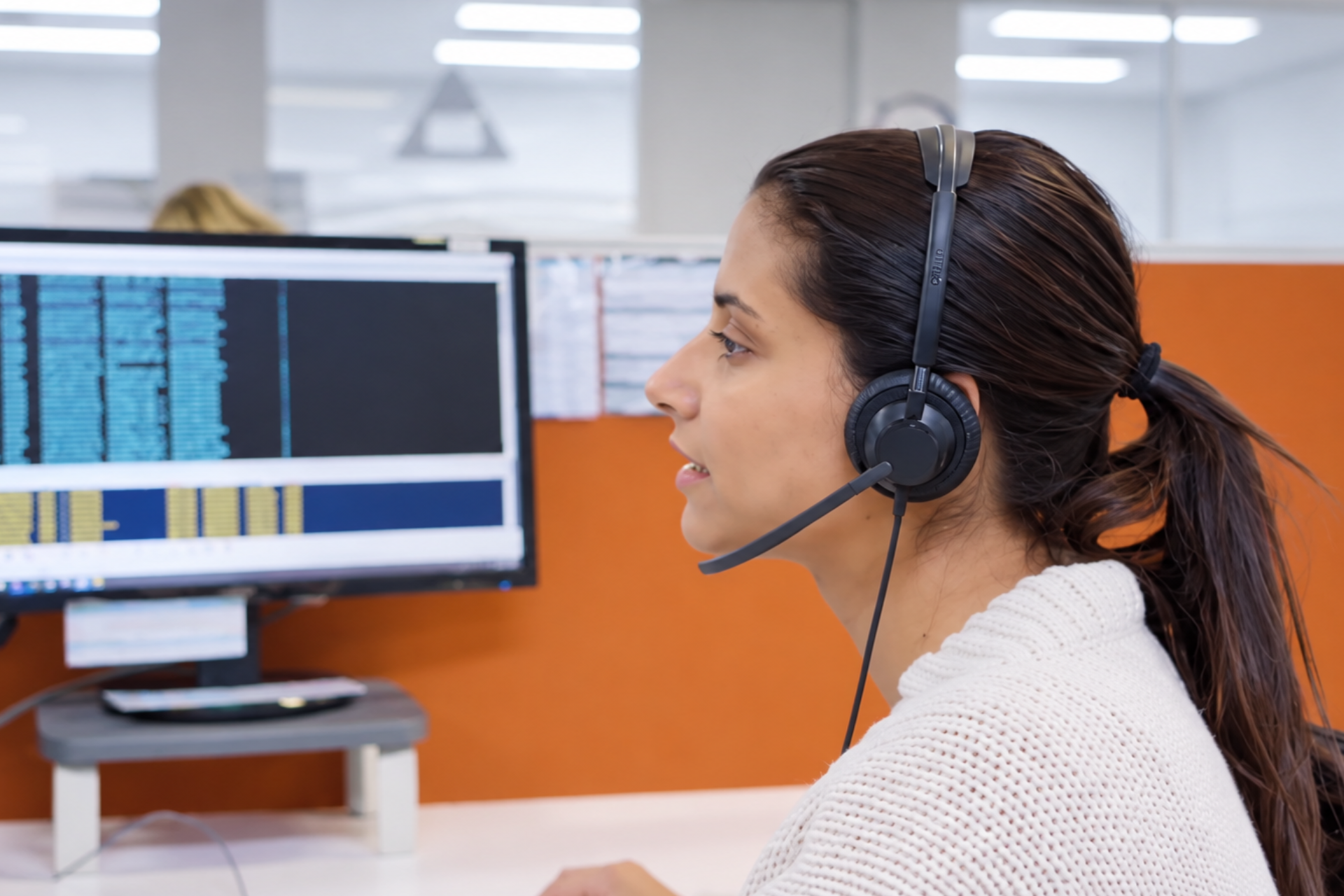
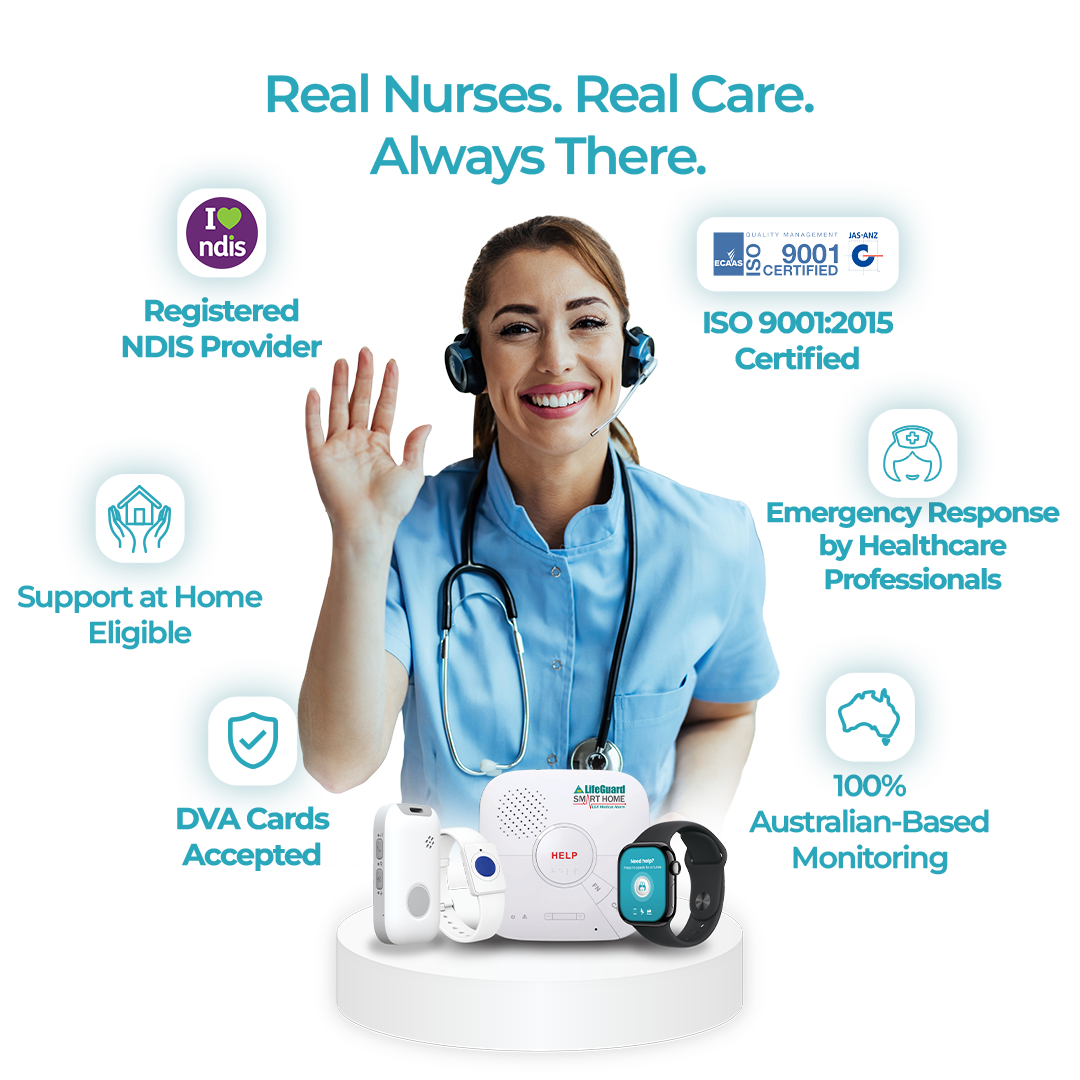
Our Clinical Operations Centre operates 24 hours a day, seven days a week. Trained emergency responder staff, along with qualified and experienced healthcare professionals, including Registered and Enrolled Nurses, operate it.
Clinical capability enables our team to ask appropriate questions, assess the situation and coordinate an appropriate response based on the person's circumstances and response plan.
Depending on the situation, this may involve communicating with the user, contacting nominated family or carers, or arranging emergency assistance when required.
The technology creates the connection. Clinical judgement helps determine what happens next.
Personal Alarms for Different Needs
No single medical alert system suits every older person.
The appropriate solution depends on factors such as where someone lives, whether they regularly leave home independently, their mobility, health, falls risk and personal preferences.
In-Home Personal Alarms
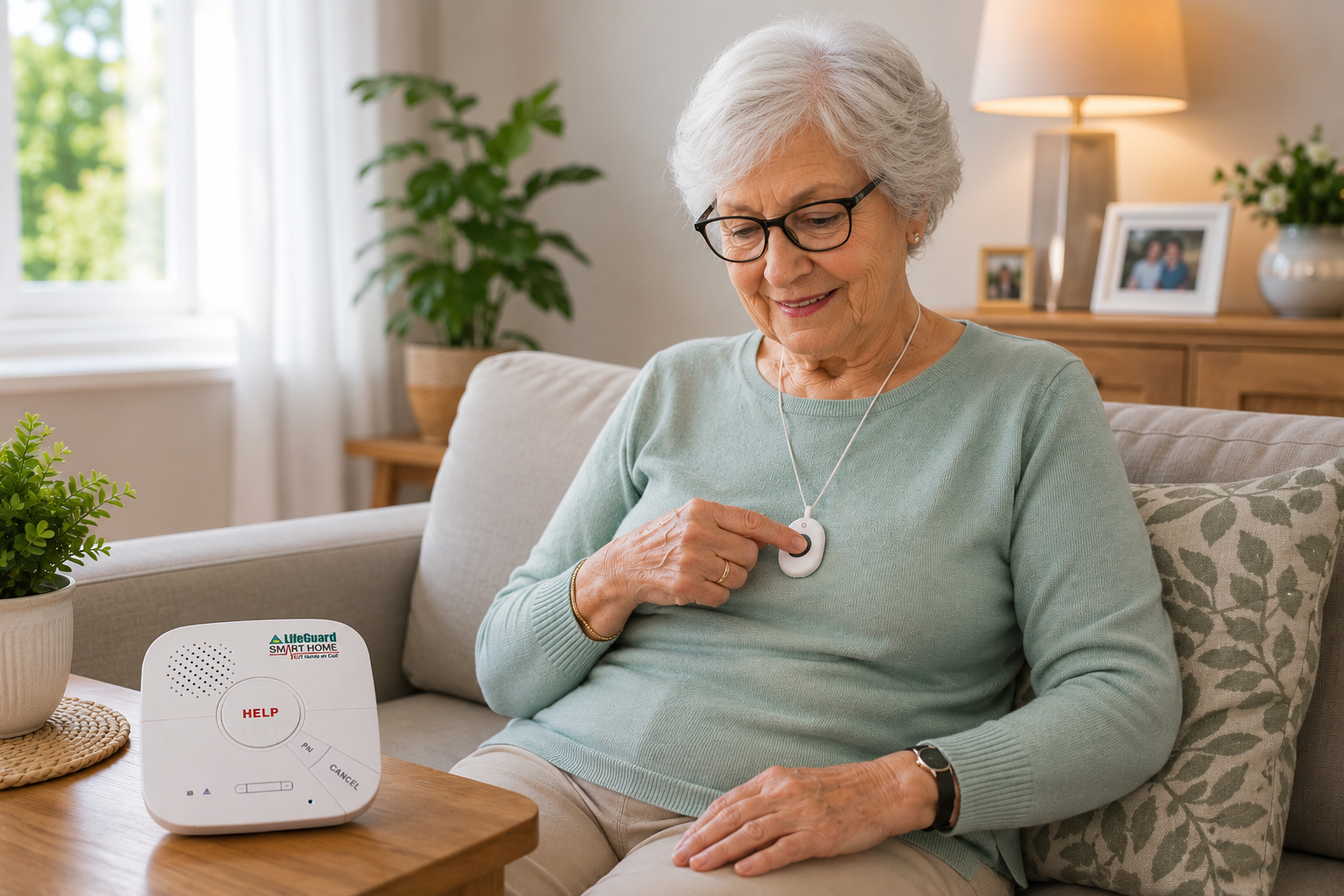
An in-home personal alarm can provide access to assistance around the home.
Depending on the system, the user may wear a pendant or wrist transmitter with a HELP button to call for assistance when needed.
Mobile GPS Personal Alarms
For people who continue to leave home independently, a mobile personal alarm can provide access to assistance while away from home where suitable mobile coverage is available.
Features include:
- HELP or SOS activation
- GPS location
- two-way communication
- Automatic fall detection.
Personal Alarm App
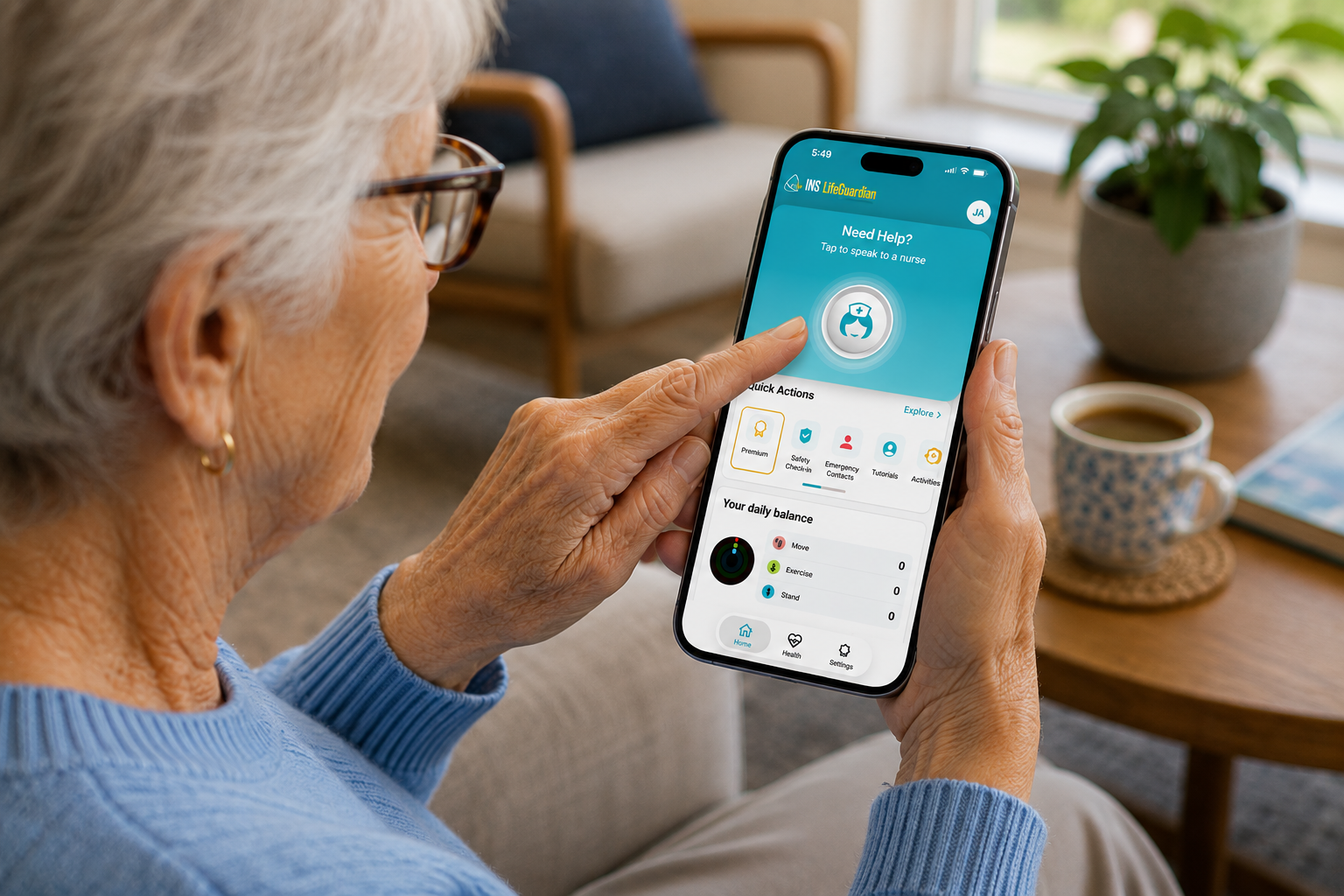
Some people prefer a smartphone over a wearable device. The INS LifeGuardian® App turns a compatible Apple or Android smartphone into a personal safety system, providing direct access to INS LifeGuard's 24/7 Clinical Operations Centre, with additional functionality available when paired with a compatible smartwatch you already own, or work alongside a smartwatch provisioned through INS LifeGuard, for added health monitoring and gait insights.
Personal Alarm Smartwatches
Some people prefer a smartwatch rather than a traditional pendant.
- Depending on the device and service, compatible smartwatch technology may support:
- emergency alerts
- automatic fall detection
- location information
- activity information
- gait and mobility insights (currently Apple-only)
- other health and wellbeing information.
The aim is to choose technology that supports the individual rather than expecting the individual to adapt their life around the technology.

From Responding to Falls to Preventing Deterioration
The traditional view of a medical alert system is relatively simple:
Someone has an emergency → presses an alarm → someone responds.
That response remains extremely important.
But connected community care creates an opportunity to think more broadly.
What if changes can be noticed earlier?
What if declining mobility or gait can prompt attention before a serious fall?
What if clinical follow-up identifies deterioration after an initial incident?
What if technology can extend the reach of healthcare professionals without replacing the human relationship at the centre of care?
This is where INS LifeGuard's philosophy differs from a conventional alarm-monitoring model.
Clinical capability is the constant. Technology simply extends its reach as an enabler.
And it leads back to one of the principles that best captures what effective falls prevention should ultimately be trying to achieve:
“Sometimes the greatest achievement is the emergency that never happened.”
If people are healthier, safer and more confident, we've done our job.
Frequently Asked Questions About Fall Prevention in Aged Care
What Is Fall Prevention in Aged Care?
Fall prevention in aged care involves identifying an older person's individual risk factors and implementing appropriate strategies to reduce their likelihood of falling or experiencing harm from a fall.
Strategies may include environmental changes, strength and balance exercise, mobility support, medicine reviews, staff education, appropriate health assessment and technology where suitable.
What Is Falls Prevention in Aged Care?
Falls prevention in aged care refers to the same broader approach to reducing falls and fall-related harm. Both “fall prevention” and “falls prevention” are commonly used terms.
An effective approach considers the individual's health, mobility, environment, medicines, previous falls and personal goals.
What Is Fall Management in Aged Care?
Fall management in aged care includes proactive risk management and the response when a fall occurs.
After a fall, staff should assess the person's condition and potential injuries, consider contributing factors, and review the care plan as needed.
How Common Are Falls Among Older Australians?
Falls are a major cause of injury among older Australians.
The latest national AIHW data shows that falls are the leading cause of injury hospitalisations and injury deaths in Australia. At the same time, AIHW's detailed 2019–20 analysis of older Australians found that falls accounted for 77% of injury hospitalisations and 71% of injury deaths among people aged 65 and over.
What Are Common Risk Factors for Falls in Aged Care?
Risk factors can include reduced strength or balance, changes in gait or mobility, vision problems, certain medicines, dizziness, cognitive changes, previous falls and environmental hazards.
Risk varies between individuals, so personalised assessment is important.
Can All Falls in Aged Care Be Prevented?
No. It isn't possible to guarantee that someone will never fall.
Falls prevention aims to identify modifiable risks and implement appropriate strategies that may reduce the likelihood of falls or minimise harm while respecting the person's independence, goals and dignity of risk.
Can a Medical Alert System Help Prevent Falls?
A conventional medical alert system primarily provides a way to request assistance after a fall or other emergency.
However, newer connected technologies may potentially contribute to a broader preventative approach.
For example, compatible smartwatch technology that provides information about gait or mobility patterns may help identify changes that warrant further attention.
Technology should complement, rather than replace, appropriate professional falls-risk assessment and clinical care.
Does Automatic Fall Detection Detect Every Fall?
No. Automatic fall-detection technology cannot detect every fall.
It should be seen as an additional layer of protection, not a replacement for manually activating a HELP button when someone can do so.
Why Is a Post-Fall Assessment Important?
A post-fall assessment can help identify injuries and factors that may have contributed to the fall.
It also provides an opportunity to reassess the person's needs and update their falls-prevention strategies where appropriate.
Supporting Safer, More Independent Lives
Effective fall prevention isn't about removing independence in the name of safety.
It's about understanding risk, recognising change and finding practical ways to help older people continue living the lives they value.
For aged care providers, that means combining person-centred falls prevention and fall management with appropriate clinical care, staff education, environmental safety and access to support when something goes wrong.
Personal alarms, medical alert systems, automatic fall detection and connected health technology can all form part of that broader approach.
At INS LifeGuard, technology is backed by 24/7 access to qualified healthcare professionals through our Clinical Operations Centre.
Health. Safety. Connection. Independence.
Those are the outcomes technology should help us strengthen.
Learn More About INS LifeGuard Personal Alarms
Discover monitored personal alarm and medical alert solutions for aged care, retirement living and older Australians living independently.
Explore INS LifeGuard Personal Alarms →
This article provides general information only and isn't a substitute for individual medical, clinical or falls-risk assessment. Falls-prevention and management strategies should be appropriate to the individual and developed with qualified healthcare professionals where required. In an emergency, call Triple Zero (000).
About
INS LifeGuard is the only 24/7 nurse on-call personal and medical monitoring in Australia. We provide monitoring technology for both in the home and on the go and can also monitor other provider's equipment. Our services are suitable for anyone wanting support to stay independent such as the elderly, those with medical conditions and disabilities plus enhancing safety and security for lone workers.