
Have a Question?

Motor Neurone Disease & Support at Home: Priority Access to Aged Care Funding
INS LifeGuard • August 21, 2026

If you have Motor Neurone Disease (MND), or care for someone who does, new aged care priority arrangements could help you access important funding and support sooner.
In June 2026, the Australian Government introduced priority access to Support at Home funding for older Australians whose MND is documented in their aged care assessment. This means eligible people with MND are placed in the urgent priority category for ongoing funding.
Priority arrangements also cover the Assistive Technology and Home Modifications (AT-HM) scheme, allowing people with MND who have AT-HM approval to access this funding with immediate priority.
For people living with a progressive condition such as Motor Neurone Disease (MND), timely access to care and practical support can make an important difference as mobility, physical abilities and day-to-day needs change.
Who Can Receive MND Priority Access?
Priority access may apply if you have MND recorded in your assessment and you:
- already have approval for ongoing Support at Home funding
- have approval for funding through the Assistive Technology and Home Modifications (AT-HM) scheme
- moved into Support at Home from the former Home Care Packages Program
- receive approval for ongoing Support at Home or AT-HM funding in the future.
Having MND does not mean you will automatically be approved for every service, piece of equipment or home modification. Your aged care assessment will look at your needs and determine which supports you are eligible to receive.
The MND priority arrangements can help reduce waiting times for the care, equipment and home modifications they have been approved to receive.
Learn more about Support at Home and the AT-HM scheme.
What You Need to Know
If You Had MND at Your Last Assessment
If you had already been diagnosed with MND when you completed your most recent aged care assessment, you do not need to have another assessment simply because the new priority arrangements have been introduced.
However, if you are not sure whether your MND diagnosis was recorded, contact the organisation that carried out your assessment. They can confirm whether this information is included in your assessment record.
If You Were Diagnosed After Your Assessment
If you received an MND diagnosis after your aged care assessment and you are still waiting for your funding to become available, contact My Aged Care.
You can arrange a reassessment so your MND diagnosis can be included in your new assessment. If you meet the requirements, the MND priority arrangements can then be applied to your funding.
If You Already Receive Support at Home
Speak with your Support at Home provider about your current needs.
If your abilities or safety risks have changed, discuss whether your existing support plan needs to be reviewed and what process is required to access additional or different support.
What Is AT-HM?
AT-HM stands for Assistive Technology and Home Modifications.
It is part of the Support at Home program and provides separate funding for approved equipment and changes to your home.
This funding helps you stay safer and more independent.
If you have MND recorded during your aged care assessment and you are approved for AT-HM, you can receive immediate priority for AT-HM funding.
AT-HM funding is separate from your regular Support at Home budget.
Depending on your needs, you may be approved for:
- assistive technology
- home modifications
- both.
The equipment or home modification must meet the Government's AT-HM rules and address a need identified during your aged care assessment.
What Assistive Technology May Help Someone With MND?
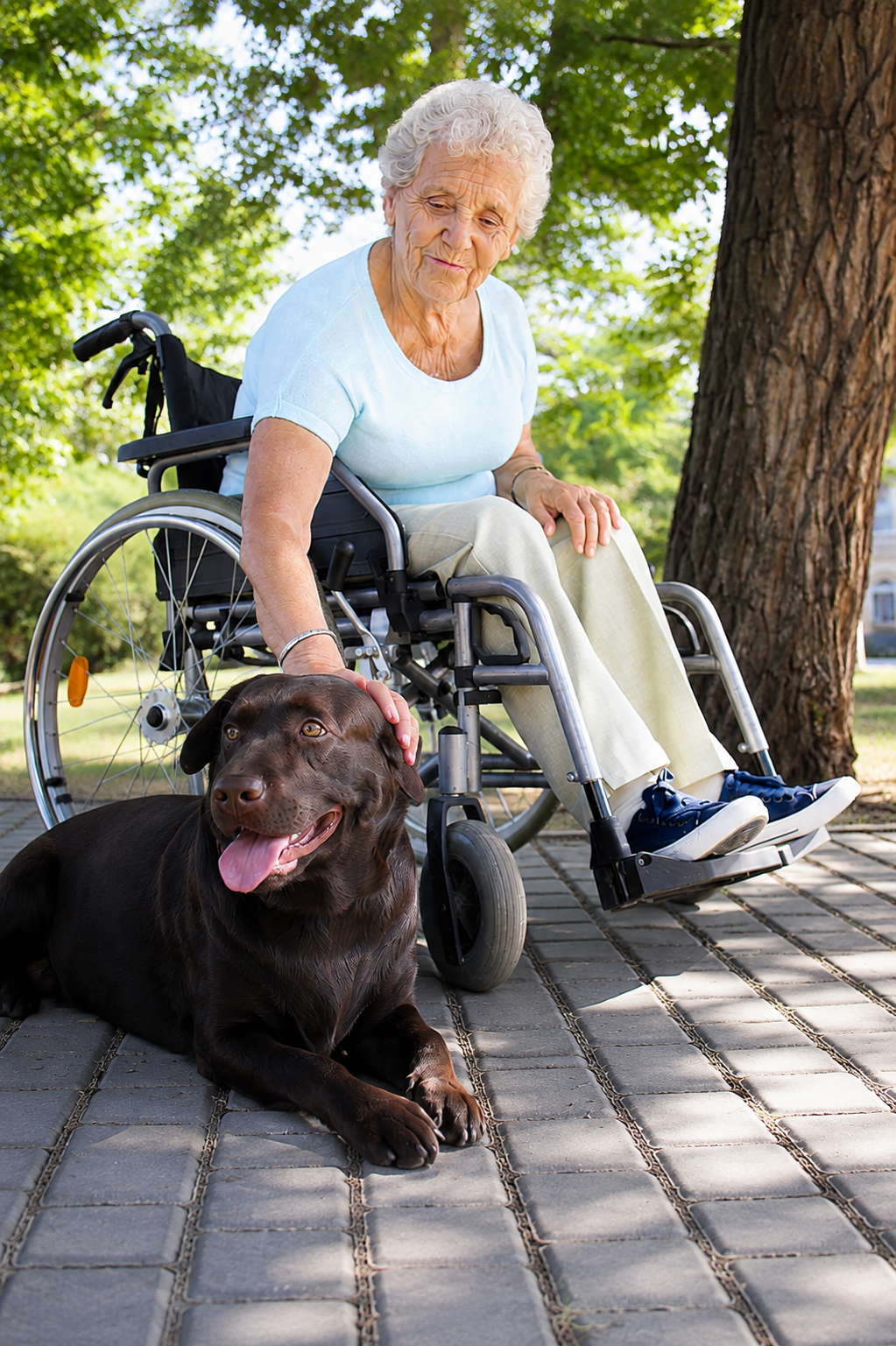
Assistive technology means equipment that can make everyday activities easier or safer.
Not everyone with MND will need the same equipment.
The right support depends on how MND affects you.
You may need equipment to help with:
- walking and mobility
- getting in and out of chairs or bed
- showering and toileting
- communication
- reduced hand or arm strength
- preventing falls
- calling for help
Some equipment may need to be recommended by a qualified health professional.
What Home Modifications Can AT-HM Help Pay For?
AT-HM can also help fund approved changes to your home.
These changes can make it easier and safer to move around.
Depending on your needs, home modifications may include:
- handrails
- grab rails
- ramps
- stair lifts
- bathroom changes
- wider doorways
- changes to make wheelchair access easier.
Some related costs, such as installation and professional advice, may also be covered when they meet the AT-HM rules.
Can AT-HM Fund a Personal Alarm?

Yes.
A personal emergency alarm may be funded through AT-HM if it meets the scheme rules and is needed because of your assessed safety needs.
A personal alarm may be useful if you:
- live alone
- spend time at home alone
- have fallen before
- are worried about falling
- have increasing muscle weakness
- may not be able to get up after a fall
- cannot always reach a phone
- have difficulty using a phone because of hand or arm weakness
- want an easier way to call for help.
Current Australian Government information includes personal care alarms and subscription costs as an example of assistive technology that may be available through AT-HM.
However, funding is not automatic.
The alarm must be connected to a genuine need identified during your aged care assessment.
How to Apply for Support at Home When You Have MND
The first step is to arrange an aged care assessment through My Aged Care.
You can apply for an assessment:
- online through My Aged Care
- by phone on 1800 200 422
- in person by making an appointment with an Aged Care Specialist Officer at a participating Services Australia service centre.
A family member, friend or other trusted person can also help you apply. With your permission, someone can apply on your behalf.
After you apply, an assessment organisation will contact you to arrange your aged care assessment. The assessment looks at what you can manage independently, and identifies where additional support could help you remain safe and comfortable at home.
What Should I Tell the Assessor About My MND?
Try to explain what you find difficult in everyday life, rather than focusing only on your diagnosis.
For example, tell the assessor if you:
- have difficulty walking or standing
- have fallen or are worried about falling
- have difficulty getting out of bed or a chair
- need help showering, dressing or using the toilet
- have reduced strength in your arms or hands
- have difficulty preparing meals
- have communication difficulties
- cannot always reach or use a phone
- spend time at home alone
- are worried that you may not be able to call for help
- need equipment to move around safely
- need changes to make your home more accessible.
Specific examples can make your needs easier to understand.
Instead of saying:
“I'm having trouble getting around.”
You might say:
“My legs are getting weaker. I have difficulty getting out of my chair and I am worried about falling when I am home alone.”
Your assessor will discuss your needs with you and help develop a support plan covering your challenges, goals and preferences.
What Should I Ask During My Aged Care Assessment?
During your assessment:
- Confirm that MND is recorded.
- Explain how MND affects your everyday activities.
- Discuss mobility, transfers and falls risks.
- Explain any difficulty calling for assistance.
- Discuss the ongoing services you need at home.
- Ask about AT-HM.
- Discuss assistive technology and home modifications.
- Raise the need for a personal emergency alarm if it is relevant to your safety.
Your assessment will determine what services and funding pathways you are approved to access.
You can take a written list of things you want to discuss. You can also have a carer, family member or another support person with you during the assessment.
What Happens After My Assessment?
After your assessment, you will receive a Notice of Decision explaining the services you have been approved to access. If you are approved for services, your support plan will also be provided.
You may be approved for ongoing Support at Home services and/or a short-term pathway such as AT-HM.
If you are approved for Support at Home, you can then prepare to choose a provider. My Aged Care can help you find providers, and its website has a Find a Provider service.
Remember that MND can change over time. If your care needs change, contact My Aged Care or speak with your provider. You may need a support plan review or another assessment.
What If I Transitioned From a Home Care Package?
If you previously received a Home Care Package (HCP), you moved to the Support at Home program when it started on 1 November 2025.
If you had unspent Commonwealth HCP funds when you transitioned, you can use these funds for eligible assistive technology and home modifications under AT-HM.
If you also receive an AT-HM funding allocation, your unspent Commonwealth HCP funds must be used first. Once those funds have been used, your provider can then use your allocated AT-HM funding for eligible supports.
Importantly, people with MND who transitioned from a Home Care Package to Support at Home are included in the new MND priority arrangements. If your MND is recorded during your aged care assessment and you have been approved for AT-HM, you can receive immediate priority for AT-HM funding.
Speak with your Support at Home provider about any unspent HCP funds you have, your AT-HM approval and how your available funding can be used for the equipment or home modifications you need.
Where Can I Get Help?
You do not have to work through the aged care system alone.
My Aged Care is the main starting point for Government-funded aged care. You can call 1800 200 422 for help applying for an assessment, understanding the process or finding a Support at Home provider.
You can also ask a trusted family member, friend or carer to help you through the process. For information and support specifically relating to Motor Neurone Disease, you can also speak with MND Australia.
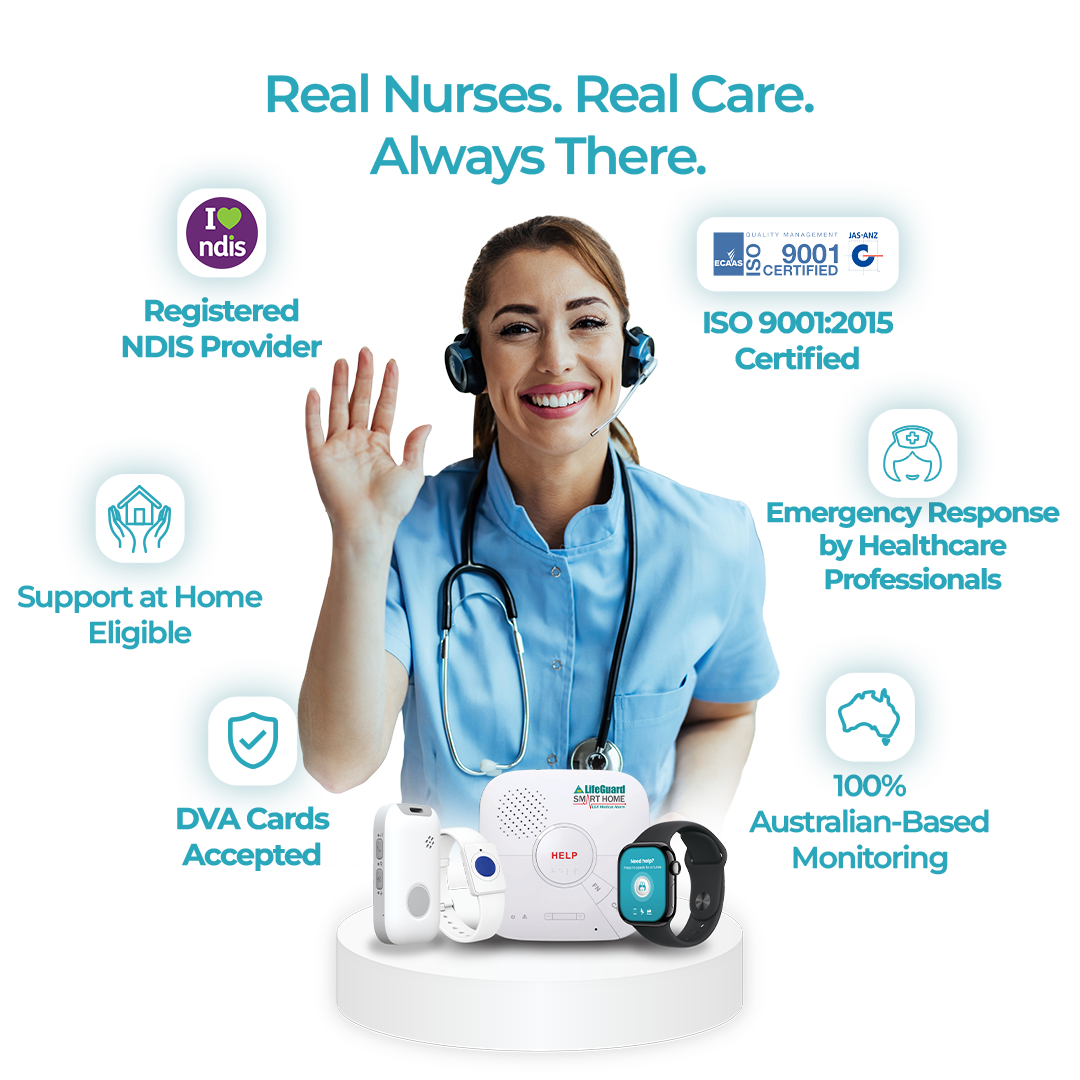
If you are considering a personal emergency alarm as part of your support needs, INS LifeGuard offers nurse-monitored personal alarm options and provides information that you can discuss with your aged care assessor or Support at Home provider.
Why Consider a Nurse-Monitored Personal Alarm With MND?
When choosing a monitored personal alarm, it is worth considering not only the device but also who responds when the alarm is activated.
INS LifeGuard personal alarms connect users to its 24/7 nurse-monitored Emergency Response Centre.
Our Emergency Response Centre is staffed by trained emergency responders who are Registered and Enrolled Nurses.
When an alarm is activated, the INS nurse can communicate with the person, assess what is happening and determine an appropriate response.
Depending on the circumstances, this may involve providing support through contacting a nominated family member, neighbour or carer, or arranging emergency services.
Accessing INS LifeGuard’s Personal Alarm Support Through AT-HM
INS LifeGuard is Australia's only nurse-on-call personal emergency response service eligible under AT-HM.
This is an important distinction when comparing monitored personal alarm services.
If you are worried about falling, being unable to reach a phone or calling for help in an emergency, explain these concerns during your aged care assessment. This can help the assessor understand why INS LifeGuard’s personal alarm may be appropriate for your needs.
Our safety solutions include options for use at home and while away from home. Depending on the device, these may include:
- 24/7 nurse-on-call
- in-home alarm systems
- mobile personal alarms
- telehealth services
- GPS location features
- fall detection and falls-risk monitoring
Takeaway
Having the right support in place can provide greater confidence for you and reassurance for the people who care about you.
Talk to our team about finding the right personal alarm to help you feel safer, maintain your independence and know that support is there when you need it.
Related Articles
Hospital stays can be stressful, especially when transitioning home or to without the support of an aged care facility. INS LifeGuard provides essential services to help patients leave the hospital safely and confidently, ensuring needed support and ongoing care.

Breast, bowel, lung, cervical & heart health screenings are available to Australians in their 50s, most of them free. Here's what each one involves & who qualifies.

Uncover if falling asleep after meals is a warning sign for diabetes. Learn about possible symptoms, risk factors, and prevention methods.
About
INS LifeGuard is the only 24/7 nurse on-call personal and medical monitoring in Australia. We provide monitoring technology for both in the home and on the go and can also monitor other provider's equipment. Our services are suitable for anyone wanting support to stay independent such as the elderly, those with medical conditions and disabilities plus enhancing safety and security for lone workers.