
Have a Question?


Waiting for Support at Home? What to Do While You Wait
INS LifeGuard • August 21, 2026

Being approved for Support at Home doesn't necessarily mean your full funding will be available straight away.
For many older Australians and their families, there can be a waiting period between approval for ongoing Support at Home services and funding allocation.
That can raise important questions: How long will I wait? What determines my priority? Can I access any funding in the meantime? And what should I do if my needs change while I'm waiting?
The good news is that more information is now available about current wait times and how the Priority System works.
This guide explains the current Support at Home wait times, how priority is determined, what interim and priority access may be available, and practical steps you can take while you wait.
How Long Is the Wait for Support at Home Funding?
If you've already been approved for ongoing Support at Home services, your estimated wait depends on your priority category.
Your wait time starts from the access approval start date shown in your assessment outcome letter.
The current government estimates are:
| Priority category | Estimated wait time |
|---|---|
| Urgent | Within 1 month |
| High | 1 month |
| Medium | 5 to 6 months |
| Standard | 7 to 8 months |
Estimated wait times last updated 30 June 2026.
These times are a guide for people already approved for Support at Home services. They are estimates, not guaranteed timeframes, and are updated as new estimates become available.
This also means there isn't one single answer to the question, “How long is the Support at Home waiting list?”
Someone assessed as Urgent may have a very different experience from someone assessed as Standard priority.
How Many People Are Waiting for Support at Home?
The latest figures provide useful context on the scale of demand.
Between 1 April and 30 June 2026, 131,017 ongoing Support at Home places were released.
As at 30 June 2026:
- 390,901 people had an ongoing Support at Home place, meaning they were either receiving care or considering the offer; and
- 106,977 people were waiting for an ongoing Support at Home place.
Data current as at 10 August 2026.
For someone waiting, those are big numbers. But your position isn't determined simply by where you sit in a queue of more than 100,000 people.
That's where the Support at Home Priority System becomes important.
How Does the Support at Home Priority System Work?
Ongoing Support at Home funding is allocated through a Priority System rather than a simple first-come, first-served waiting list.
If you're approved for ongoing Support at Home services, you're assigned one of four priority categories:
- Urgent
- High
- Medium
- Standard
Your priority affects how quickly we allocate funding.
Your approval date is also relevant when funding is released through the Priority System.
This means two people approved around the same time may not receive funding at the same time if their assessed urgency levels differ.
How Is My Support at Home Priority Determined?
Your priority isn't determined simply by how long you've been waiting.
As part of your aged care assessment, your needs and circumstances are assessed to determine how urgently you need access to funded services.
The Australian Government says priority is based on factors including:
- your level of function
- the level of risk associated with your care situation
- other relevant concerns identified during your assessment.
A trained aged care needs assessor uses the Integrated Assessment Tool to understand your care needs and make recommendations.
If you're approved for ongoing Support at Home services, you'll then be assigned an Urgent, High, Medium or Standard priority.
There isn't a simple public formula that automatically places everyone into a particular priority category based on a condition or circumstance. Your needs and circumstances are considered as part of the assessment process.
What If My Needs Change While I'm Waiting?
Your circumstances don't necessarily remain fixed just because your assessment is complete.
If you believe your aged care needs have changed since your assessment, you can request a Support Plan Review.
An aged care needs assessor can discuss your current needs and determine whether changes can be made to your existing Support Plan or whether you need a full reassessment.
A full reassessment is typically considered when your care needs have changed significantly.
Contact My Aged Care if, for example, there has been a significant change in your:
- health
- mobility
- ability to manage personal care or everyday activities
- cognition
- living arrangements
- availability of family or carer support
- safety at home
- overall level of support required.
If your circumstances have changed substantially while you've been waiting, don't assume you simply have to continue waiting under the circumstances recorded at your original assessment.
Let My Aged Care know what's changed.

Do People With Motor Neurone Disease Get Priority Access?
Yes.
Older people living with Motor Neurone Disease (MND) now have priority access to aged care funding and services under Support at Home.
This includes priority access to:
- ongoing Support at Home funding; and
- the Assistive Technology and Home Modifications (AT-HM) scheme.
To apply for priority access, the person's MND diagnosis must be recorded during their aged care assessment.
The arrangements apply to older people with MND who:
- have already been approved for ongoing Support at Home or AT-HM funding; or
- are approved for ongoing Support at Home funding or the AT-HM scheme in the future.
If you or someone you care for has MND and is waiting for funding, check that the MND diagnosis has been recorded during the aged care assessment.
What About the 10-Month Support at Home Wait-Time Figure?
This is where Support at Home wait-time information can become confusing.
The Australian Government's Aged Care Act 2024 Wait Times Report published on 11 August 2026, found that people who commenced ongoing Support at Home services between 1 April and 30 June 2026 had a:
- median elapsed time of 297 days — around 10 months; and
- mean elapsed time of 306 days — also around 10 months.
But this does not mean someone already approved for Support at Home should expect to wait another 10 months for funding.
The 297-day figure measures the entire aged care access journey, from when someone first applies through My Aged Care to when their services commence.
That journey can include:
My Aged Care application → screening and triage → assessment → approval → funding allocation → finding/engaging a provider → service commencement.
The government's report notes that this measure differs from My Aged Care's published Support at Home wait times, which measure the period from assessment approval to funding allocation.
So if you've already been approved and want to know how long you may wait for your funding allocation, the Urgent, High, Medium and Standard estimates shown earlier in this article are the more relevant guide.
Why Can the Overall Support at Home Process Take So Long?
No single waiting list is responsible for the entire period between first contacting My Aged Care and receiving services.
Time can accumulate at several stages.
The government's aged care pathway includes:
Registration → Screening → Triage → Assessment → Approval → Allocation → Service commencement
Delays aren't necessarily caused by funding allocation.
The government identifies several factors that can affect when services actually begin.
Personal circumstances
Some older people may take additional time because they:
- want to discuss their options with family
- are comparing providers
- prefer a provider with particular cultural or language capabilities
- have temporarily improved health
- already have informal support available
- are dealing with financial, legal or guardianship matters.
Provider availability
Service commencement can also be affected by:
- workforce or service shortages
- provider waiting lists
- scheduling delays
- waiting for a preferred provider
- organising a service agreement
- additional preparation needed for assistive technology or home modifications.
System and administrative factors
Other factors can include:
- navigating the aged care system
- processing approvals
- communication and funding notifications
- using other community or state-funded services while waiting for Commonwealth-funded aged care.
This helps explain why two people with apparently similar approvals can still have different experiences.
Do Support at Home Wait Times Vary by State?
The ongoing Support at Home Priority System operates nationally rather than as a separate published priority-category waiting list for each state.
However, the overall time between first applying for aged care and actually commencing services can vary geographically.
The government's April to June 2026 wait-times report found that across all non-specialist aged care services, the national median elapsed time was 255 days.
At state and territory level, median elapsed times included:
| State/Territory | Median elapsed time |
|---|---|
| Western Australia | 229 days |
| South Australia | 234 days |
| Tasmania | 242 days |
| Northern Territory | 243 days |
| Victoria | 253 days |
| Australian Capital Territory | 255 days |
| New South Wales | 262 days |
| Queensland | 266 days |
There was even greater variation between individual Aged Care Planning Regions.
However, interpret these figures carefully.
They cover all non-specialist aged care services included in the report, not just ongoing Support at Home funding, and measure the full period from initial application to service commencement.
They should therefore not be used as state-by-state Support at Home funding wait times.
The data does show, however, that where you live, and factors such as local provider availability and workforce capacity can affect the broader experience of accessing aged care.
Can I Receive Interim Funding While I Wait?
Some people waiting for their full ongoing Support at Home allocation may receive interim funding.
Interim funding is currently 60% of the person's approved ongoing classification amount.
This can allow some approved services to begin before the person's full funding allocation becomes available.
When the remaining funding is allocated, the person can move to their full approved classification amount.
If you've been approved but aren't sure whether interim funding applies to you, ask My Aged Care or your Support at Home provider:
- whether interim funding has been allocated
- how much funding is currently available
- which approved services you can start using
- what happens when your full allocation becomes available.
What If I’m Also Waiting for AT-HM Funding?
If you’ve also been approved for Assistive Technology and Home Modifications (AT-HM), it’s important to understand how that funding relates to your ongoing Support at Home funding.
AT-HM is part of the Support at Home program, but it has separate funding arrangements from your ongoing quarterly Support at Home budget.
There are separate Priority Systems for:
- ongoing Support at Home funding
- Assistive Technology funding
- Home Modifications funding.
This means the different funding allocations may become available at different times. You may receive your ongoing Support at Home funding while still waiting for approved assistive technology or home modifications — or vice versa.
The latest government wait-times report also shows that the overall journey from first applying through My Aged Care to actually commencing services differs by pathway.
For people who commenced services between April and June 2026, the median elapsed time was:
- 297 days for ongoing Support at Home
- 193 days for Assistive Technology
- 193 days for Home Modifications
- 64 days for the Restorative Care Pathway
- 14 days for the End-of-Life Pathway.
These figures measure the entire aged care pathway from initial My Aged Care application to service commencement. They are not estimates of how long someone will wait for funding after approval.
If you’ve been approved for more than one type of funding, check the status of each allocation with My Aged Care or your provider.
What Can I Do While I'm Waiting for Support at Home?
You may not be able to control when your full funding is allocated, but waiting doesn't mean you can't do anything.
1. Find Out Exactly What You're Waiting For
One of the most useful questions you can ask is: Where am I in the process?
You could be waiting for:
- an aged care assessment
- an approval decision
- funding allocation
- a provider
- a service agreement
- services to actually commence.
Those are different stages.
If you're not sure where you are, contact My Aged Care or your provider and ask.
2. Know Your Priority Category
If you've been approved for ongoing Support at Home funding, check your assessment outcome and understand whether you've been assigned Urgent, High, Medium or Standard priority.
This gives you a much more meaningful indication of your expected funding wait than a general headline about aged care waiting times.
3. Tell My Aged Care If Your Needs Change
If your health, mobility, safety or support circumstances change while you're waiting, don't assume your original assessment remains the final word.
Contact My Aged Care and explain what's changed.
A Support Plan Review or reassessment may be appropriate.
4. Ask About Interim Funding
If you haven't received your full allocation, ask whether interim funding is available.
If you already have interim funding, speak with your provider about how to prioritise the available funding around your most important needs.
5. Check Whether You Have Unspent Home Care Package Funds
If you transitioned from the former Home Care Packages Program, you may have eligible unspent HCP funds available.
Depending on your circumstances and the rules that apply, these may still be available for approved services or items.
Ask your Support at Home provider whether you have unspent funds and how you can use them.
6. Check Your AT-HM Funding Separately
If you've been approved for assistive technology or home modifications, check its status separately rather than assuming it will arrive with your ongoing Support at Home funding.
7. Start Thinking About Your Provider
Even once funding has been allocated, services may not start instantly.
The government's wait-times report identifies provider availability and the time it takes to establish services as factors that can affect when care begins.
It can therefore be useful to start understanding:
- which registered providers service your area
- whether they offer the services you need
- their prices
- their availability
- whether they have waiting lists
- whether they can meet any particular language, cultural or clinical needs.
8. Identify Your Most Immediate Needs
Think about what's becoming difficult or potentially unsafe while you're waiting.
For example:
- Are you struggling to shower or dress safely?
- Are meals becoming difficult to prepare?
- Has your mobility deteriorated?
- Are you worried about falls?
- Are you regularly alone?
- Are you having difficulty getting help in an emergency?
- Is a family member or carer struggling to provide the level of support you now need?
Identifying the most important gaps can help you have a more useful conversation with My Aged Care, your provider, family and other support services.
9. Consider What Can Be Arranged in the Meantime
Depending on your circumstances, family, friends, carers or community organisations may be able to help bridge particular gaps.
You can also arrange some services or equipment privately while you're waiting for government funding.
This is especially relevant if delaying support could affect your safety or independence.
What Happens Once My Support at Home Funding Is Allocated?
Receiving your allocation doesn't necessarily mean services automatically begin the next day.
Once funding is allocated, you'll need to engage a registered provider and arrange your services.
The government's wait-times report notes that Support at Home allocations are generally time-limited.
People generally have 56 days to enter into a service agreement with a provider, with an extension to 84 days possible where approved.
So once you receive an allocation, it's worth acting promptly.
Staying Safe While You Wait
A long aged care process creates a practical question: what happens in the meantime?
For many older Australians, the concern isn't only when cleaning, personal care, transport or another service will begin. It's knowing what will happen if something goes wrong when no one else is there.
Falls, sudden illness and other emergencies don't wait for aged care funding to be allocated.
A monitored personal alarm can provide an additional layer of safety while your Support at Home arrangements are still being finalised.

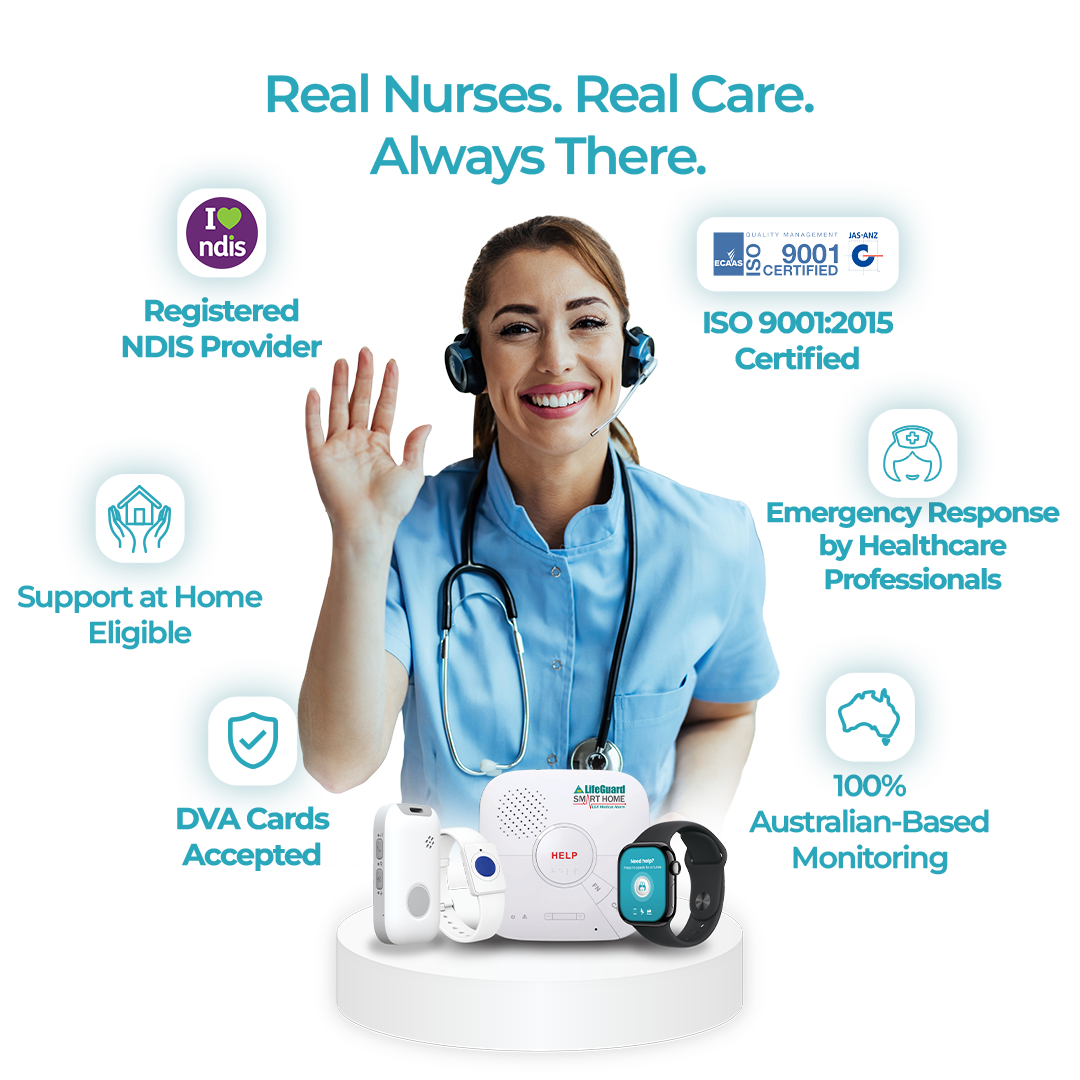
At INS LifeGuard, our Emergency Response Centre operates 24 hours a day, seven days a week. Our trained emergency responders are also qualified and experienced healthcare professionals, including Registered and Enrolled Nurses.
When a LifeGuard alarm is activated, our team can communicate with the client, clinically assess and triage the situation, provide immediate medical advice where appropriate, and coordinate an appropriate response.
Importantly, you don't necessarily have to wait for your Support at Home funding to be allocated before arranging a personal alarm.
You can arrange and pay for a LifeGuard personal alarm privately while you wait. If a personal alarm is subsequently approved as part of your Support at Home arrangements and meets the applicable funding requirements, you may then be able to transition the service from private payment to Support at Home funding.
This means you can have the safety and reassurance of a monitored personal alarm in place now, rather than waiting for your funding allocation before getting started.
Learn how to get a personal alarm funded through Support at Home →
Waiting for Support at Home: Frequently Asked Questions
How long is the Support at Home waiting list?
For people who have already been approved for ongoing Support at Home funding, current estimated waits are within 1 month for Urgent priority, 1 month for High priority, 5 to 6 months for Medium priority and 7 to 8 months for Standard priority.
These are guide times and were last updated on 30 June 2026.
When does my Support at Home wait time start?
For the published priority-category estimates, your wait starts from the access approval start date shown in your assessment outcome letter.
How is my Support at Home priority determined?
Priority is based on your assessed needs and urgency, including factors such as your level of function, the level of risk associated with your care situation and other relevant concerns identified during assessment.
How many people are waiting for Support at Home?
As at 30 June 2026, 106,977 people were waiting for an ongoing Support at Home place.
Between 1 April and 30 June 2026, 131,017 ongoing places were released.
Why does the government also say Support at Home takes around 10 months?
The government's August 2026 wait-times report found a median elapsed time of 297 days, or around 10 months, for people who commenced ongoing Support at Home between April and June 2026.
However, that measures the entire journey from first applying through My Aged Care to actually commencing services. It is not the same as the estimated wait between approval and funding allocation.
Do Support at Home wait times vary by state?
The Support at Home Priority System operates nationally, and there isn't a separate published Urgent/High/Medium/Standard funding wait-time table for each state.
However, the government's broader application-to-service data does show geographic variation, which can be influenced by factors such as provider availability and local service capacity.
What is interim funding under Support at Home?
Interim funding allows some people waiting for their full allocation to receive 60% of their approved ongoing classification amount, allowing some approved services to begin earlier.
What should I do if my needs change while I'm waiting?
Contact My Aged Care.
If your care needs have changed since your assessment, you may be able to request a Support Plan Review. Depending on the extent of the change, your existing plan may be adjusted, or you may be referred for a full reassessment.
Do people with Motor Neurone Disease get priority access?
Yes. Older people living with MND have priority access to ongoing Support at Home funding and the AT-HM scheme where their MND diagnosis is recorded during their aged care assessment.
This applies to people who have already been approved as well as future approvals.
If I’m Approved for AT-HM, Will That Funding Arrive at the Same Time as My Ongoing Support at Home Funding?
Not necessarily. AT-HM is part of the Support at Home program, but ongoing Support at Home, Assistive Technology and Home Modifications have separate Priority Systems for funding allocation.
This means the different funding allocations may become available at different times.
Can I use unspent Home Care Package funds while waiting?
If you transitioned from the former Home Care Packages Program and have eligible unspent HCP funds, those funds may still be available for approved uses.
Ask your Support at Home provider what unspent funds you have and how you can use them.
Can I arrange a personal alarm while I'm waiting?
Yes.
You can arrange a personal alarm privately without waiting for Support at Home funding.
Personal alarms and monitoring technology may also be eligible for Support at Home funding if you meet the applicable requirements and they address your assessed support needs.
Waiting Doesn't Mean Doing Nothing
Waiting for Support at Home can be frustrating, especially when you've already been assessed and know you need additional support.
But understanding what you're waiting for and what you can do next can make the process easier to navigate.
Check your priority category and current estimated wait. Find out exactly where you are in the process. Keep My Aged Care informed if your circumstances change. Ask about interim funding. Check AT-HM separately. Find out whether you have unspent Home Care Package funds. And start thinking about your provider and any immediate safety gaps before your full funding arrives.
If you or someone you care for has MND, make sure the diagnosis has been recorded during the aged care assessment so the applicable priority-access arrangements can be applied.
Most importantly, if your needs change significantly while you're waiting, don't assume you simply have to keep waiting under your original assessment.
Contact My Aged Care and tell them what's changed.
The goal is to make the waiting period as safe and manageable as possible while your longer-term Support at Home arrangements are put in place.
Related Articles

Hospital stays can be stressful, especially when transitioning home or to without the support of an aged care facility. INS LifeGuard provides essential services to help patients leave the hospital safely and confidently, ensuring needed support and ongoing care.

Breast, bowel, lung, cervical & heart health screenings are available to Australians in their 50s, most of them free. Here's what each one involves & who qualifies.

Uncover if falling asleep after meals is a warning sign for diabetes. Learn about possible symptoms, risk factors, and prevention methods.
About
INS LifeGuard is the only 24/7 nurse on-call personal and medical monitoring in Australia. We provide monitoring technology for both in the home and on the go and can also monitor other provider's equipment. Our services are suitable for anyone wanting support to stay independent such as the elderly, those with medical conditions and disabilities plus enhancing safety and security for lone workers.