
Have a Question?

Retirement Village Staffing Costs: Why 24/7 Nurse Monitoring Beats On-Site Staff
INS LifeGuard • July 29, 2026

Retirement villages are designed to support older Australians to live independently, but independence doesn't eliminate the need for help in an emergency. Whether it's a fall, a sudden illness or another urgent situation, residents need confidence that assistance is available when they need it.
Nearly 250,000 older Australians call a retirement village home, and emergency call systems aren't a nice-to-have; they're core infrastructure: nearly 70% of retirement village residents have used an emergency call button in their village. For village operators, the real question isn't whether to provide 24/7 emergency response; it's how to provide it without on-site staffing costs blowing out resident levies.
What On-Site Staffing Actually Costs
Ongoing village fees already fund a lot: management, maintenance, insurance, and staff wages. NSW Fair Trading confirms these fees can include 24-hour emergency support as one of the services covered.
Staffing that supports with physically present, clinically trained staff around the clock is expensive by nature. Covering a single continuous role- nights, weekends, sick leave, annual leave- means rostering several full-time staff, not one. That cost gets built directly into resident levies, on top of everything else the village already funds.
Retirement Villages Aren't Required to Have 24/7 On-Site Nurses
Here's an important distinction that's often misunderstood. Since 1 July 2023, residential aged care homes in Australia have been required to have a registered nurse on site 24 hours a day, seven days a week. That legal requirement applies to residential aged care, not retirement villages.
Retirement villages are designed for independent living. They're regulated under state and territory retirement village legislation rather than the Commonwealth aged care framework and aren't accredited to provide residential aged care. As a result, there is no equivalent national requirement for retirement villages to have a registered nurse on site 24 hours a day.
When a resident's needs progress to the point of requiring constant, physically present clinical care, that's generally where an Aged Care Assessment points toward residential aged care as the more appropriate setting, a different pathway entirely, not something a retirement village is expected to absorb.
The obvious question then becomes: if there isn't a nurse on site, who answers the emergency call? At INS LifeGuard, it's another nurse.
That distinction matters. Instead of speaking to a call centre operator who follows a script, residents speak directly with a qualified nurse who can clinically assess the situation, provide immediate guidance and determine the most appropriate response.
For retirement villages, that means residents receive immediate clinical support without the fixed overhead of maintaining a 24/7 on-site clinical roster.
Nurse Monitoring Complements Staff, It Doesn't Replace Them
A common misconception is that remote monitoring replaces village staff.
In reality, it complements them.
Staff can continue focusing on resident wellbeing, maintenance and day-to-day operations while emergency calls are answered immediately by qualified nurses who can assess the situation, coordinate the appropriate response and stay with the resident until help arrives.
Rather than adding another responsibility to an already busy team, INS LifeGuard provides an additional layer of clinical support, with every emergency call answered by a qualified nurse.
The Practical Limits of a Single On-Site Responder
Even where a village does employ on-site staff, one person can only be in one place. If a staff member is already helping a resident who's fallen in one unit, they can't simultaneously respond to a second emergency elsewhere in the village; someone has to wait. A monitoring centre with multiple nurses answering calls doesn't have that bottleneck: several residents pressing their alarms at the same time can each be answered without one call holding up another.
There's a clinical dimension too. A staff member who isn't a trained nurse, finding a resident in distress, still has to stop and call emergency services themselves, often without much clinical detail to pass on. A nurse answering the alarm directly can assess the situation, determine whether it's genuinely a medical emergency, and guide whoever's on-site, whether that's a staff member or simply someone nearby, on what to do next. They can also relay clinical observations to emergency services when dispatching, and stay on the line to support the resident until help arrives, all without needing to physically travel to the unit first. And the support doesn't stop once the ambulance leaves; nurses also check in on residents when they return home from hospital.
| 24/7 On-Site Staffing | INS LifeGuard's Nurse-Led Emergency Response | |
|---|---|---|
| Clinical response | Limited to staff on duty | Qualified nurses available 24/7 |
| Multiple emergencies | One responder may be tied up | Multiple nurses can answer calls simultaneously |
| Staffing costs | Ongoing wages, leave and rostering | Predictable monitoring costs |
| Recruitment | Continuous hiring and retention | No clinical recruitment required |
| Compliance reporting | Manual processes | Included via Manager's Portal |
| Resident support | Depends on staffing levels | Immediate nurse assessment and triage |
Why Fast, Qualified Response Still Matters
Every minute counts when an older person falls. Falls remain the leading cause of hospitalised injury among older Australians. In 2023-24, there were 248,211 fall-related hospitalisations nationally, costing the health system more than $5 billion a year. Speed and the right response genuinely matter, which is why compliant emergency call systems in retirement villages are governed by AS4607, the Australian Standard for Personal Response Systems, alongside ACMA/RCM device certification and ISO 9001 quality management for the monitoring centres themselves. For residents at higher risk, compatible pendants with fall detection are also available, automatically triggering an alert if a fall occurs, even if the resident isn't able to press the button themselves.
Remote nurse-monitored systems meet all of this, without needing a resident to be physically located near an on-site staff member when something happens.
Notifications and a Safety Net Beyond the Village
A monitored in-home alarm with a pendant is a resident's primary protection at home. The INS LifeGuardian® app also lets residents receive village notifications and alerts for free wherever they are, so being away from the unit during a drill or an announcement doesn't mean missing it.
View INS LifeGuardian® app feature comparison
Peace of Mind for Families Too
Villages aren't the only ones who benefit from visibility. With a resident's consent, family members can use the free INS LifeGuardian Connect® app to stay informed too, viewing alarm history and setting up geofence alerts, so they have reassurance without needing to manage anything themselves.
Compliance and Oversight, Built In: The Manager's Portal
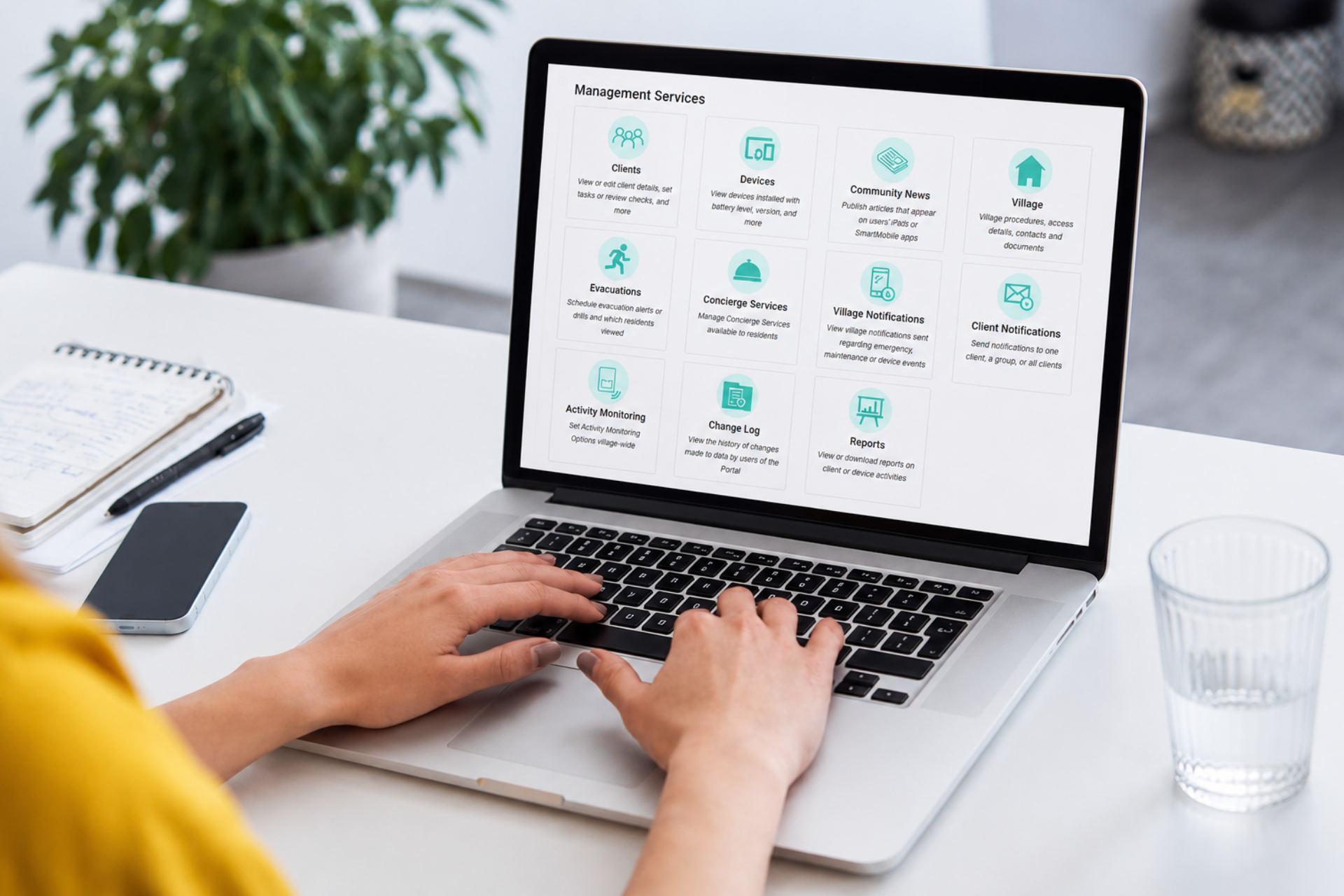
Staffing costs aren't the only place where the on-site vs remote comparison plays out; compliance oversight is another. Villages are required to run annual emergency evacuation drills and maintain reliable emergency call systems in every unit and common area. Proving that on an ongoing basis, not just when an auditor asks, takes real admin work.
INS LifeGuard's Manager's Portal gives village managers direct oversight of exactly this: a live dashboard of alarm activations and response times, device and connection status across every unit, and a full record of evacuation drills, including who received the alert and who acknowledged it. Reports on activations, low device usage, and notifications can be generated and scheduled by the village itself, giving managers ready evidence of active safety management whenever it's needed, rather than having to reconstruct it after the fact.
Many providers charge for this level of portal access, or don't offer it at all. INS includes full Manager's Portal access as standard, at no extra cost, with as many staff logins as a village needs.
Trusted by Residents When It Matters Most
"I became unwell while away from home and was hesitant to reach out in the middle of the night, but the help I received was second to none. From the midnight support call to the follow-ups the next day, I felt truly cared for." — Kevin D.
"Roz stayed on the phone with her the entire time, ensuring she remained calm and safe until she was back inside." — on team member Roz's support for a resident locked out of her unit
"Big shout out to the team for the incredible work you do every day." — Jenny D., on the team's help with a recent alarm
"I don't know what I would have done without you." — Pamela, on the care provided during a medical emergency
Why Villages Are Choosing INS LifeGuard
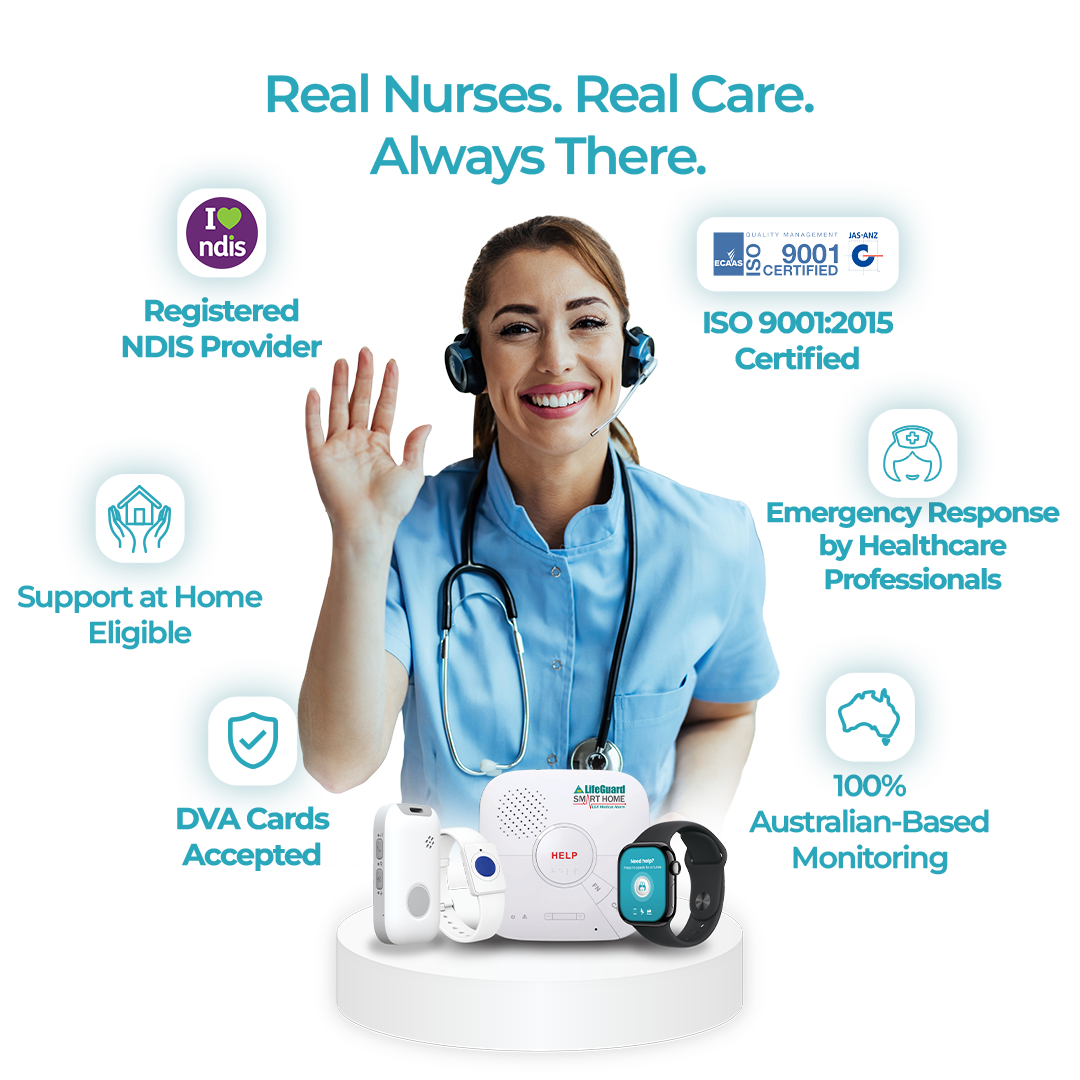
INS LifeGuard's Emergency Response Centre is staffed entirely by qualified nurses, not a generic call centre, meeting AS4607 and RCM certification requirements and holding ISO 9001:2015 certification. As a PERSL member, INS also commits to the industry's Code of Practice and Guidelines on top of the Australian Standard itself.
Get the Full Picture for Your Village
Curious what 24/7 nurse-monitored emergency response could look like for your village, and where the cost savings actually land? Book a meeting with our Business Development team to talk through your village's specific needs.
Related Articles
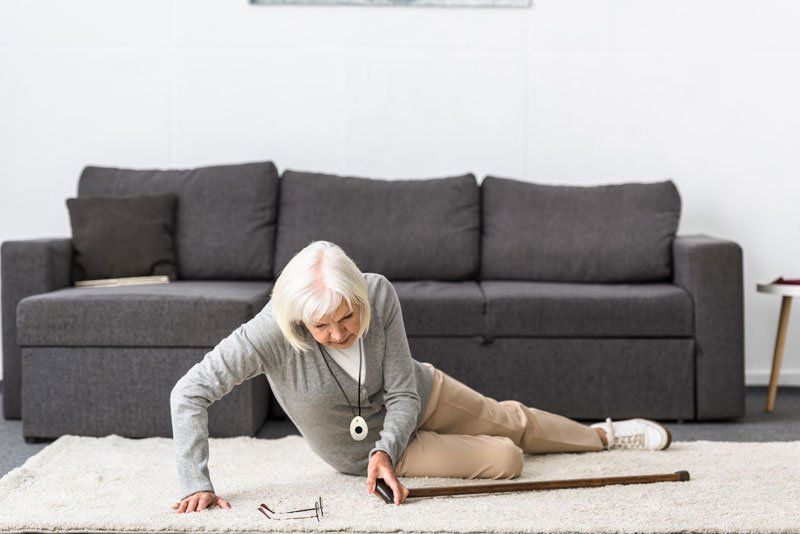
Learn about fall prevention in aged care, fall management strategies, risk factors and how personal alarms and medical alert systems can support older Australians.

Learn the early signs and symptoms of Motor Neurone Disease (MND), how it progresses, and practical ways to support independence and safety at home.

Learn how people with Motor Neurone Disease can receive priority access to Support at Home and AT-HM funding for aged care support in Australia.
About
INS LifeGuard is the only 24/7 nurse on-call personal and medical monitoring in Australia. We provide monitoring technology for both in the home and on the go and can also monitor other provider's equipment. Our services are suitable for anyone wanting support to stay independent such as the elderly, those with medical conditions and disabilities plus enhancing safety and security for lone workers.