
Have a Question?

Confused About Assistive Technology Funding? You're Not Alone.
INS LifeGuard • July 29, 2026

If you've been trying to work out how to get funding for a personal alarm or other assistive technology through the new Support at Home program, and you've come away more confused than when you started, it's not you. It's the system.
Since November 2025, assistive technology through the new Support at Home program has been funded through a dedicated pathway called the AT-HM scheme, sitting inside the broader Support at Home program. It was meant to make things simpler for older Australians who want to keep living independently at home. In practice, industry groups and clinicians say it's doing the opposite.
This guide covers funding through the Support at Home program and the AT-HM scheme. If you're on CHSP, your funding pathway works differently; speak with your provider directly.
What's actually going wrong
Occupational Therapy Australia has been surveying occupational therapists for the past six months, and the results aren't pretty. The vast majority of clinicians surveyed are dissatisfied with how the AT-HM scheme is working, and the reasons come up again and again:
- Funding decisions take too long. Many older Australians are assessed as needing assistive technology well before any funding is actually available. Clinicians report that by the time approval comes through, months later, the person's needs have often changed.
- Providers are hesitant to take on new clients. Some assistive technology and home modification providers are reluctant to work with people who haven't yet been allocated a full Support at Home package, partly because of cost, and partly because the registration and assessment pathways are genuinely confusing, even for the professionals.
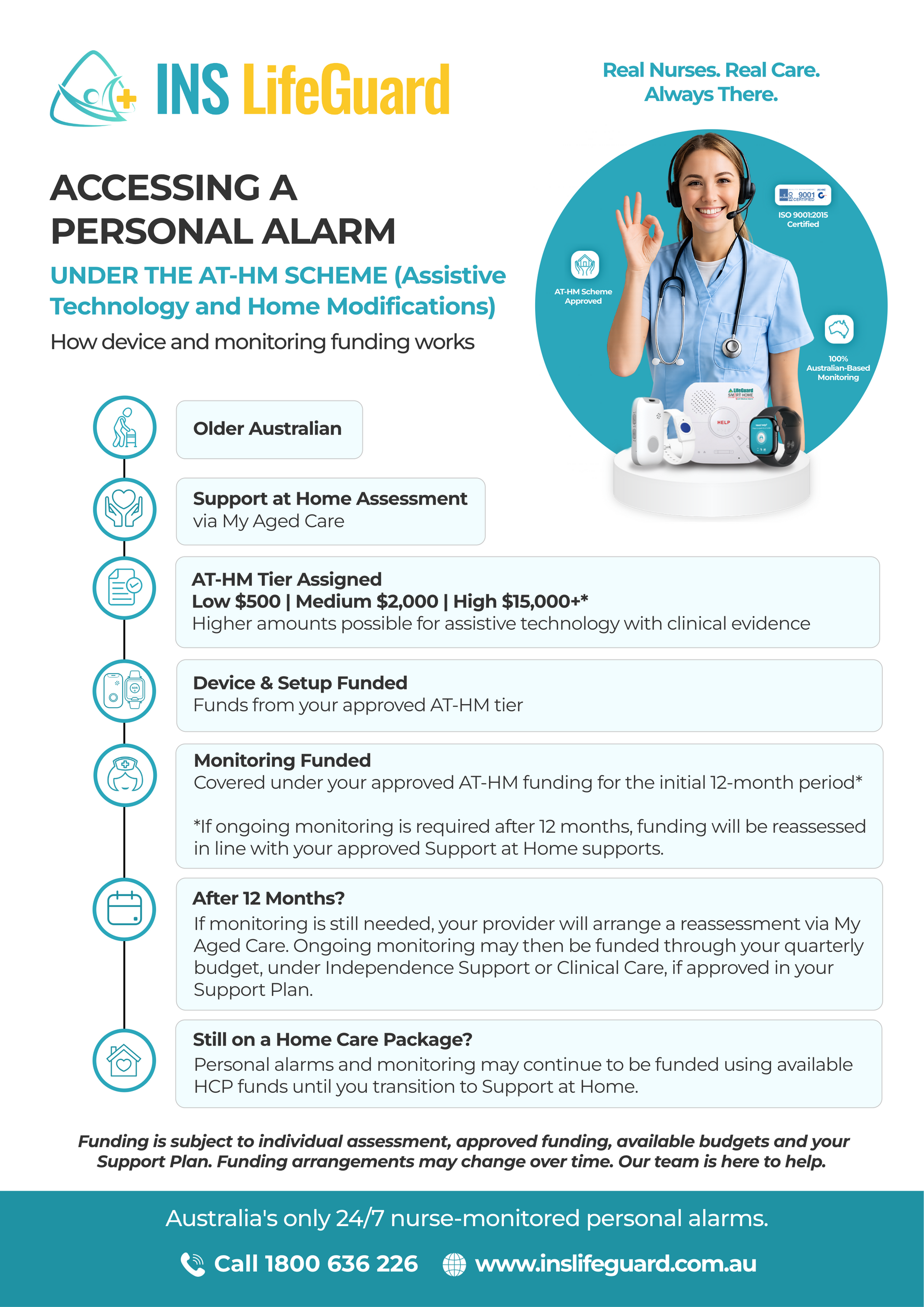
- The funding caps are tight. The lowest tier for assistive technology support is just $500 for 12 months, which barely covers an occupational therapy assessment, let alone the equipment itself.
- Reapplying for essential, ongoing equipment. Items like personal alarms aren't a one-off need. They're something people rely on continuously. But under the current system, they can still get caught up in support plan reviews and reapplication processes, adding unnecessary delay to something that should just be part of an ongoing budget.
Industry voices, including Assistive Technology Suppliers Australia and Allied Health Professions Australia, have been vocal about the need for a clear, consistent operational guide so that assessors, providers and families all know exactly what steps are required and what evidence is needed. Right now, that clarity doesn't exist, and it's older Australians and their families who are left carrying the confusion.
Where this leaves you
If you're trying to secure funding for a monitored personal alarm, or any other piece of assistive technology, you're navigating a system that even the professionals inside it are calling unnecessarily complex. Multiple assessment pathways, unclear registration requirements, and drawn-out approval times mean it's easy to get stuck, or to give up before you get the support you're entitled to.
You shouldn't have to become an expert in aged care policy just to keep yourself or someone you love safe at home.
One Thing That Trips Up Almost Everyone
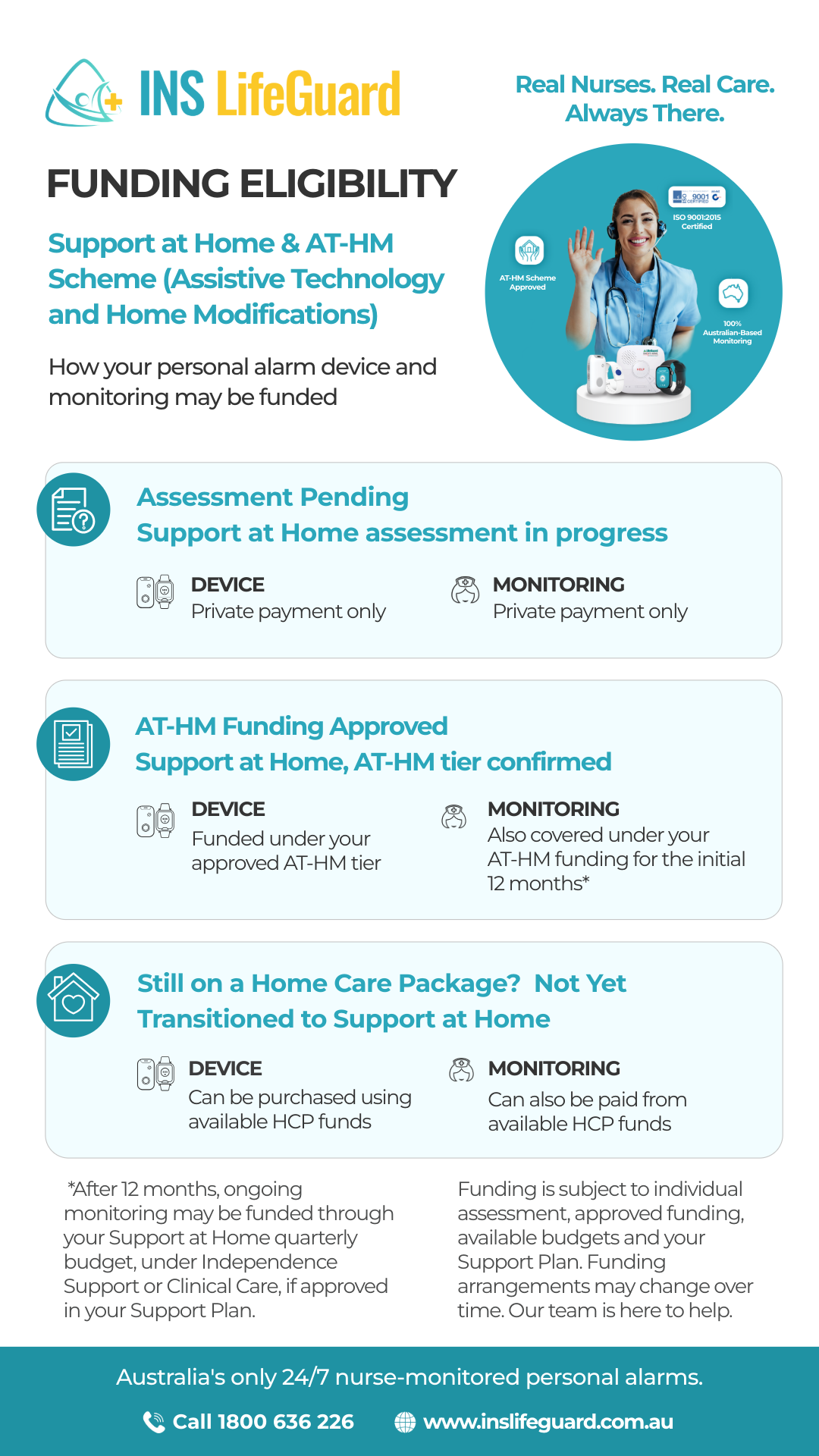
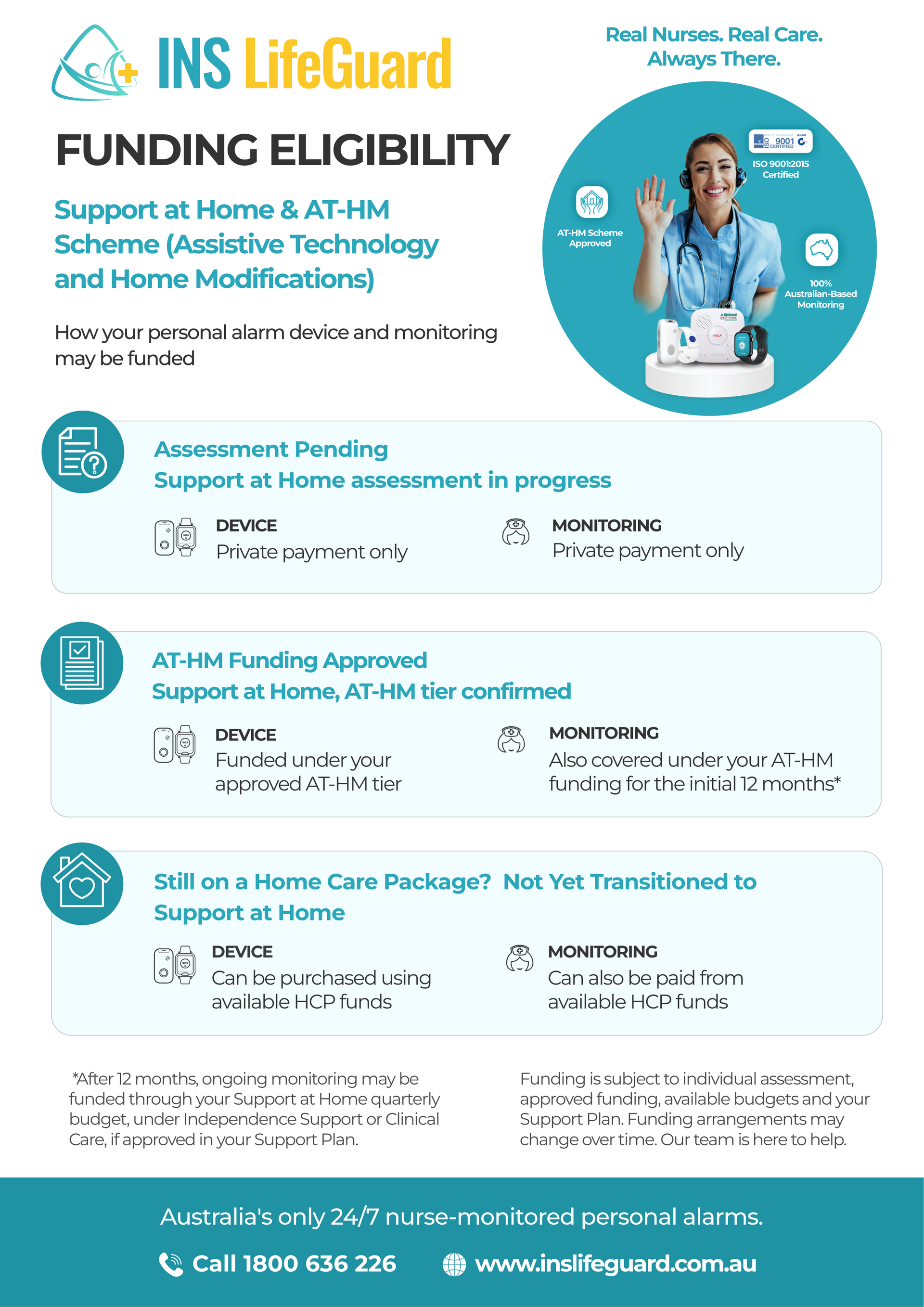
Getting your personal alarm approved under AT-HM is actually more generous than a lot of people realise, and also more time-limited than it might first appear.
- For the first 12 months, your AT-HM funding covers both the device and the ongoing 24/7 nurse monitoring, as one combined allocation. You don't need a separate approval for monitoring during this period.
- After 12 months, if you still need monitoring, you'll need a reassessment through My Aged Care. From there, ongoing monitoring may be funded through your quarterly budget, under Independence Support or Clinical Care, if it's approved as part of your Support Plan.
This is why timing matters: the confusion usually isn't about whether monitoring is covered, it's about what happens once that first 12-month period runs out, and making sure a reassessment happens before funding lapses, not after.
Accessing a Personal Alarm Under AT-HM
Frequently Asked Questions
Is a personal alarm covered under AT-HM?
Yes, personal alarms are classified as assistive technology and are funded through the AT-HM Scheme, separate from your everyday support budget.
What's the difference between the device funding and the monitoring funding?
See "One Thing That Trips Up Almost Everyone" above: device and monitoring are funded through two completely separate mechanisms.
How long does approval usually take?
This varies by provider and assessment timing. If you're waiting on approval, private payment is available in the meantime, with the option to transition to funded coverage once approved.
What do I do if I'm still stuck?
Check the tables above against your own situation first. If you're still not sure, ask below.
Still Have Questions About a Client's Funding?
Between eligibility, tiers, contributions and now the AT Loans scheme, it's a lot to keep across for every client. Check the guide above first, and if you've got a specific case you're stuck on, send us the details and we'll get back to you.
Related Articles
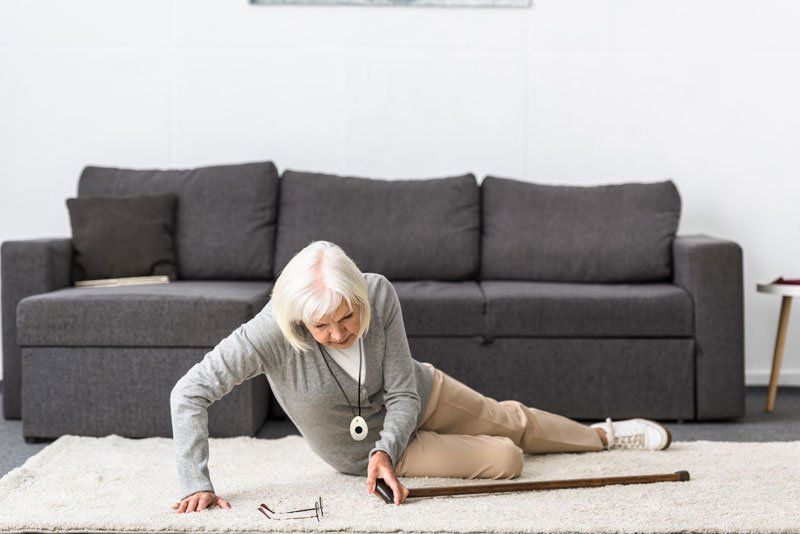
Learn about fall prevention in aged care, fall management strategies, risk factors and how personal alarms and medical alert systems can support older Australians.

Learn the early signs and symptoms of Motor Neurone Disease (MND), how it progresses, and practical ways to support independence and safety at home.
Learn how people with Motor Neurone Disease can receive priority access to Support at Home and AT-HM funding for aged care support in Australia.
About
INS LifeGuard is the only 24/7 nurse on-call personal and medical monitoring in Australia. We provide monitoring technology for both in the home and on the go and can also monitor other provider's equipment. Our services are suitable for anyone wanting support to stay independent such as the elderly, those with medical conditions and disabilities plus enhancing safety and security for lone workers.