
Have a Question?

Stuck in Hospital Waiting for Aged Care? Australia's Bed Block Crisis Explained
INS LifeGuard • September 18, 2026

Every day across Australia, older patients who are medically ready to leave hospital remain there waiting for a suitable home care service, in-home support, or an aged care bed. This isn't just an inconvenience. It has profound consequences for the individual, their family, the hospital system, and aged care services.
What’s Happening?
- There are now over 3,600 older Australians stranded in hospital nationwide waiting for an aged care placement, up from over 2,700 just a year earlier.
- In South Australia alone, the state government spent more than $123 million in 2025-26 caring for patients stuck in hospital waiting for an aged care bed, at an average of $1,318 per patient per day.
- Australia needs around 10,000 new aged care beds a year to meet demand, but only about 800 were built last financial year, and several major providers have recently shelved planned developments due to funding pressure.
- Families are being left to manage complex care at home. One woman recently shared her experience of there being no beds for her husband, being handed a blood pressure machine and told to monitor her husband's health herself, with no training or clinical backup.
Why It Matters
For the patient: Staying in hospital longer than necessary increases the risk of infection, physical decline, and emotional stress.
For hospitals: Bed shortages create a ripple effect, delaying surgeries and urgent care.
For families: Loved ones are often discharged into their care with little to no preparation, placing emotional and medical responsibility on people who aren't equipped for the role.
What’s Driving the Problem?
- Shortage of residential aged care beds and long waitlists.
- Under-resourced home care providers and delays in Support at Home assessments or availability.
- Gaps in transitional care and discharge planning.
- A lack of accessible, tech-enabled support solutions in the home.
How Nurse-Answered Alarms Are Helping Ease the Crisis
Nurse-monitored personal medical alarms are increasingly being used as part of the solution to Australia's bed block crisis. By providing a genuine clinical safety net at home, INS LifeGuard can give hospital discharge teams the confidence to safely send an elderly patient home earlier.
A major driver of bed block is that doctors are understandably reluctant to discharge a frail patient who lives alone or has no immediate support in place. Knowing a 24/7 Nurse On Call service through our Clinical Operations Centre is tracking that patient's health gives the treating team the clinical confidence to send them home.
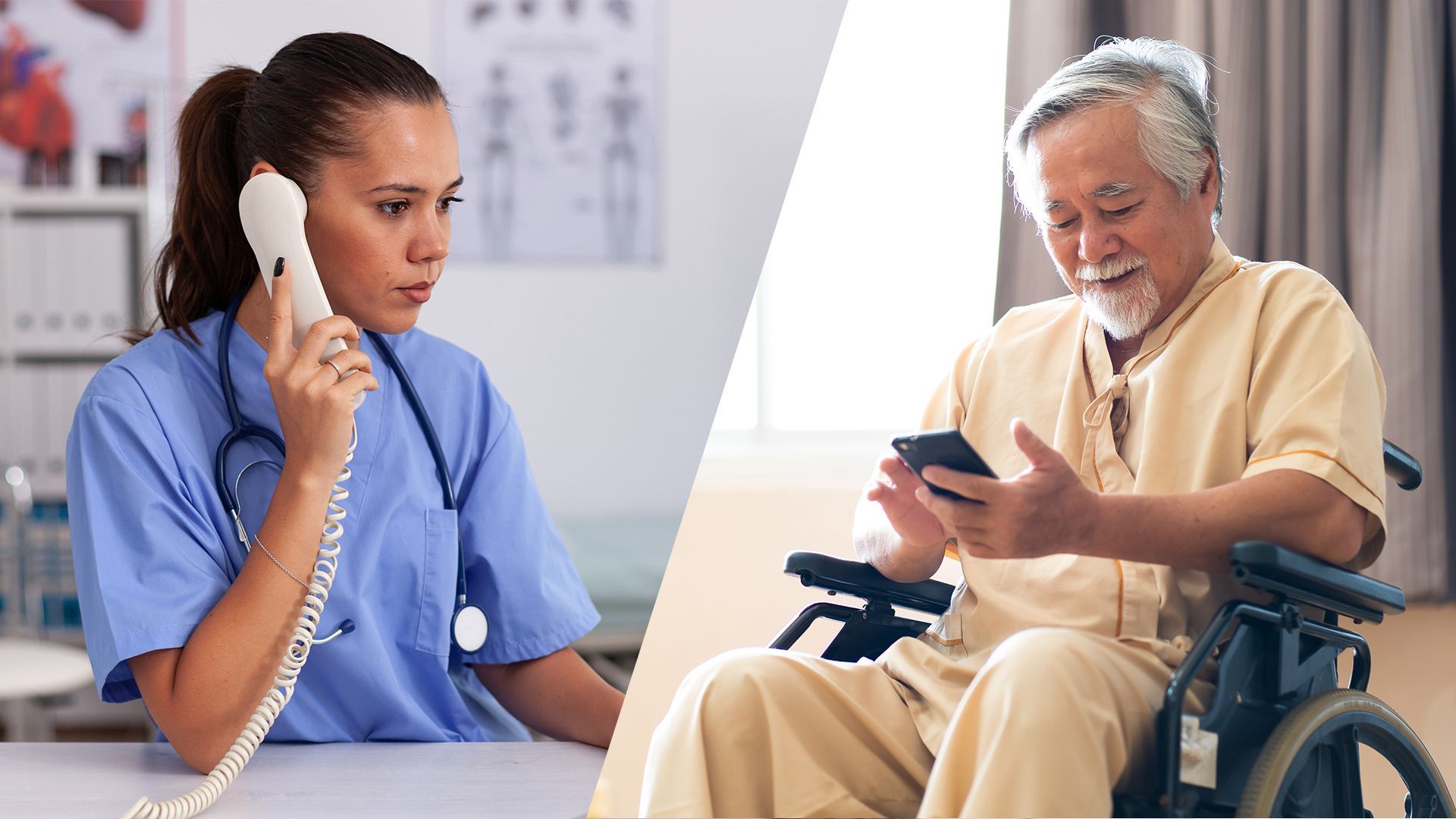
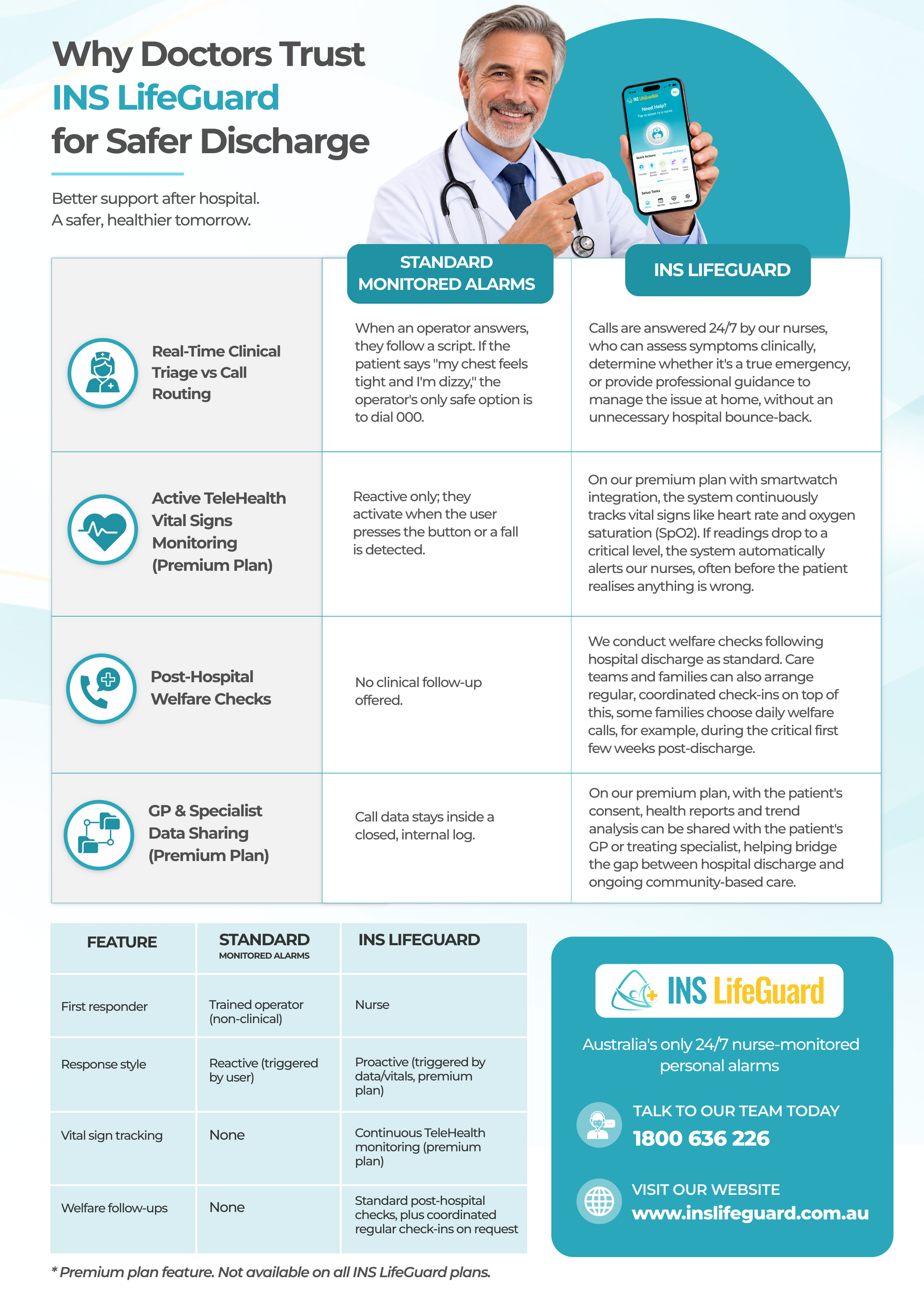
This is where the distinction matters most. Standard personal alarms typically connect to a call centre answered by trained customer service staff, not clinical professionals. INS LifeGuard is the only nurse-monitored personal alarm service in Australia, meaning the person answering your call can assess symptoms, triage a medical complaint, and check it against your health history in real time, often preventing an unnecessary ambulance callout or hospital re-presentation altogether.
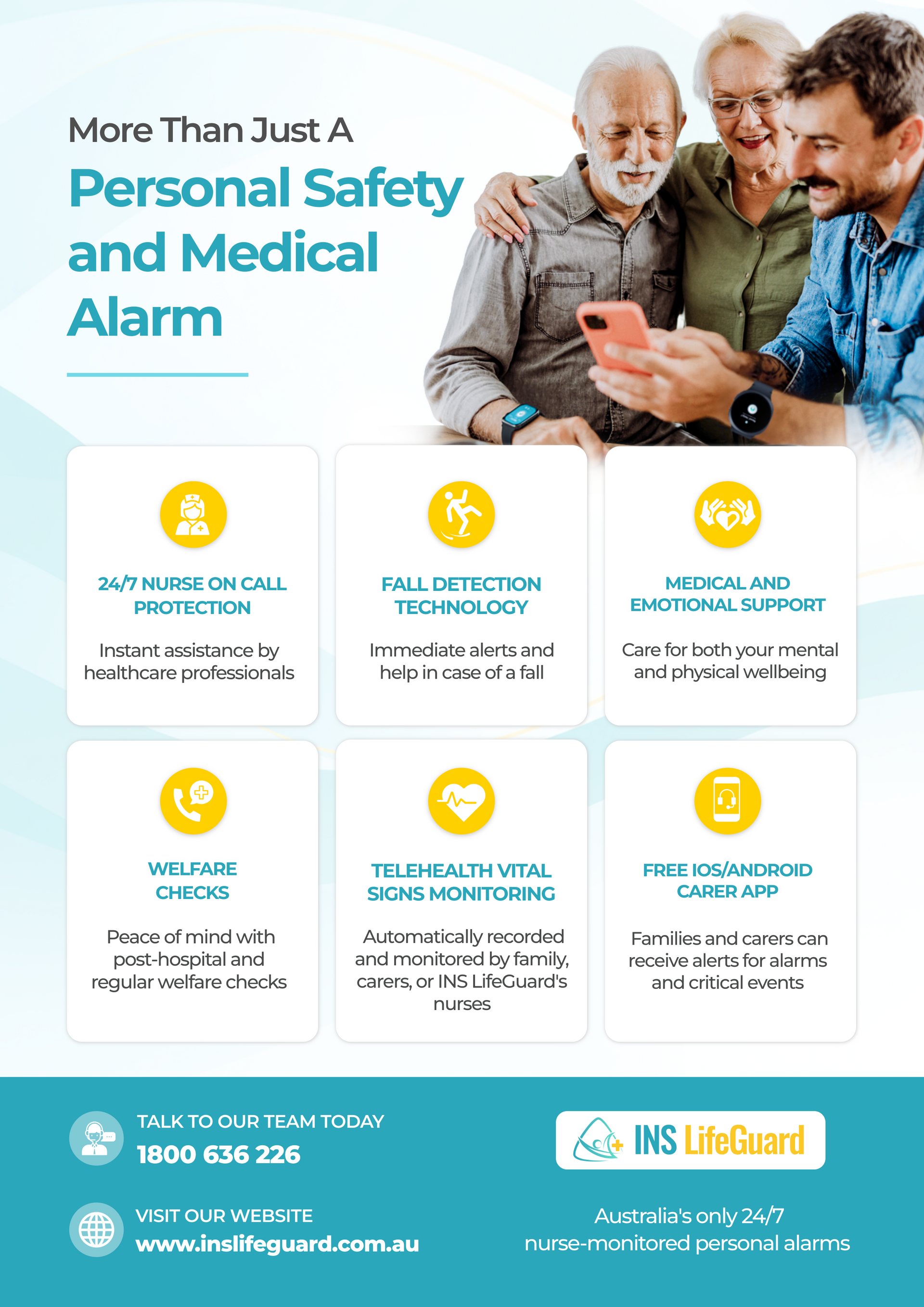
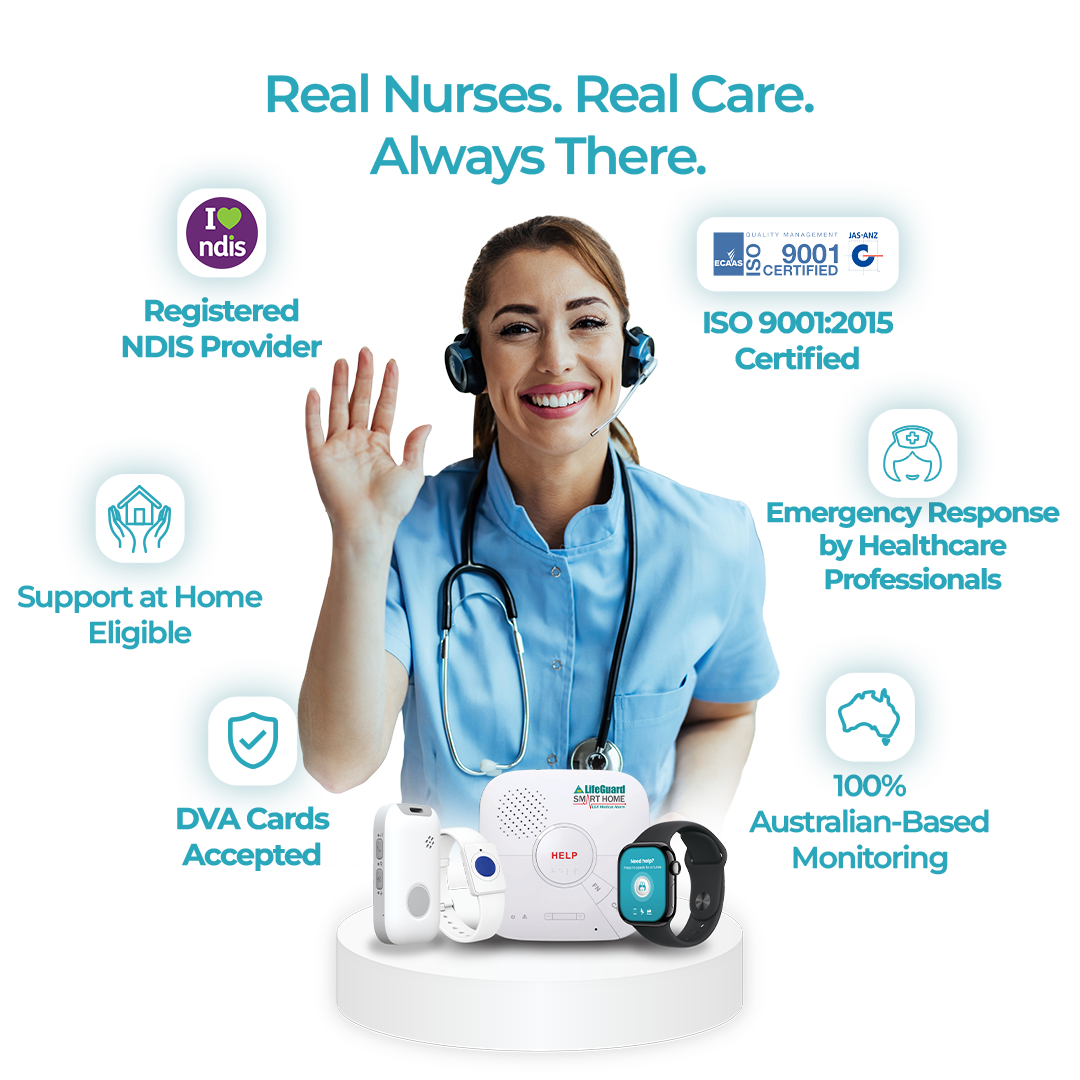
Every INS LifeGuard alarm, whether an in-home unit or an on-the-go mobile alarm, connects to a real nurse for clinical backup, not just an emergency contact list. For those using a compatible smartwatch, whether your own device or INS LifeGuard's own INS LifeGuardian® Watch, that clinical backup extends further: as shown above, TeleHealth Vital Signs Monitoring and Welfare Checks mean blood pressure, oxygen levels, and heart rate can be tracked automatically, giving our nursing team the chance to spot a decline early, before a manageable issue becomes another hospital admission.
Why Nurses on the Line Matter for Hospital Discharge
- Triage instead of automatic ambulance dispatch: if someone feels unwell at 2am, a standard call centre has to err on the side of calling an ambulance. A registered nurse can assess the symptoms, advise on medication, or arrange a GP visit the next morning, often avoiding an unnecessary trip back to emergency, which matters given the flow-on pressure bed block puts on ambulance ramping across the country.
- Managing complex post-hospital needs: patients discharged early to free up a bed often still need wound care, new medication management, or close monitoring of unstable vital signs. Our nurses can monitor telehealth data sent through the alarm unit and manage that recovery remotely.
- Hospital-level confidence: discharge teams are more willing to release a higher-risk patient early when they know a genuine clinical professional, not a general customer service team, is monitoring them at home.
Where INS LifeGuard Can Help
INS LifeGuard provides real solutions to help ease these pressures:
- Nurse-monitored personal alarms and smartwatches for safety and clinical backup at home.
- Vital signs monitoring to track health post-discharge, without relying solely on family.
- 24/7 access to real nurses, helping reduce unnecessary re-admissions.
- Bridging support for families while permanent care or services are being arranged.
For hospitals and aged care providers, a personal alarm through INS LifeGuard offers a way to support safer early discharge and continuity of care at home without overwhelming families or delaying the patient journey.
Funding the Solution
Patients transitioning home, or families managing a long wait for a placement, don't need to fund this privately.
- The device itself: hardware like pendants and smartwatches can be funded under the AT-HM (Assistive Technology) scheme through Support at Home.
- Ongoing monitoring: AT-HM actually covers the device and the monitoring together for the first 12 months. After that period, ongoing monitoring can continue to be funded through the person's quarterly budget, under Independence Support or Clinical Care.
READ TRANSCRIPT
In His Own Words: Claude Raffin, Managing Director, The INS Group
"I'm Claude Raffin, the managing director of the INS Group. We've been around since 1984 and I'm really proud of what we've achieved over that time. We originally started as a nursing service, employing registered nurses and providing services in people's own homes. We provide services ranging from in-home personal response systems to telehealth products and services to employee health and safety services and products. But our DNA has always been healthcare, and that's something I'm very proud about. Everything we do comes from that foundation of providing health and wellness to our customers.
Some of the points of difference that we have to our competitors is that our call centre is staffed, and is unique in the industry, but it's staffed by highly qualified healthcare professionals. It allows us to provide better services to our clients in terms of when we respond to an emergency, but also allows us to provide wellness services, keeping people away from needing to press an emergency button.
What I like the most about INS is when I was working in the public system, there was a lot of our clients, patients, that were hospitalised for months, for years, because they couldn't get into an aged care, or it just wasn't safe enough for them to go back home and live by themselves. So LifeGuard serves as a shield. It empowers individuals. And one of the things I'm most proud about is some of the feedback we're getting is the confidence we are giving back to people.
Some people who have lacked the confidence to go out and about to leave their home because they may have had a fall previously, or they may not be feeling the best, they may be living by themselves, but the knowledge that they've got us with them wherever they go empowers them to get back to living life."
In Her Own Words: Sammy, Registered Nurse at INS LifeGuard
"When I came across INS and saw what they were doing, it sort of just caught my eye, because they are filling a gap in the whole healthcare system. We do get a lot of clients in hospital, they get stuck in hospital, they're in a situation where they're in between, they're not safe at home by themselves. So this gap needed to be filled up. And when I came across INS and saw what they're doing, I was impressed, and I was like, I need to be a part of this.
I think INS makes them independent, and a lot of our clients, when they call us and we get connected with them, they tell us that it feels so good to know that someone is watching over me. And if anything happens, I have someone to help me. It feels great."
A Smarter Step-Down Solution
As Australia's aged care system continues to evolve, we need to think beyond beds. With the right monitoring and support in place, older Australians can return home safely and confidently earlier, and hospitals can free up capacity where it's most needed.
Need help planning safer discharges or post-hospital care options? Call 1800 636 226 today to learn more or speak to our friendly team.
FAQs: Early Discharge, Aged Care Delays & Support at Home
Why won’t the hospital discharge my elderly parent?
Hospitals may delay discharge if no safe or appropriate care arrangement is available at home or in aged care. This often happens due to bed shortages, waitlists, or gaps in transitional care.
Can I say no to taking someone home after discharge?
Yes, you can raise concerns if you don’t feel prepared or safe to care for someone post-discharge. Hospitals have a duty to ensure safe discharge plans, and you can request further assessment or support.
How can INS LifeGuard help with early discharge?
We offer nurse-monitored safety alarms with fall detection and clinical backup, plus vital signs tracking and real-time health monitoring through a compatible smartwatch. Together, this helps families and providers support recovery at home safely, with a real nurse behind it.
What is a "bed-blocked" patient?
This refers to someone who no longer needs acute hospital care but remains in hospital due to a lack of available support or placement.
How can INS LifeGuard help with early discharge?
We offer nurse-monitored safety alarms, fall detection, vital signs tracking, and real-time health monitoring that help families and providers support recovery at home — safely and with clinical backup. INS LifeGuard can bridge that gap by monitoring and responding to health issues at home.
What happens if there's no aged care bed available?
Sometimes, hospitals discharge patients into family care while waiting for an aged care place. This can be risky without proper support. INS LifeGuard can bridge that gap by monitoring and responding to health issues at home.
A Smarter Step-Down Solution
As Australia’s aged care system continues to evolve, we need to think beyond beds. With the right monitoring and support in place, older Australians can return home safely and confidently earlier, and hospitals can free up capacity where it’s most needed.
Need help planning safer discharges or post-hospital care options? Call 1800 636 226 today to learn more or speak to our friendly team.
About
INS LifeGuard is the only 24/7 nurse on-call personal and medical monitoring in Australia. We provide monitoring technology for both in the home and on the go and can also monitor other provider's equipment. Our services are suitable for anyone wanting support to stay independent such as the elderly, those with medical conditions and disabilities plus enhancing safety and security for lone workers.