
Have a Question?

Choosing the Right Personal Alarm in Australia: Features, GPS Safety, and Contract Traps to Avoid
INS LifeGuard • February 3, 2026

Are you an older person wanting to live independently? A lone worker needing protection in the field? Someone with a disability or medical condition requiring support? A personal alarm can be life-changing, but only if you choose the right one.
With countless options flooding the market, it's easy to get lost in all the noise. Which features actually matter? Who answers when you press the button: a nurse or a call centre operator? And how do you avoid being trapped in long-term contracts with hidden fees?
This guide cuts through the clutter. You'll learn which features are essential, why GPS tracking matters, and how to spot contract traps that lock you in. Most importantly, you'll discover how to find a solution that prioritises both your safety and your freedom, without the fine print.
Understanding Personal Alarms
Personal alarms and medical alert devices are often used interchangeably. While the wording can differ, both refer to technology that helps a person call for help quickly when something goes wrong. In most cases, they serve the same purpose, with modern devices combining features from both categories.
What is a Personal Alarm?
Personal alarms are devices that give you the ability to get help if anything bad happens. Whether you fall down at home, feel unsafe, get lost, become injured or encounter any problems that require immediate help, all you have to do is press the emergency button on the device. The good news is that modern personal alarms work regardless of where you are. Most have GPS tracking enabled, providing reliable location-based data to your loved ones or emergency personnel so they can find you quickly.
What Can Medical Alert Devices Do?
Medical alert devices offer the same core function as personal alarms, with added health and monitoring features. Depending on the model, they may be able to:
- Locate a loved one when they’re not at home
- Detect when a fall has taken place
- Remind them to take medication or attend appointments
- Connect to an Emergency Response Centre 24/7
- Integrate with smart products around the home
- Monitor health and wellness
In practice, many modern devices combine personal safety, location tracking, and health support in one system. INS LifeGuard devices are a clear example of this, which is why the terms personal alarm and medical alert device are often used to describe the same type of solution.
If you want this to lean more consumer-friendly, more clinical, or more marketing-led, I can adjust the tone easily.
Who Needs a Personal Alarm?
Before you make a purchase, you should be certain that a personal alarm is necessary. In these situations, a medical alert device is absolutely essential:
- If they live alone: Without immediate support nearby, quick access to emergency services is crucial
- If they have medical or health concerns: Chronic conditions or health vulnerabilities require reliable emergency access
- They don’t have friends or family who live close by: Geographic isolation makes immediate help difficult
- Your loved one is hard to get in contact with: If regular check-ins are difficult, a monitoring system provides reassurance
- They take medication that has side effects: Medications that can cause dizziness, confusion or other issues increase fall risk
- If they are prone to falling: Previous falls or balance issues make fall detection features essential
- They are recovering from a fall or condition such as a stroke: Recovery periods often involve increased vulnerability and require monitoring
Essential Features to Consider
Once you know why you need a medical alert device, the next step is to examine the features closely. This will give you an indication of how the device can be used in certain situations, as well as how reliable it is. Here are the essential features you should consider:
1. Who is Answering the Emergency Call?
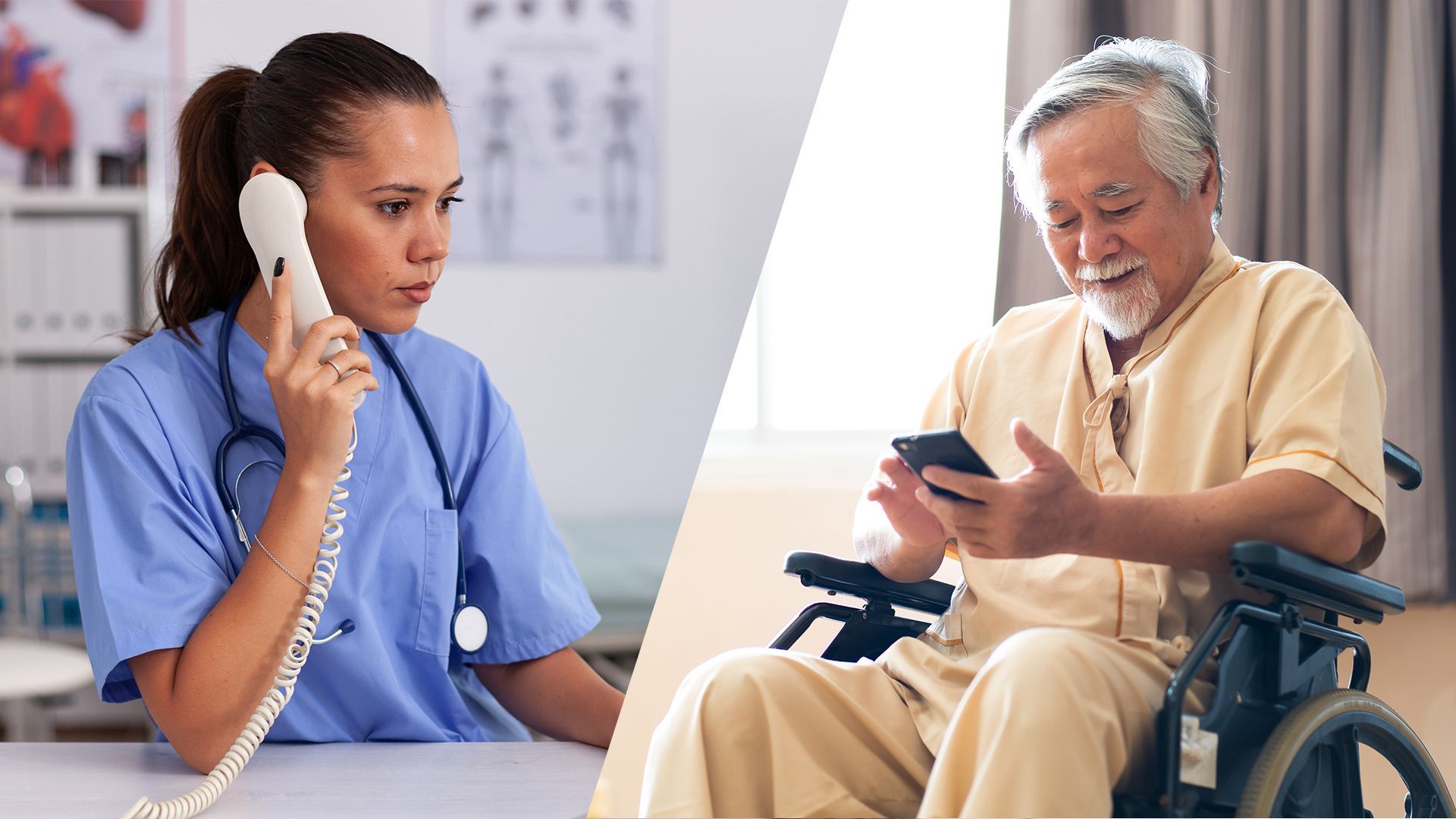
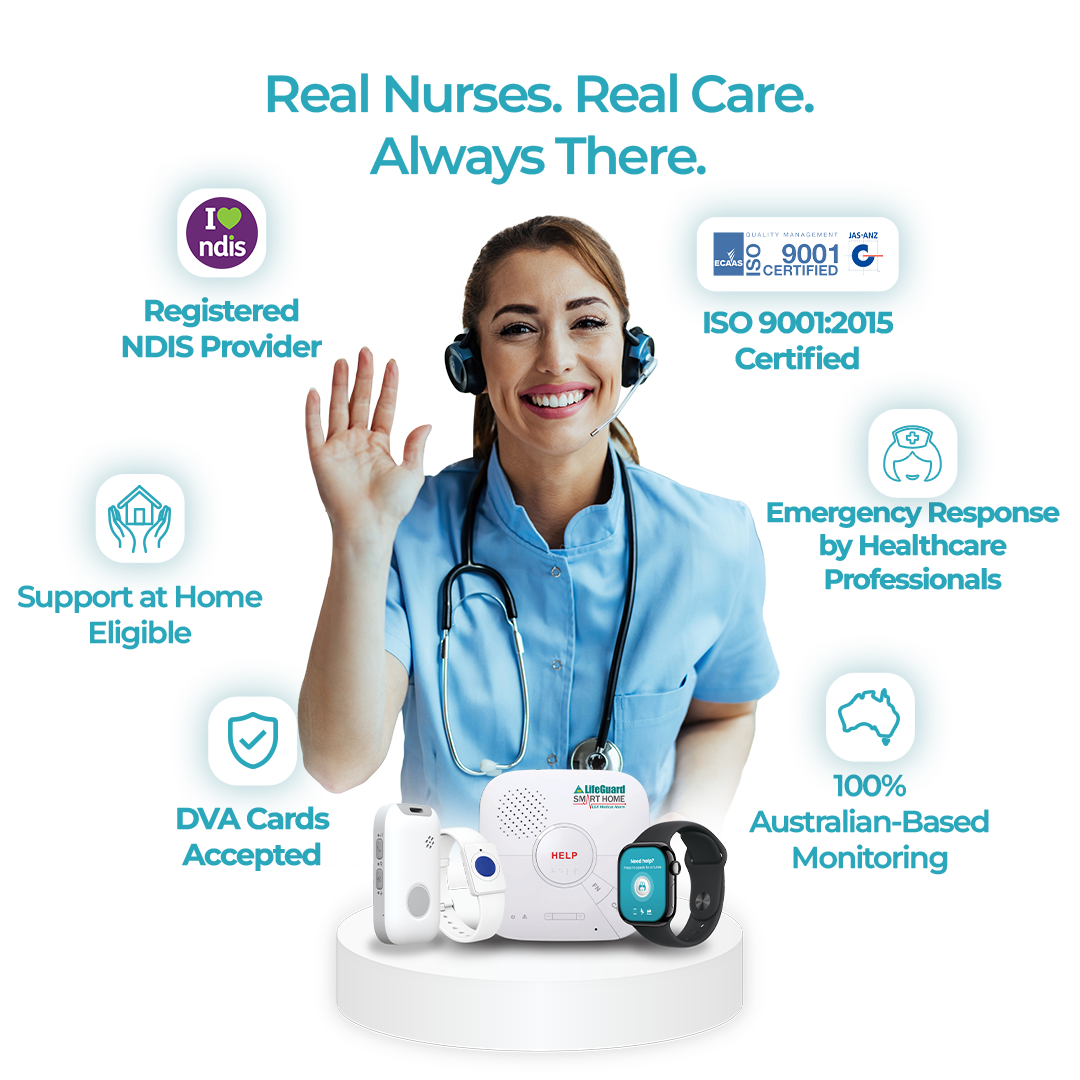
This is the most important question to ask. Are the responders qualified healthcare professionals who can provide expert guidance and support? Many medical alarm suppliers route calls to call centre operators rather than nurses. At INS LifeGuard, every alarm is handled by highly qualified nurses, not call centre operators. This means your loved one receives expert clinical guidance whenever needed, not just a transfer to emergency services.
2. Water Resistance
Can the device be used in showers or bathtubs? Many falls occur in wet environments, so water-resistant devices provide continuous protection. Look for devices with IP67 waterproof ratings or similar.
3. Battery Life
Does it have a long battery life in case it doesn’t get charged one night? Reliable battery performance is crucial for continuous protection. Consider devices with multi-day battery life and low-battery alerts.
4. Connection Types
What connection types does it use, such as landline or 4G? Modern devices should offer reliable 4G connectivity that works anywhere in Australia, not just at home. This is particularly important for mobile personal alarms.
5. Backup Power
Are there backup batteries in case of power outages? In-home systems should continue working even when the power goes out, providing uninterrupted protection.
6. Mobility & Coverage
Can the device be used outside of the home? Look for devices that offer both in-home and mobile coverage. This flexibility allows your loved one to maintain independence whilst staying protected wherever they go.
7. GPS Technology
Does it come with GPS technology in case your loved one needs to be located? GPS tracking is essential for mobile devices and provides peace of mind when your loved one is out and about. We’ll explore this critical feature in depth in the next section.
The Importance of GPS Tracking for Personal Alarm Safety

In today’s fast-paced world, personal safety is paramount, particularly for older individuals or those with specific health needs and mobility challenges. GPS tracking technology has become an essential tool for enhancing safety and providing peace of mind to users and their families.
Understanding GPS Tracking
Global Positioning System (GPS) tracking utilises satellite technology to pinpoint the location of a device in real time. This capability allows caregivers, family members and emergency response services to monitor a person’s whereabouts, providing reassurance that help is readily available when needed. For individuals who may experience cognitive challenges, health issues, or work alone, GPS tracking can be a lifeline.
How GPS Tracking Enhances Safety
Real-Time Location Monitoring
GPS tracking enables caregivers and family members to monitor the real-time location of individuals using mobile personal alarm devices. This feature is particularly vital for those who may wander, become disoriented, have fallen or feel unsafe, allowing for rapid responses in emergencies.
Geofence Alerts
INS LifeGuard products come equipped with geofencing capabilities, which allow users to set predefined safe zones. If an individual crosses these boundaries, caregivers receive instant notifications, enabling them to act swiftly to secure the user’s safety.
Emergency Response
In the event of an emergency, GPS tracking helps emergency responders locate individuals quickly. This is particularly important for those who may be unable to communicate their location due to health issues or other circumstances. Our team of trained nurses, available 24/7, can access users’ health information and GPS location, providing informed, expert support in every situation.
Peace of Mind for Families
Knowing that a loved one is being monitored through GPS tracking provides invaluable peace of mind for families. They can trust that help is available at the touch of a button, whether their loved one is at home or out and about.
Avoiding Contract Traps: The Hidden Costs of Long-Term Commitments
When choosing a medical alarm system, the last thing you need is to feel trapped by long-term commitments. Unfortunately, many suppliers lure customers with low upfront costs or attractive hardware pricing but require lengthy monitoring contracts that limit flexibility.
Common Contract Traps to Watch For
1. Minimum Contract Terms
Many providers require 12, 24 or even 36-month minimum contracts. This means you’re locked in even if your needs change, the service doesn’t meet expectations, or your loved one moves to aged care.
2. Early Termination Fees
Breaking a contract early often results in substantial fees. These can amount to hundreds of dollars, effectively penalising you for changing your circumstances.
3. Hidden Fees and Fine Print
Watch for activation fees, equipment return fees, upgrade charges and other costs buried in the fine print. What looks like affordable monitoring can quickly become expensive.
4. Automatic Contract Renewals
Some contracts automatically renew for another full term unless you cancel within a specific window. Missing this deadline can lock you in for another year or more.
The INS LifeGuard Difference: No Lock-In Contracts
At INS LifeGuard, we believe there’s a better way to provide peace of mind without locking you into restrictive agreements. Here’s what sets us apart:
No Minimum Contract Terms
Unlike many competitors, our monitoring services are available without long-term commitments or minimum terms. You’re free to adjust your service as your needs change. This flexibility means you’re never trapped by circumstances.
Transparent Pricing
We offer competitive, straightforward pricing for both equipment and monitoring services. There are no hidden fees, fine print or surprises - just transparent and honest costs. You know exactly what you’re paying for from day one.
24/7 Nurse Response
Every alarm is handled by highly qualified nurses, not call centre operators. This provides expert guidance and support whenever needed, giving you clinical-grade care rather than just an emergency transfer service.
Flexibility to Scale
As needs evolve, so can your service. Our no-lock-in policy allows you to scale up or down without penalty. Whether you need to add features, switch devices or pause service temporarily, you have complete control.
Why Flexibility Matters
Medical alarms aren’t just about technology. They’re about trust and care. With INS LifeGuard, users benefit from:
- Immediate access to healthcare professionals: A button press connects users directly to our skilled nurses for emergencies or clinical advice
- Flexibility as needs change: Whether health improves, declines or circumstances change, you can adjust your service without penalty
- Enhanced confidence: Knowing that help is always within reach fosters peace of mind for users and their families
INS LifeGuard’s Range of Personal Alarm Solutions
INS LifeGuard offers a comprehensive range of personal alarm devices and monitoring solutions. Whether you need in-home monitoring, mobile protection or a combination of both, we have options to suit every need. All our devices connect to our 24/7 Emergency Response Centre, staffed with highly qualified, experienced nurses and healthcare professionals.
Our Featured Solutions
| Feature | Product Image | Details | Monthly Cost | Package includes | Product Link |
|---|---|---|---|---|---|
| LifeGuard SmartHome LGX | 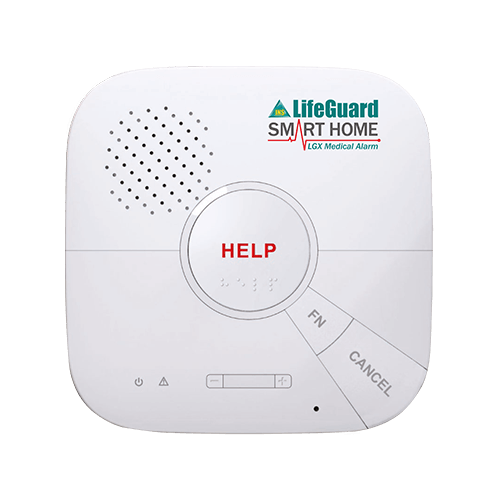 |
This product is rented | As low as $38.20/monthly | 1 Standard Transmitter (can swap for optional Fall Sensor) |
Read More |
| SmartLink Medi Guardian MKII 4G | 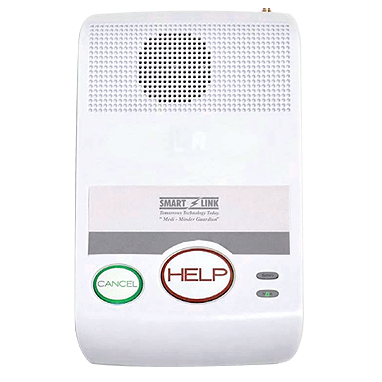 |
This product is rented | As low as $38.20/monthly | 1 Standard Transmitter (can swap for optional Fall Sensor) |
Read More |
| INS LifeGuardian® Mobile App | 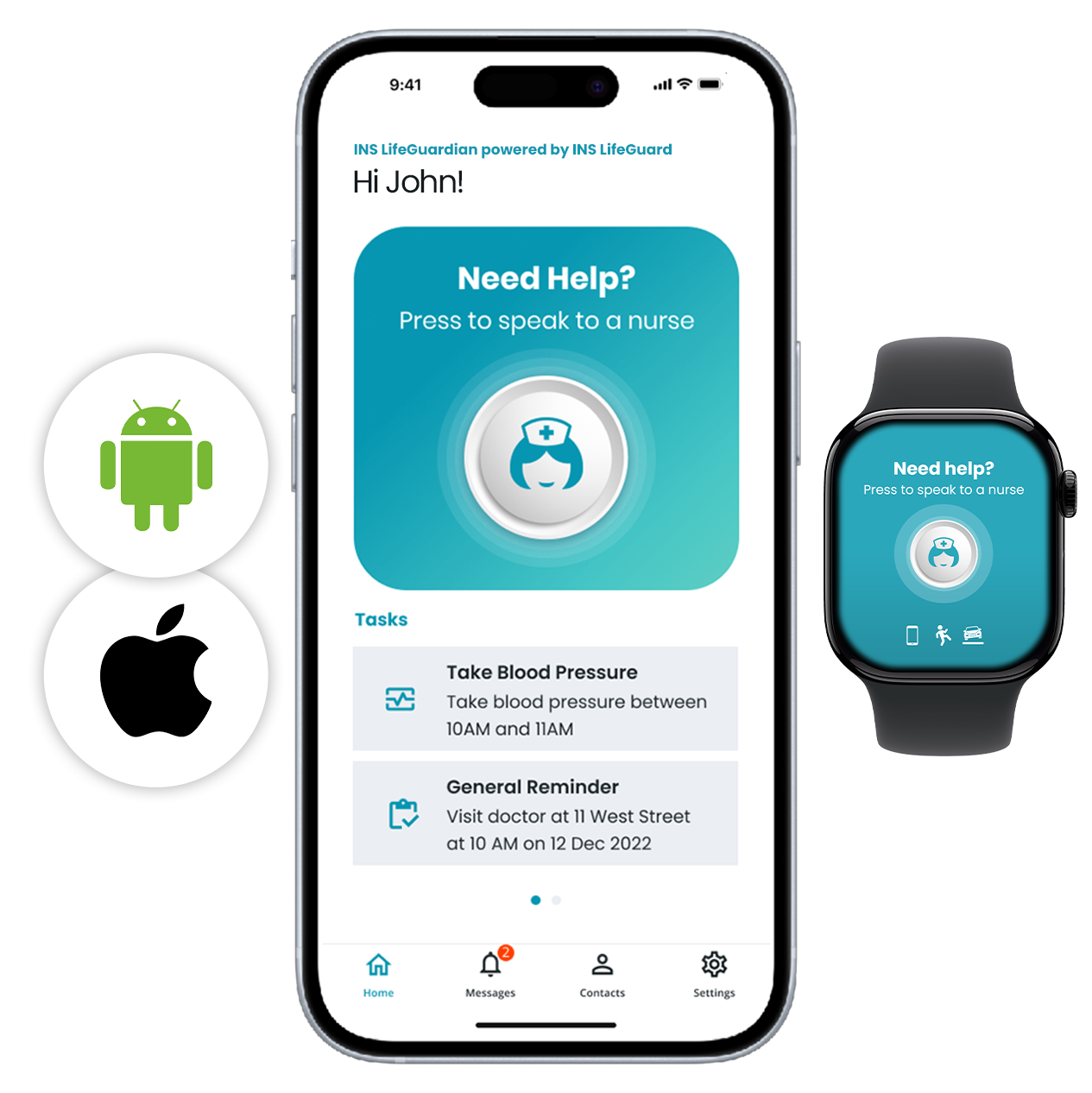 |
App is free to download for iOS or Wear OS | As low as $9.99 for customers with a current in-home monitoring service (Essentials Plan) As low as $29.99 for customers with a current in-home monitoring service (Premium Plan) |
30-day Free Trial | Read More |
| INS LifeGuardian® Watch | 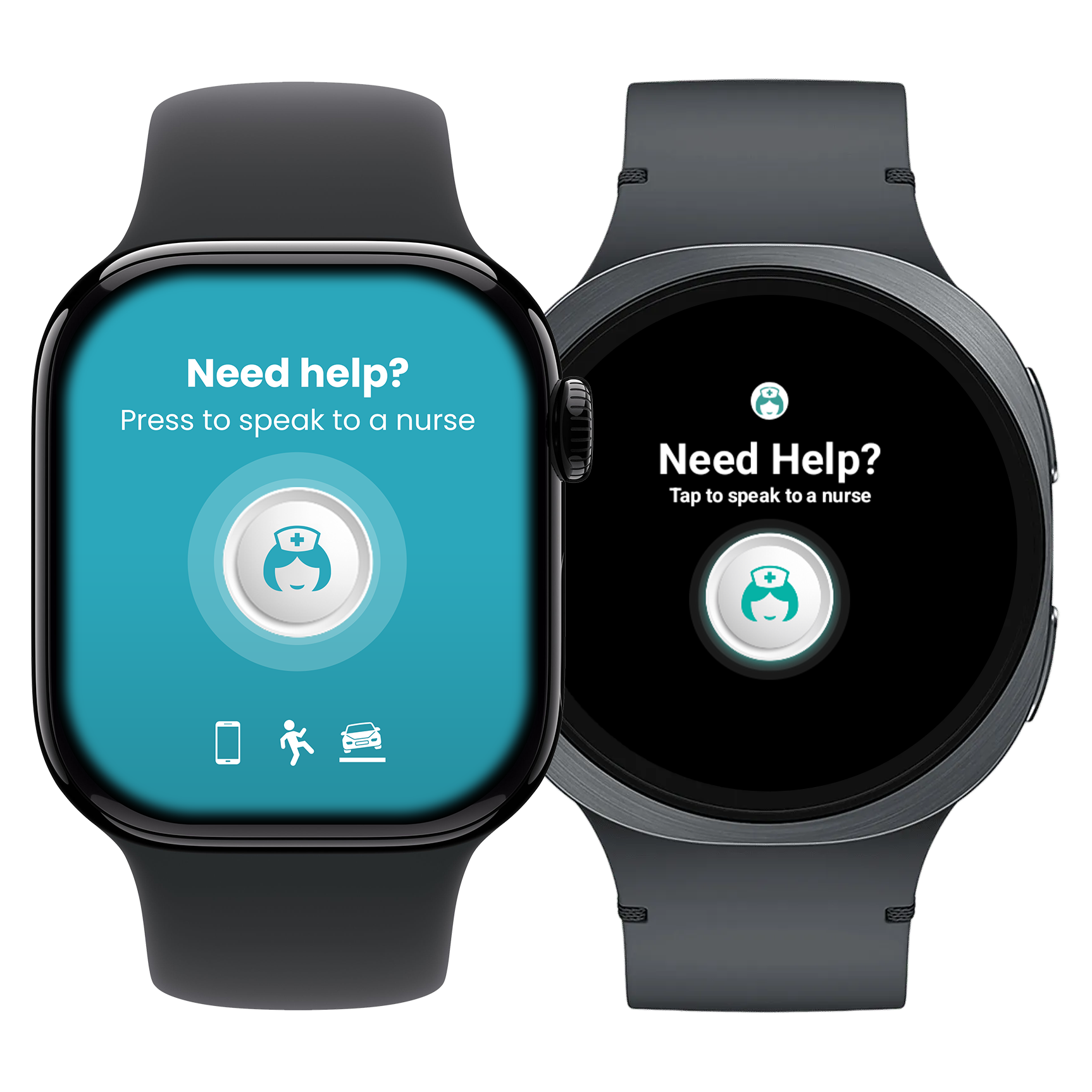 |
This product is rented. Apple Watch Series 11 or Samsung Galaxy Watch 8, supplied by INS to suit your phone. Establishment fee from $495 (24-month plan) or $825 (12-month plan). | As low as $43.59/monthly (Essential) | Watch, setup and your first month of monitoring | Read More |
| LifeGuard SmartTracker or SafetyWatch | 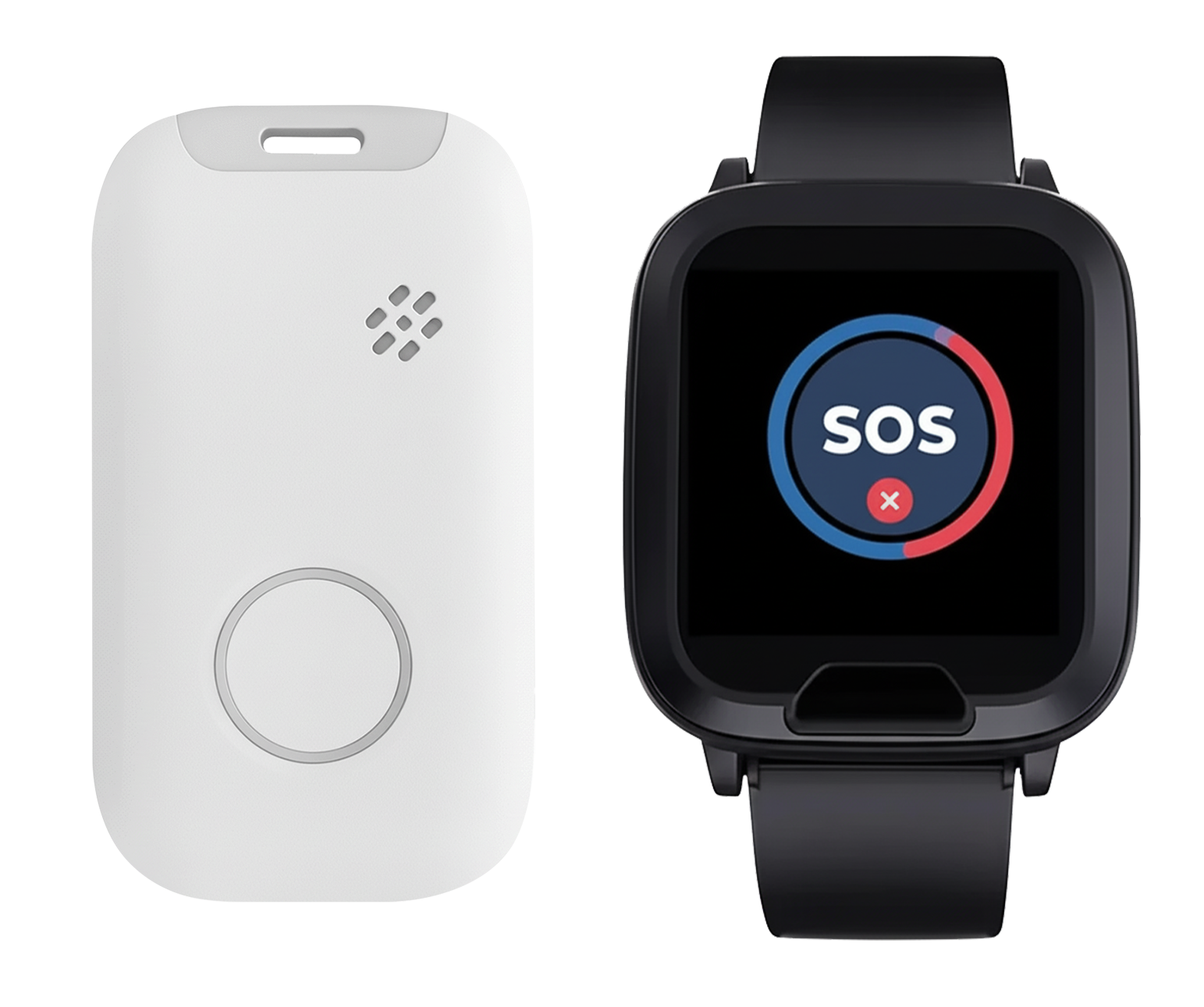 |
Device fee $399 (Tracker) $399 (Watch) |
As low as $10.95/monthly for customers with a current in-home monitoring service | - | Read More |
Coverage
| Feature | In-Home | Mobile / On-the-Go |
|---|---|---|
| LifeGuard SmartHome LGX |  |
- |
| SmartLink Medi Guardian MKII 4G | |
- |
| INS LifeGuardian® Mobile App | |
|
| INS LifeGuardian® Watch | |
|
| LifeGuard SmartTracker or SafetyWatch | |
|
Compatible Equipment
| Feature | Standard Transmitter (Wrist/Neck) | Apple and Samsung Smartwatch Compatibility | Standard Wireless Call Point | VR Voice Activated Call Point | Fall Sensor | Smoke Detector | Internal Strobe Light (for 240V Smoke Detector) | Activity Sensors (PIR Beams, Pressure Mats, etc.) | Home Automation Devices | Door/Window Security Sensors |
|---|---|---|---|---|---|---|---|---|---|---|
| LifeGuard SmartHome LGX | |
- | |
|
|
|
|
|
(via ZigBee or Z-Wave Option) |
- |
| SmartLink Medi Guardian MKII 4G | |
- | |
- | |
|
|
- | - | - |
| INS LifeGuardian® Mobile App | - | |
- | - | Dependent upon phone and watch version | - | - | - | - | - |
| INS LifeGuardian® Watch | - | (supplied) |
- | - | In-built | - | - | - | - | - |
| LifeGuard SmartTracker or SafetyWatch | SmartTracker is worn around neck SafetyWatch is worn on wrist |
- | - | - | In-built in both devices | - | - | - | - | - |
Services and Features
| Feature | 24/7 Emergency Response | 2-Way Voice Contact in Emergencies | Free Nurse Chat / Health Info Line | Professional TeleHealth, Regular Reviews by RN* | Free TeleHealth, Family/Carers Monitor Vital Signs | GPS Location Tracking | Geofence Alerts* | INS LifeGuardian Connect® App Compatible | Schedule Reminders e.g. Appointments & Medications | Voice Activation | Fall Detection and Prevention | Motor Vehicle Crash Detection | Vital Signs Monitoring | Remote Worker Services* | Activity Monitoring with AI* | Home Security Service* | Home Automation Service | Concierge Services* | 24/7 Help and Support |
|---|---|---|---|---|---|---|---|---|---|---|---|---|---|---|---|---|---|---|---|
| LifeGuard SmartHome LGX | |
|
|
Future Planned | Future Planned | - | - | |
- | - | - | - | - | - | - | (requires LifeGuard PIRs) |
(optional ZigBee, Z-Wave or BT) |
- | |
| SmartLink Medi Guardian MKII 4G | |
|
|
- | - | - | - | |
- | - | - | - | - | - | - | - | - | - | |
| INS LifeGuardian® Mobile App | |
|
|
|
|
|
|
|
|
|
(via compatible smart watches) |
(via compatible smart watches) |
(via Apple watch) |
|
(Future Planned for Android users) |
- | - | |
|
| INS LifeGuardian® Watch | |
|
|
(Premium plan) |
(Premium plan, via LifeGuardian Connect® App, with permission) |
|
|
|
|
(Apple only, Siri command) |
(Apple and Samsung) |
(Apple only) |
(Premium plan, both watches) |
- | - | - | - | - | - |
| LifeGuard SmartTracker or SafetyWatch | |
|
|
- | - | |
|
|
- | - | - | - | - | - | - | - | - | - | |
Making the Right Choice
With so many options available, how do you choose the right personal alarm? Here’s a practical decision-making framework:
Step 1: Assess Your Lifestyle and Needs
- Primarily home-based? Consider an in-home system like the SmartHome LGX or Medi Guardian
- Active and mobile? The LifeGuardian® App, SmartTracker or SafetyWatch provides protection wherever you go
- Both? Combine an in-home system with a mobile solution for comprehensive coverage
Step 2: Identify Essential Features
- Fall detection if you’re at risk of falling
- GPS tracking if you’re active outside the home
- Health monitoring if you have chronic conditions
- Home integration if you want comprehensive home safety
Step 3: Consider Your Budget
Compare not just monthly costs but total ownership. A rental system with no upfront cost might be ideal if you prefer predictable monthly expenses. Purchase options like the
SmartTracker or SafetyWatch involve an upfront investment but lower ongoing costs.
Step 4: Verify the Quality of Emergency Response
This is the most critical factor. Always ask: Who answers when I press the button? With INS LifeGuard, you’re connected directly to qualified nurses 24/7, not call centre operators. This makes a significant difference in the quality of care and support you receive.
Step 5: Check for Contract Flexibility
Avoid suppliers that lock you into long-term contracts with hidden fees. INS LifeGuard offers no lock-in contracts. This gives you the freedom to adjust your service as your needs change without penalty.
Peace of Mind Without Compromise
GPS tracking is more than just a technological advancement. It’s a critical part of personal safety. At INS LifeGuard, we’re committed to leveraging this technology to empower users, providing them with the independence they desire whilst securing their safety is never compromised.
We’re proud to partner with a growing number of retirement villages, care providers and families who trust INS LifeGuard to deliver reliable, professional and flexible solutions. Our mission is to empower communities with tools and services that enhance safety and wellbeing without unnecessary restrictions.
Whether you need comprehensive in-home monitoring, mobile GPS protection or advanced health tracking, INS LifeGuard has a solution that fits. And with our no-lock-in contract policy, transparent pricing and 24/7 nurse-led response, you can have confidence that you’re making the right choice for yourself or your loved one.
Ready to Experience the INS LifeGuard Difference?
Explore our range of GPS-enabled products and discover how we can help you or your loved ones stay confident and connected wherever life takes you.
About
INS LifeGuard is the only 24/7 nurse on-call personal and medical monitoring in Australia. We provide monitoring technology for both in the home and on the go and can also monitor other provider's equipment. Our services are suitable for anyone wanting support to stay independent such as the elderly, those with medical conditions and disabilities plus enhancing safety and security for lone workers.