
Have a Question?


AusAlert: Everything You Need to Know about Australia's Emergency Warning
INS LifeGuard • June 11, 2026
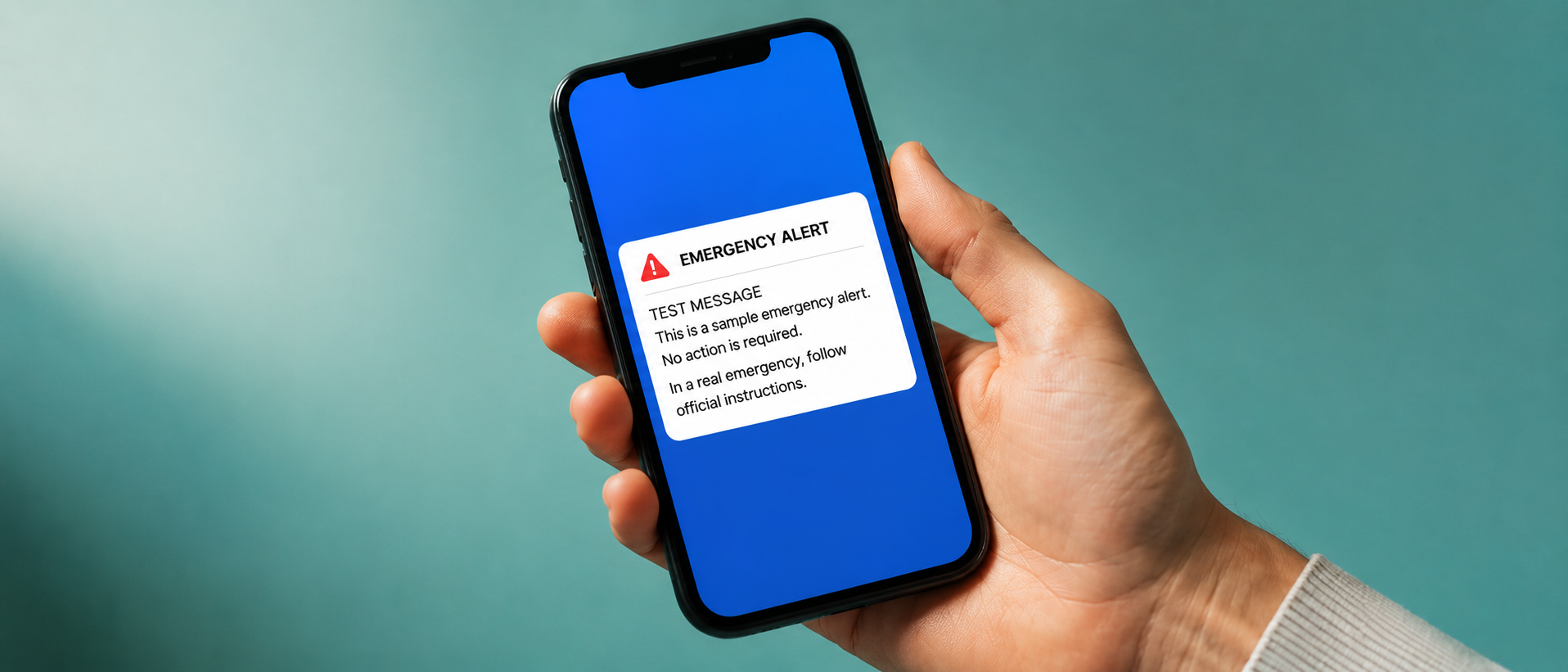
When disaster strikes, seconds matter. Australia’s national system, AusAlert, is built to warn Australians about serious threats, including bushfires, floods, cyclones, severe storms, security threats, and public health emergencies.
Here is everything you need to know.
What Is AusAlert?
AusAlert is Australia's new national emergency warning system, managed by the National Emergency Management Agency (NEMA). It is designed to deliver urgent alerts directly to compatible mobile devices, automatically and instantly, without requiring any registration.
The previous Emergency Alert system sent SMS text messages to mobile numbers registered in a particular area. It worked, but it had significant limitations that became impossible to ignore, particularly after the devastating Black Summer bushfires of 2019–2020.
The 2020 Royal Commission into National Natural Disaster Arrangements found that existing communication systems were not effective enough at keeping communities informed in real time. AusAlert is a direct response to those findings.
The old SMS system also failed to reach visitors, tourists, and anyone whose number was not registered locally. And during major disasters, when thousands of people tried to use their phones simultaneously, SMS alerts frequently lagged or failed entirely due to network congestion.
AusAlert solves all of this and then some.
How Much Did AusAlert Cost, And Is It Worth It?
The Australian Government invested $132 million to build and deploy AusAlert. That figure reflects the significant technical complexity of unifying the system across all telecommunications providers and government agencies nationwide.
It is a substantial investment, but one that the government has defended as essential. When you consider the cost of a major disaster response, the economic damage of an unwarned evacuation, and the human cost of lives lost due to delayed or failed warnings, a reliable national alert system pays for itself many times over.
Australia was not the first, and that is reassuring
Australia joins more than 30 countries that already successfully use cell broadcast emergency warning systems, including:
- United Kingdom — the Emergency Alerts system launched in 2023
- United States — Wireless Emergency Alerts (WEA) have been operating since 2012
- Japan — one of the most advanced systems in the world, refined over decades of earthquake and tsunami response
- New Zealand — the Emergency Mobile Alert system has been active since 2017
- Canada, Netherlands, Germany, South Korea — all operating mature cell broadcast systems
The technology is proven. Australia has benefited from learning from all of these systems, including what works, what does not, and how to design alerts that prompt action without causing unnecessary panic.
How AusAlert Actually Works
1. It Uses Cell Broadcast Technology
Rather than sending individual text messages to registered phone numbers, AusAlert uses cell broadcast technology, the same approach used in the UK, USA, Canada, Japan, New Zealand, and more than 30 other countries.
Cell broadcast transmits a warning simultaneously to every compatible device connected to a mobile tower in the affected area. It does not matter whether you live there, work there, or are just passing through. It does not need your phone number. It operates on a completely separate channel from regular mobile traffic, so it is never slowed down by network congestion, even when thousands of people are on their phones at the same time.
2. It Targets the Right People — Not Everyone
Older warning systems sent SMS alerts across large geographic areas, often causing unnecessary panic among people who were perfectly safe. AusAlert targets specific mobile towers to narrow the warning zone to within a 160-metre radius. Authorities can send an evacuation order to one specific street or neighbourhood while leaving the next block completely undisturbed.
3. It Catches You If You Drive Into Danger
One of the most significant features of AusAlert is its active broadcast windows. If an evacuation alert is active for a specific area, the system continues to broadcast it. If you are driving and physically enter that danger zone, your phone will instantly pick up the broadcast signal from the local tower and trigger the emergency alarm even if the alert was issued hours earlier. You do not need to have been in the area when it started.
4. What Will Actually Happen on Your Phone When You Receive an Alert?
This is where it gets very practical. The alert will flash on your mobile's home screen and play a loud sound, even if your phone is set to Do Not Disturb. The message will tell you what the emergency is, where it is happening, how serious it is, what you should do, who the message is from, and where to find more information.
Alerts will appear on your phone screen even if it is locked, and can include a link to more details. You must acknowledge the alert before you can use other features on your device; it will not simply disappear if you ignore it.
This is very different from a standard SMS or app notification that can be easily missed or swiped away. The alert is designed to demand your attention and give you everything you need to act, all in one screen.
5. It Forces You to Pay Attention
AusAlert has two alert levels, and understanding the difference matters.
Critical Alert is the highest level, reserved for immediate threats to life, an active bushfire bearing down on a suburb, a flash flood, or a serious security incident. A Critical Alert completely overrides your phone's settings. It forces your device to emit a distinct, piercing siren and vibrate heavily even if it is set to silent or Do Not Disturb. The message locks onto your screen so you cannot accidentally swipe it away. You cannot ignore it. That is the point.
Priority Alert is used for serious but less immediately life-threatening situations, such as an approaching severe storm, a road closure due to flooding, or an early-stage emergency that requires people to be aware and start preparing. A Priority Alert behaves more like a standard notification. It will still appear on your screen and make a sound, but it respects your phone's Do Not Disturb settings and can be dismissed normally.
In short: if your phone screams at you and won't let go, it is a Critical Alert, and you need to act immediately. If it chimes like a notification, it is a Priority Alert still important, but you have a little more time to read and respond calmly.
6. What Happens If the Network Goes Down?
This is a fair question, and it does reveal a real limitation of the system.
If your specific mobile provider goes down but a competitor's tower is still operating, your phone will automatically connect to the surviving tower. You will still receive the AusAlert even if your screen says "Emergency Calls Only" or you have run out of mobile data. That cross-network resilience is genuinely useful.
However, if the physical cell towers in an area are completely destroyed or have no power, which can happen during the very bushfires and floods AusAlert is designed for, your phone cannot receive the broadcast at all. In a total network blackout, AusAlert goes silent. The advice in that scenario is to fall back on a battery-powered AM/FM radio to listen to local emergency broadcasts.
It is worth acknowledging this honestly: a Critical Alert that overrides your silent mode means nothing if the tower is down. This is why emergency preparedness experts consistently recommend AusAlert as one layer of a broader safety plan, not a single solution. Knowing your local emergency radio station, having a battery-powered radio, and signing up for any local council or state emergency service alerts all remain just as important as ever.
Which Devices Will Receive AusAlert?
AusAlert is compatible with most modern 4G and 5G devices, including mobile phones, tablets, and smartwatches. No app download or sign-up is needed.
Older devices that only support 3G or earlier technology will not receive AusAlert. The existing SMS-based Emergency Alert system continues to operate alongside AusAlert to help cover these devices.
AusAlert and Personal Alarm Monitoring — Better Together
AusAlert and personal alarm monitoring serve different but deeply complementary roles.
AusAlert is a community-wide broadcast. It is fast, automatic, and reaches everyone at once — but it has no way of knowing who you are, where you are within your home, or whether you are able to respond.
Personal alarm monitoring is personal. Systems like INS LifeGuard maintain an always-on, two-way connection between an individual and a 24/7 monitoring centre. If someone falls, feels unwell, or needs help, their monitoring service is there any time, day or night.
AusAlert is the community early warning. Personal alarm monitoring is the personal safety net.
Frequently Asked Questions
Do I need to register or download anything?
No. AusAlert is fully automatic. If your device is compatible and in the alert area, you will receive it.
Will it work if my phone is on silent?
Yes. Critical AusAlerts override silent mode and Do Not Disturb and will sound regardless.
What do I do when I receive an alert?
In a real emergency, follow the instructions. During a test, no action is required — the alert stops on its own after around 10 seconds.
What if I drive into an emergency zone after the alert was sent?
You will still receive it. AusAlert uses active broadcast windows, meaning the alert remains active and will reach your device as soon as you connect to a tower in the affected area.
What if the mobile network goes down?
If any tower in range is still operating, even from a different provider, your phone will connect to it and receive the alert. If all towers in an area are destroyed or are without power, you will not receive AusAlert and should tune to a battery-powered AM/FM radio for emergency information.
Is my personal data collected when I receive an alert?
No. AusAlert is a one-way broadcast. No personal information is collected or transmitted.
What if I have a hearing impairment?
AusAlert also uses strong vibration and an on-screen visual message. Additional accessibility support is available at ausalert.gov.au.
More Information
For full details about AusAlert, compatible devices, and accessibility support, visit the official website:
Related Articles
What interconnected smoke alarm rules mean for your home, including Queensland's 2027 deadline, and how a monitored smoke detector adds 24/7 protection.
Already have a personal alarm? INS LifeGuard can monitor most alarms, including other providers', with 24/7 nurse-led support. Check if yours can connect.

Find out who qualifies for the Commonwealth Seniors Health Card, the current income limits, the benefits and how to apply in Australia.
About
INS LifeGuard is the only 24/7 nurse on-call personal and medical monitoring in Australia. We provide monitoring technology for both in the home and on the go and can also monitor other provider's equipment. Our services are suitable for anyone wanting support to stay independent such as the elderly, those with medical conditions and disabilities plus enhancing safety and security for lone workers.