

Have a Question?

Skin Cancer in Older Australians: Prevention, Early Signs, and When to Get Checked
INS LifeGuard • January 27, 2026

Australia has one of the highest rates of skin cancer in the world, and older Australians are among the most impacted. In fact, around two in three Australians are expected to be diagnosed with some form of skin cancer by the age of 70, with most cases linked to long-term exposure to ultraviolet (UV) radiation.
Every year, more than one million treatments are performed for non-melanoma skin cancers nationwide, highlighting just how common, and serious, this health issue is. Because sun exposure builds up over a lifetime, the risk of skin damage and concerning changes often increases with age, making regular skin checks and prevention habits more important than ever, particularly during and after summer when UV levels can remain dangerously high.
In this blog, we’ll explore the key facts about skin cancer, the warning signs seniors should never ignore, and practical ways to lower the risk moving forward.
What is Skin Cancer?
Skin cancer is a disease where abnormal skin cells grow uncontrollably. It usually develops when skin cells are damaged, most commonly by ultraviolet (UV) radiation from the sun or artificial sources like sunbeds.
The Three Main Types of Skin Cancer
There are different types of skin cancer, and each can look and behave differently.
Basal Cell Carcinoma (BCC)
The most common form of skin cancer. It usually develops slowly and often appears on sun-exposed areas such as the face, neck, and arms.
Squamous Cell Carcinoma (SCC)
SCC can grow deeper into the skin if left untreated. It often shows up as a scaly, thickened patch or a sore that doesn’t heal, usually on areas frequently exposed to UV.
Melanoma
The least common but most serious type, as it can spread to other parts of the body. It may appear as a new spot or a changing mole and needs urgent medical attention if suspected.
What Causes Skin Cancer?
In Australia, the main cause of skin cancer is excessive exposure to ultraviolet (UV) radiation. UV is the part of sunlight that leads to tanning and sunburn, and it can also damage skin cells over time. UV radiation isn’t only from the sun, it can also come from artificial sources such as sunbeds (solariums).
Skin cancer can occur at any age, but it becomes more common as people get older, largely because UV damage can build up across a lifetime.
Your risk may be higher if you:
- have had skin cancer before, or have a family history of skin cancer
- have fair or freckled skin, especially if you burn easily or don’t tan
- have naturally light features such as red or fair hair and light-coloured eyes
- have a weakened immune system (for example, from certain medical conditions or treatments)
- have sunspots, unusual markings, or irregular moles
- have spent significant time outdoors over the years (work, sport, or leisure)
- deliberately tan or have used sunbeds
Skin Cancer: What to Know and Where to Look
This is a simple, downloadable resource designed to help you recognise common skin changes, understand what to look out for, and know when to seek medical advice. It shares clear, factual information to support early awareness and encourage regular skin monitoring.

Skin Cancer Doesn’t Always Look Like a Mole
A common misconception is that skin cancer always appears as a dark, obvious mole. In reality, some skin cancers can look like everyday skin irritation or minor damage.
Signs of skin cancer can include a new spot, a sore that doesn’t heal, a spot that bleeds, or areas that change in appearance over time.
Signs that should be checked by a medical professional
Some examples of skin changes that may need medical review include:
- A persistent sore that doesn’t fully heal
- A rough or scaly patch that stays in the same spot
- A lump or raised area that continues to grow
- A lesion that crusts, bleeds easily, or becomes tender
- Any patch that noticeably changes in colour or texture over time
If you notice a spot that looks unusual or different to the rest of your skin, it’s worth discussing it with a GP or skin clinic.
How to Take Photos to Show Your GP
If you notice a spot that concerns you, photos can help track changes over time. A clear photo can also be useful during medical appointments.
Helpful tips:
- Take photos in good lighting
- Photograph from the same angle each time
- Include a reference point (such as a ruler) if possible
- Record the date
If you’re unsure what to photograph or how often, your GP can guide you.
What Happens If a Doctor Finds Something Suspicious?
If a GP or skin specialist believes a lesion needs further investigation, the next steps may include closer examination and medical testing.
- Depending on the situation, a doctor may:
- Examine the area using a dermatoscope (a magnifying tool designed for skin assessment)
- Recommend a biopsy (a small sample sent for pathology testing)
- Remove the lesion if needed
Only a qualified medical professional can diagnose skin cancer, and pathology testing is used to confirm the diagnosis where required.
Skin Type and Why It Matters for UV Risk
Your natural skin tone and features can influence how quickly your skin reacts in the sun. People with skin that burns easily tend to be more sensitive to UV exposure, which can increase the risk of sun damage.
That said, every skin tone can be harmed by too much UV radiation, even if it rarely burns. People with naturally darker skin have more melanin, which provides some protection, but it does not make anyone “immune” to sun damage.
Common skin type categories
Type I
Very fair skin that frequently burns and rarely tans. Often linked with freckles and lighter features such as red or fair hair and light-coloured eyes.
Type II
Fair skin that usually burns and may tan a little over time. Often associated with lighter hair and eyes.
Type III
Medium skin that may burn sometimes and generally tans more easily. Often linked with brown hair and eyes.
Type IV
Olive or light brown skin that doesn’t burn often and tends to tan consistently.
Type V
Naturally brown skin that rarely burns and can tan deeply.
Type VI
Deeply pigmented dark brown to black skin that does not usually burn, but still needs UV protection.
Skin Cancer Prevention
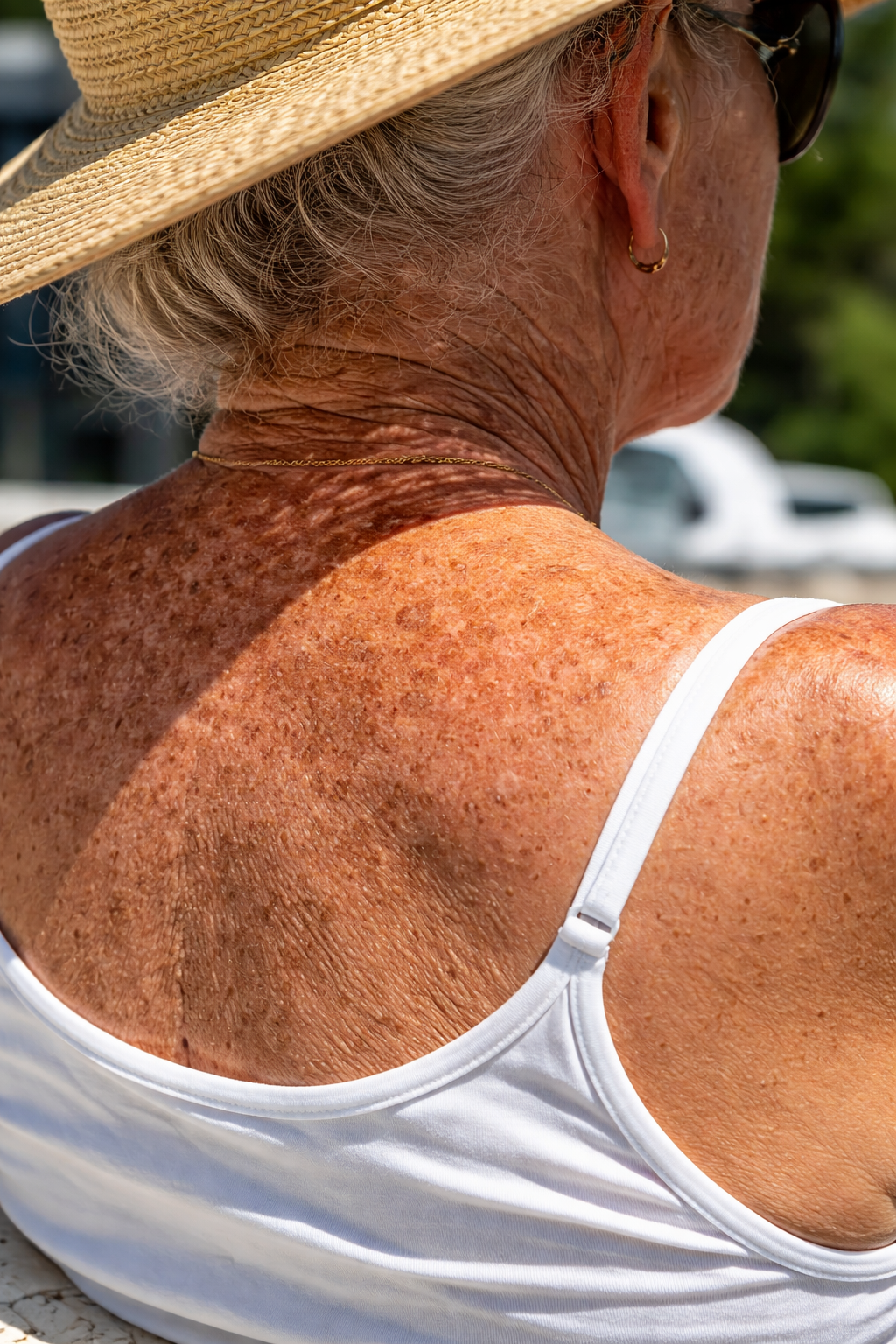
Most skin cancers can be avoided by reducing UV exposure over your lifetime. The most effective approach is to make sun protection part of your everyday routine, avoid sunburn, and regularly check your skin so changes can be noticed early.
You can lower your UV risk by following these sun safety steps:
- Wear sun-protective clothing that covers as much skin as possible, including shoulders, arms and legs.
- Use broad-spectrum sunscreen that is SPF 30+ or higher and water-resistant when outdoors.
- Wear a hat that helps shade the face, ears and neck.
- Stay in the shade where possible, especially near reflective surfaces such as water, sand and concrete.
- Wear wraparound sunglasses to help protect the eyes and the skin around them.
- Avoid solariums and sunbeds, as they expose the skin to high levels of UV radiation.
Take Skin Changes Seriously
For older Australians, skin health is not just about appearance, it’s about noticing changes early and getting medical advice promptly. If you notice a new spot, a persistent sore, or a patch that continues to change, it’s worth booking an appointment with a GP or a skin clinic.
And if you’re living independently, having access to support services like nurse-monitored personal alarms can help provide reassurance that assistance is available if you ever need it. This added layer of protection is especially helpful for older Australians managing appointments, recovery, medication routines, or reduced confidence after diagnosis or treatment, offering reassurance to both seniors and their families that help is always within reach when it matters most.
About
INS LifeGuard is the only 24/7 nurse on-call personal and medical monitoring in Australia. We provide monitoring technology for both in the home and on the go and can also monitor other provider's equipment. Our services are suitable for anyone wanting support to stay independent such as the elderly, those with medical conditions and disabilities plus enhancing safety and security for lone workers.