
Have a Question?


Dementia and Alzheimer’s Disease: Early Signs, Key Differences, and When to Get Support
INS LifeGuard • February 3, 2026

Forgetting where you put your keys is one thing. Forgetting what keys are for is something else entirely.
Dementia isn't a single disease. It's an umbrella term covering a collection of symptoms that affect memory, thinking and daily functioning. Alzheimer's disease is the most common cause, accounting for 60-80% of cases, but it's not the only one. Vascular dementia, Lewy body dementia, frontotemporal dementia and others all fall under the same umbrella, each with different patterns, progressions and implications for care.
For families watching someone change, the questions pile up fast. Is this normal ageing or something more? If it is dementia, which type? When do you seek help? And perhaps most urgently: how do you keep them safe when confusion leads them to wander off, searching for something or someone they can no longer quite remember?
This blog post explains what dementia and Alzheimer's actually are, how to recognise the seven early warning signs, and what practical support exists when wandering and safety become real concerns. Because the sooner you understand what's happening, the sooner you can act.
What is Dementia?
Dementia refers to a brain disorder where an individual experiences memory loss, has difficulty thinking or struggles to control emotions. Damage to brain cells is what leads to dementia. It is not a disease itself but rather an umbrella term that covers a wide range of symptoms making it hard for patients to perform everyday tasks normally.
According to the Alzheimer’s Association, Alzheimer’s disease is a specific brain disease whilst dementia is a general term for cognitive impairment. Simple memory errors, such as forgetting someone’s name or where you put your car keys, are not dementia. However, a person with dementia could have issues in at least two of the following areas:
- Memory
- Conversing and speaking
- Thinking skills
- Reasoning skills
- Visual perception
Types of Dementia
The most prevalent type of dementia is Alzheimer’s disease, accounting for 60-80% of cases. However, dementia can take many forms:
- Alzheimer’s Disease: Progressive damage to brain cells affecting memory, thinking and language
- Vascular Dementia: Second most common type, caused by interrupted oxygen supply to the brain
- Lewy Body Dementia: Characterised by abnormal protein deposits in the brain
- Frontotemporal Dementia: Affects frontal and temporal lobes, often occurs between ages 40-60
- Parkinson’s Disease Dementia: Develops in some people with Parkinson’s disease
- Mixed Dementia: Brain changes from more than one type of dementia occur simultaneously
Understanding Alzheimer’s Disease
Alzheimer’s disease is the most common type of dementia, responsible for 60-80% of dementia cases. It causes progressive damage to brain cells, initially affecting memory and eventually leading to loss of environmental awareness. The brain regions responsible for thought, memory and language are particularly affected, significantly impairing a person’s capacity to perform everyday activities.
Types of Alzheimer’s Disease
Early-Onset Alzheimer’s
Occurs between ages 30 and 60 and affects less than 10% of all Alzheimer’s patients. Early-onset Alzheimer’s is sometimes misdiagnosed as frontotemporal dementia because both affect younger individuals.
Late-Onset Alzheimer’s
The most common type of Alzheimer’s, occurring in people from their mid-60s and above. This form typically affects individuals over 65 and represents the vast majority of Alzheimer’s cases.
How Alzheimer’s Progresses
Early symptoms of Alzheimer’s frequently involve
problems with thinking and reasoning abilities, as the disease first affects nerve cells in the brain connected to learning. As the disease progresses, symptoms such as confusion, behavioural changes and impaired thinking worsen. Eventually, individuals may lose the ability to recognise loved ones, communicate effectively or perform basic self-care tasks.
Key Differences: Dementia vs Alzheimer’s Disease
Whilst related, dementia and Alzheimer’s disease are not interchangeable terms. Here’s the critical distinction:
- Dementia is an umbrella term describing a collection of symptoms affecting memory, thinking and social abilities severely enough to interfere with daily functioning. It’s not a specific disease but rather a syndrome that can be caused by various conditions.
- Alzheimer’s disease is a specific progressive brain disease and the most common cause of dementia. It involves specific changes in the brain, including the buildup of proteins (beta-amyloid plaques and tau tangles) that damage and kill brain cells.
Think of it this way: All Alzheimer’s disease is dementia, but not all dementia is Alzheimer’s disease. Someone diagnosed with Alzheimer’s has dementia, but someone diagnosed with dementia might have Alzheimer’s, vascular dementia, Lewy body dementia or another condition entirely.

7 Early Warning Signs of Dementia
Whilst forgetfulness can be a normal part of ageing, certain changes are not. Some forms of dementia may manifest differently depending on which part of the brain is affected. Although there is currently no cure for dementia, treatment options are available that may help slow progression and alleviate symptoms—but only if you catch them early. Keep an eye out for these warning signs:
1. Short-Term Memory Changes
Subtle memory changes involving short-term memories are a key warning sign. A person may recall events from many years ago but have trouble remembering things they did recently, such as what they had for breakfast or a conversation from earlier in the day.
2. Confusion
Confusion is common in early stages of dementia. Individuals may have trouble remembering faces or people they know, forget where they are, misplace personal belongings or get so confused they wander off looking for someone or something related to their past.
3. Deteriorating Communication Skills
A sudden decline in communication abilities is an early symptom. Someone with dementia may struggle with regular conversation, have trouble finding the right words or experience difficulties with grammar, spelling and other communication tools.
4. Mood and Personality Changes
Sudden changes in mood or personality may indicate dementia. Mood changes can include anxiety, depression or irritability. Personality changes might manifest as a previously shy person becoming outgoing, or a calm individual becoming agitated.
5. Difficulty with Seemingly Easy Tasks
A person with dementia may struggle completing tasks that were once simple, such as reading, writing, doing basic arithmetic, following directions, calculating numbers, making coffee, using a computer, operating a smartphone or travelling to familiar locations.
6. Poor Judgment
Another early sign is poor judgment and decision-making. You’ll notice this if a person who was previously sensible and responsible suddenly makes unreasonable decisions regarding financial matters, social affairs, personal hygiene, healthcare or safety.
7. Repetitive Behaviours
Repetitive behaviour, such as repeatedly performing tasks or asking the same questions, may indicate dementia. This is believed to result from a combination of memory loss and the individual’s reaction to neurological changes caused by dementia.
Additional Common Symptoms
Beyond the seven early warning signs, other common symptoms of dementia and Alzheimer’s include:
- Forgetting recent activities and events
- Regularly losing belongings and placing them in odd locations
- Getting lost in well-known locations
- Forgetting the names of loved ones and commonplace items
- Having difficulty putting thoughts or actions into words
- Repeating sentences and enquiries
Risk Factors for Dementia
Dementia is caused by several risk factors including age and lifestyle. Whilst some can be addressed to reduce risk, others cannot.
Non-Modifiable Risk Factors
- Age: Risk increases especially beyond age 65, though dementia can occur in younger people
- Family history: Having family members with dementia increases risk, though genetic testing can identify specific mutations
- Down Syndrome: Individuals with Down Syndrome commonly develop dementia in middle age
Modifiable Risk Factors
- Diet and exercise: Research shows those who eat poorly have higher dementia risk compared to those living healthily
- Alcohol consumption: Large alcohol consumption linked to altered brain chemistry and elevated dementia risk
- Depression: Late-life depression may trigger dementia occurrence
- Head trauma: Traumatic brain injuries (TBIs) in people aged 50+ increase dementia prevalence
- Sleep disturbances: Sleep apnea and other sleep disorders increase dementia risk
- Certain medications: Some over-the-counter drugs can impair memory due to their chemical structures
Diagnosis and Treatment
Diagnosis
Whilst there is no single test to identify dementia, doctors can perform various examinations to distinguish different types. For Alzheimer’s disease specifically, clinicians can now diagnose it through biomarkers and PET scans—a significant advancement from when it could only be confirmed after death.
Treatment
Treatment depends on the cause. Currently, there is no cure for dementia or Alzheimer’s disease. However:
- Non-drug treatments and cognitive training can manage symptoms
- Memory games can help enhance cognitive function
- Current Alzheimer’s treatments can temporarily address cognitive issues
- Aducanumab, an immunotherapy medicine targeting protein beta-amyloid, is approved for treating Alzheimer’s by reducing amyloid plaques
When to Seek Professional Help
If you suspect a loved one may be experiencing signs or symptoms of dementia, consult your family doctor as soon as possible. Early diagnosis enables:
- Access to treatments that may slow progression
- Time to plan for future care needs
- Connection to support services and resources
- Implementation of safety measures before wandering becomes a concern
How INS LifeGuard Supports People with Dementia
If someone you care about has been diagnosed with dementia, one of the primary safety concerns is wandering. Individuals with dementia may become confused about their location, forget where they’re going or set off to find someone or something from their past. INS LifeGuard offers comprehensive solutions specifically designed to keep people with dementia safe.
GPS Location Tracking
The INS LifeGuardian® app comes with a GPS tracker that allows you to monitor your loved one’s location in real-time. Whether they’re at home or out in the community, you can quickly locate them through the INS LifeGuard Connect® app if they wander off or become lost. This life-saving solution provides peace of mind knowing you can quickly find them.
Geofence Alerts
Through the INS LifeGuard Connect® app, you can set up virtual boundaries (geofences) around safe zones such as home, the local park or familiar neighbourhood areas. When your loved one crosses these boundaries, you receive an immediate notification, enabling you to respond quickly before they become disoriented or lost.
The Connect® app also allows you to view alarm history, set up automated welfare checks your loved one can respond to, and monitor vital signs to detect medical problems. These features work together to provide comprehensive oversight whilst respecting independence.
24/7 Nurse-Led Emergency Response
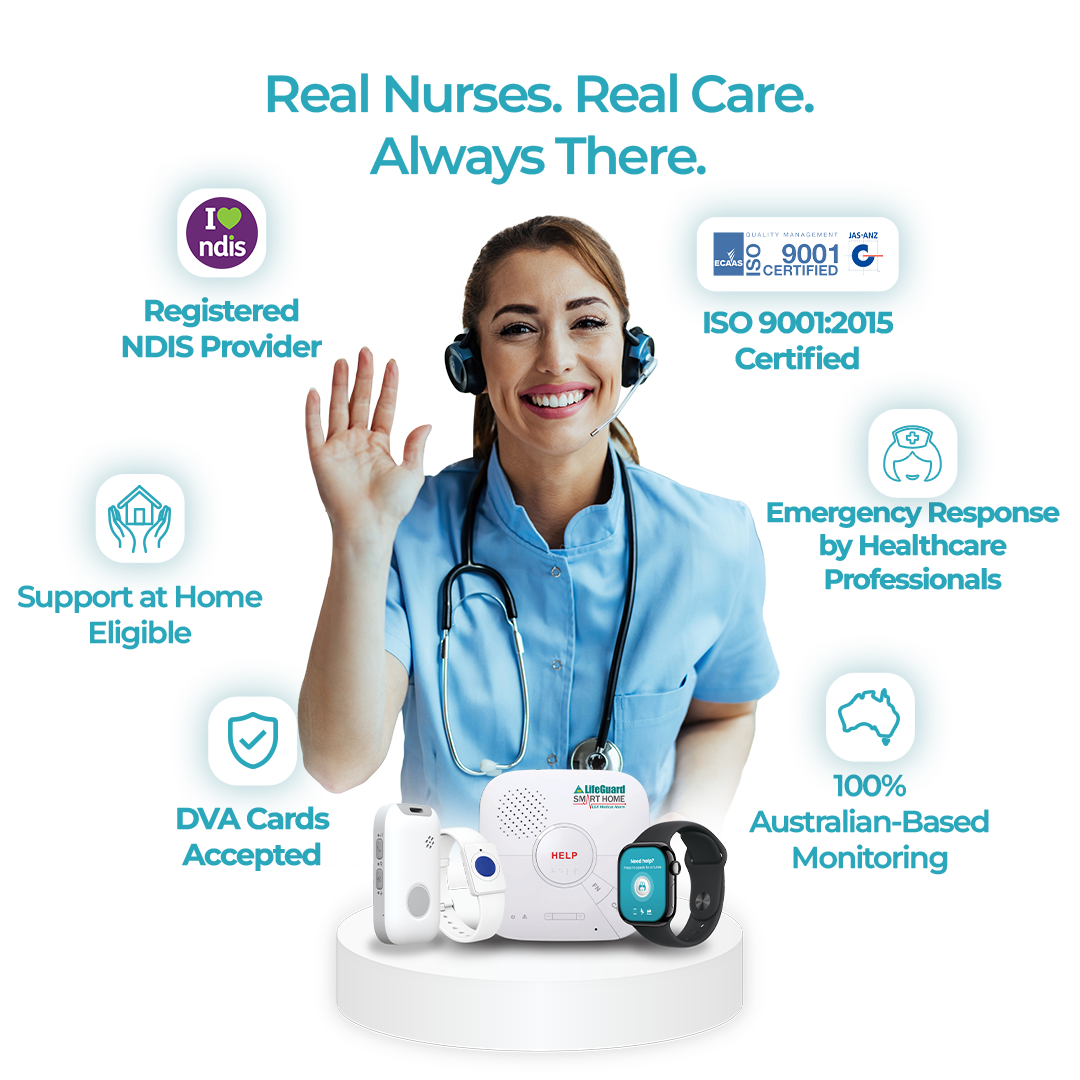
As Australia’s premiere nurse response service, our Emergency Response Centre is staffed by highly qualified and experienced nurses 24 hours a day, seven days a week. We know of no other company that can make this claim. When your loved one presses their personal emergency button, they connect directly to a nurse who can assess the situation, provide reassurance and coordinate appropriate help.
Two-Way Communication
Our personal alarm systems include two-way voice communication, allowing nurses to speak directly with the person, assess their situation and provide guidance. For individuals with early-stage dementia who may be confused but can still communicate, this feature provides immediate reassurance and support.
At-Home and On-the-Go Solutions
INS LifeGuard offers a range of personal alarm solutions for various users and situations, from seniors through to those with early-onset dementia who remain active in the community. Our systems work both at home and on the go, providing continuous protection wherever your loved one is.
With features including GPS location tracking and geofencing, INS personal alarms are especially helpful for those who wander, making them a great choice for individuals with early-onset dementia or Alzheimer’s disease.
Supporting Independence Whilst Providing Safety
A dementia diagnosis changes everything. But it doesn't have to end independence. With early intervention, appropriate treatment and the right safety systems in place, individuals with dementia can continue living meaningful lives for as long as possible.
The key is recognising the warning signs early, seeking professional diagnosis and implementing safety measures before wandering or other concerns escalate. GPS tracking isn't about restricting freedom. It's about enabling it. It means your mum can still take her daily walk. Your dad can still visit the corner shop. Your partner can still tend the garden. Because you know that if they become confused or disoriented, help is just a button press away and you can locate them through the Connect® app within minutes.
Whether your loved one is in early-stage dementia and still largely independent, or in later stages requiring more intensive support, INS LifeGuard's combination of the LifeGuardian® app with GPS tracking, the Connect® app for geofence alerts and monitoring, 24/7 nurse-led response and two-way communication provides the safety net families need.
Call us on
1800 636 226 to discuss which solution best fits your situation, or visit the
INS LifeGuard website to learn more about how we can help keep your loved one safe whilst preserving their dignity and independence.
About
INS LifeGuard is the only 24/7 nurse on-call personal and medical monitoring in Australia. We provide monitoring technology for both in the home and on the go and can also monitor other provider's equipment. Our services are suitable for anyone wanting support to stay independent such as the elderly, those with medical conditions and disabilities plus enhancing safety and security for lone workers.