
Have a Question?


Arthritis in Australia: Key Facts, Research Investment and What Families Need to Know
INS LifeGuard • June 23, 2026

Arthritis is one of Australia’s most significant health challenges, affecting millions of people and many families every day.
In 2026, the Australian Government announced a $100 million, 10-year Arthritis and Musculoskeletal Conditions Research Mission through the Medical Research Future Fund, designed to support research into the prevention, diagnosis, and treatment of arthritis and related musculoskeletal conditions.
It is a welcome investment. According to Arthritis Australia, more than 4.1 million Australians are currently living with arthritis, and that number is projected to rise to around 5.4 million by 2040. When arthritis and musculoskeletal conditions are considered together, more than 7 million Australians are affected.
But for many families, the concern is immediate.
It is not only: What type of arthritis does Mum or Dad have?
It is also: Are they moving safely? Are they avoiding activities? Could they fall? And would they be able to call for help if they did?
Arthritis can affect far more than joints. It can change how a person walks, stands, showers, climbs stairs, gets out of bed, leaves the house and feels about living independently.
In this article, we look at the link between arthritis, mobility and falls, the warning signs families should watch for, and how personal alarms can support safer independent living.
Arthritis in Australia: Fast Facts
The scale of arthritis as a health and daily living issue is often underestimated.
Arthritis Australia reports that:
- More than 4.1 million Australians are living with arthritis
- This is projected to rise to around 5.4 million by 2040
- More than 7 million Australians live with arthritis and/or a musculoskeletal condition
- There are more than 100 different types of arthritis
- Arthritis affects people of all ages, including children and young people
- More than 20% of people living with arthritis need assistance with a daily activity
- Arthritis and musculoskeletal conditions account for 12.7% of Australia’s total burden of disease
There are many different types of arthritis, and each can affect mobility, pain and daily routines in different ways.
These are not just statistics. Behind each number is a person managing pain, stiffness, reduced mobility and the daily effort to stay independent.
Why arthritis can affect mobility
Arthritis is often described as joint pain, but for many people, it affects everyday movement in a much broader way.
Depending on the type of arthritis and the joints involved, a person may experience:
- Pain when standing, walking or bending
- Stiffness after sitting or sleeping
- Swelling in the hands, knees, hips, feet or ankles
- Reduced grip strength
- Fatigue
- Reduced balance or confidence
- Difficulty using stairs, showers, toilets or outdoor paths
These changes can build slowly. A person may start by walking less, avoiding social outings, holding onto furniture or taking longer to complete normal daily tasks.
Over time, this can create a cycle: pain leads to less movement, less movement can reduce strength and confidence, and reduced confidence can increase the fear of falling.
How arthritis may increase fall risk
Falls are one of the biggest causes of injury for older Australians, and they can have long-lasting effects on health, confidence and independence. Falls prevention is not just about removing hazards. The Australian Commission on Safety and Quality in Health Care’s Preventing Falls in Community Care fact sheet notes that successful fall prevention involves a combination of interventions tailored to the person’s needs and individual falls risk. It also identifies areas such as balance and mobility, medicines review, vision, feet and footwear, environmental risks, monitoring and post-fall management.
Arthritis may contribute to fall risk in several ways.
Painful knees, hips, ankles or feet can make walking less stable. Stiff joints may make it harder to react quickly if someone trips. Arthritis in the hands or wrists can make it harder to grip rails, walking aids or bathroom supports. Fatigue may also affect concentration and strength.
Some people with arthritis also change the way they move to avoid pain. They may shuffle, lean, favour one side, avoid bending properly or rush through uncomfortable movements such as getting to the bathroom.
The risk is not only the fall itself. It is also what happens afterwards.
A person may be unable to get up. They may feel frightened, confused, embarrassed or unsure whether they are injured. If they live alone or fall in a bathroom, bedroom, garden or hallway, it may be some time before anyone knows they need help.
Warning signs families should look for
Families often notice small changes before a major incident occurs.
It may be time to review safety and support if your parent, partner or loved one is:
- Holding onto furniture or walls while walking
- Avoiding stairs, showers or outdoor paths
- Taking much longer to get out of chairs or bed
- Having difficulty standing from the toilet
- Wearing unsuitable footwear around the home
- Reporting dizziness, weakness or near-falls
- Showing unexplained bruises
- Avoiding social outings because walking is painful
- Becoming anxious about being alone
- Keeping a phone nearby “just in case”
- Saying they are fine, while clearly moving less confidently
These signs do not always mean someone needs residential care or a major lifestyle change. Often, they mean the home environment, support plan and emergency response options need to be reviewed.
The gap between research progress and right now
Increased national investment in arthritis research is an important step. Better prevention, diagnosis and treatment could make a real difference for Australians living with arthritis and musculoskeletal conditions in the years ahead.
But many families are managing the immediate reality now.
They are watching a parent slow down. They may already be wondering how to talk to an elderly parent about getting a personal alarm without making them feel less independent. They are also thinking about what would happen if something went wrong when no one was home.
For these families, the research timeline is not the most pressing concern. What matters is: what can be done today?
Practical ways to reduce risk at home
Arthritis-related falls are not always preventable, but many risks can be reduced.
Families can start with simple changes:
- Improve lighting in hallways, bedrooms, bathrooms and entrances
- Remove loose rugs, cords and clutter from walkways
- Add non-slip mats or flooring in wet areas
- Install handrails near steps, toilets and showers
- Keep commonly used items within easy reach
- Encourage supportive footwear indoors
- Review walking aids with a health professional
- Ask a GP or pharmacist to review medications that may affect balance
- Encourage gentle strength and balance exercises where clinically appropriate
- Make sure help can be called quickly from anywhere in the home. For someone who lives alone or has become less confident with mobility, a personal alarm for the elderly can provide an added layer of reassurance
A GP, physiotherapist, occupational therapist or other health professional can help assess mobility, home safety and fall risk.
Why personal alarms matter for people with arthritis
A personal alarm does not replace fall prevention. It adds an important layer of protection when something still goes wrong.
For someone living with arthritis, a personal alarm may help if they:
- Fall and cannot get up
- Feel sudden pain, weakness or dizziness
- Become stuck in a chair, bathroom or garden
- Need reassurance during a flare-up
- Feel unsafe or unsure what to do
- Cannot reach their phone
- Live alone or spend long periods alone
This is especially important because arthritis can affect the hands and wrists. In an emergency, using a mobile phone may be difficult. The phone may be in another room, the person may not be able to stand, or pain and panic may make it harder to call the right person.
A wearable personal alarm, such as a pendant, wrist, or mobile alarm, or a monitored smartwatch, provides a simple way to call for help.
For people who prefer a smartwatch option, INS LifeGuard offers Apple and Samsung smartwatch personal alarms, which are supplied and monitored by our 24/7 nurse-monitored Emergency Response Centre. These can provide an extra layer of protection through features such as fall detection, GPS location support, safety check-ins and access to nurse support.
Personal alarms do not replace exercise, home safety changes, or medication reviews arranged through a GP, pharmacist, physiotherapist or occupational therapist. But with INS LifeGuard, alarms are monitored 24/7 by trained responders who are also qualified healthcare professionals, including Registered and Enrolled Nurses. If someone presses their alarm or a fall is detected, they are connected to people who can assess the situation, provide reassurance, contact family or carers, and escalate to emergency services when needed. On compatible premium smartwatch plans, gait, movement, and walking steadiness monitoring can also add another layer of fall-prevention support.
The INS LifeGuard difference: technology backed by nurses
Many families think of personal alarms as simple emergency buttons. But who answers the alarm matters.
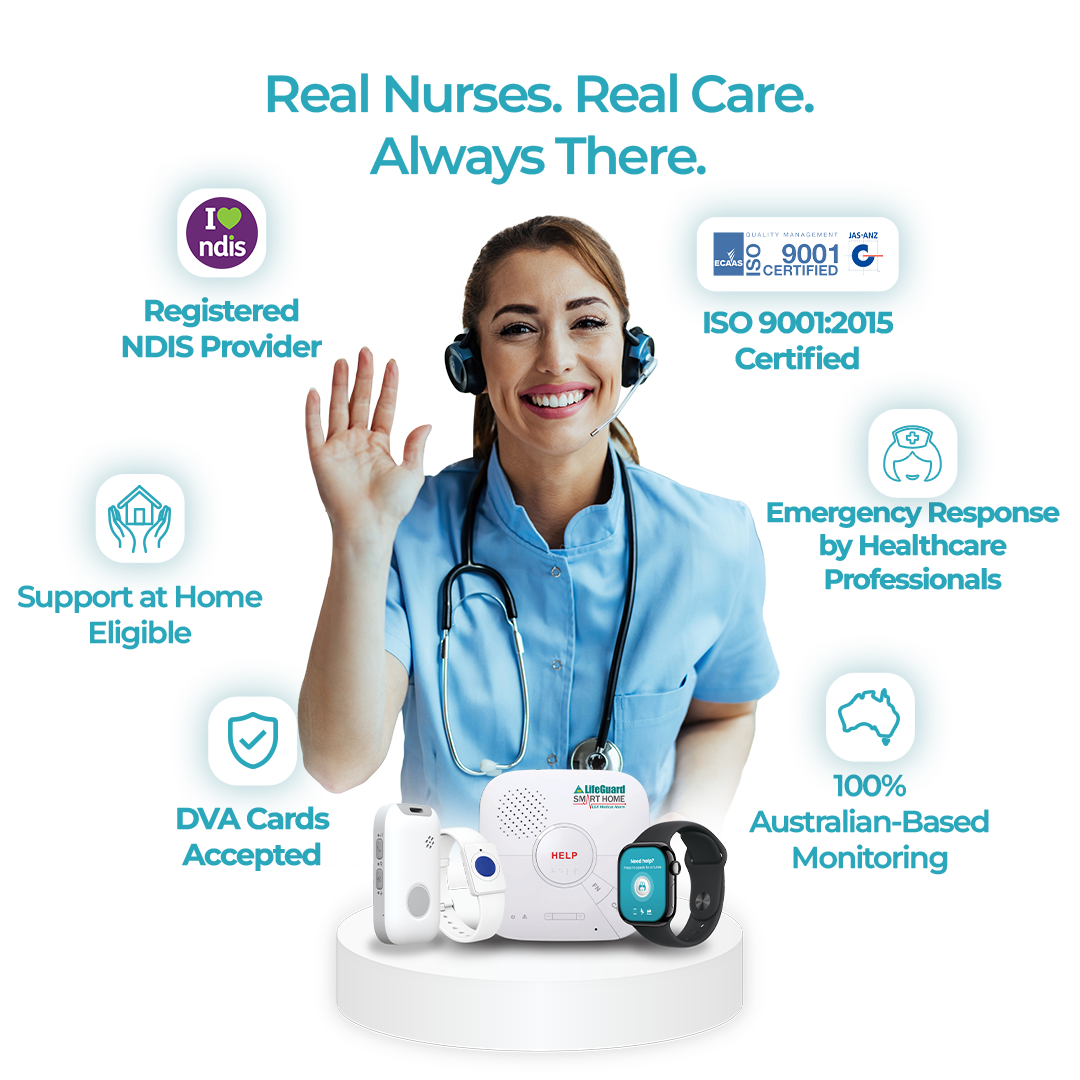
INS LifeGuard’s Emergency Response Centre is staffed 24 hours a day, seven days a week by trained emergency responders who are also qualified healthcare professionals, including Registered and Enrolled Nurses.
That means when someone presses their alarm, they are not only connected to a call centre. They are connected to people who can listen, reassure, assess the situation, provide clinical care, contact family or carers, and escalate to emergency services when needed.
For people living with arthritis, this can be especially reassuring. Some calls may be urgent. Others may involve pain, uncertainty, fear after a near-fall, or concern about whether medical attention is needed.
A human nurse response can help families feel more confident that their loved one is not managing those moments alone.
When should families consider a personal alarm?
It may be time to consider a personal alarm if your loved one:
- Lives alone
- Has already had a fall or near-fall
- Has arthritis affecting their knees, hips, feet, hands or spine
- Has difficulty getting up from chairs, beds or toilets
- Is worried about showering or moving around the home alone
- Has reduced confidence when walking
- Has recently returned home from the hospital
- Has other health conditions as well as arthritis
- Wants to stay independent, but family members are concerned
A personal alarm can also support people who are still active and independent. It is not only for people who are frail or unwell. For many families, it is a practical way to protect independence rather than take it away.
Supporting independence without taking over
One of the hardest parts for families is knowing how to help without making a loved one feel less independent.
Arthritis can be frustrating. A person may already feel they are losing freedom because of pain, stiffness or slower movement—conversations about safety need to be handled with respect.
Instead of saying:
“You’re not safe on your own anymore.”
Try:
“We want you to keep doing the things you enjoy, but with a way to call for help if something happens.”
A personal alarm can be framed as a tool for independence. It helps the person stay at home, move around with more confidence and remain connected to support when needed.

How INS LifeGuard can help
INS LifeGuard supports people living with arthritis, mobility changes and increased fall risk through monitored personal alarm solutions for home and away, including fall alarms and sensors, wearable devices, smartwatch options and nurse-backed health support.
Our options may include:
- In-home personal alarms
- Wearable pendants
- Wrist-worn alarms
- Mobile personal alarms
- Supplied Samsung and Apple smartwatch personal alarms
- INS LifeGuardian® App for compatible BYO smartphones and smartwatches
- Fall detection and safety check-ins
- Premium gait, movement and walking steadiness monitoring on compatible devices
- Health monitoring support, such as heart rate, oxygen levels and activity insights on compatible devices
- Medication support and reminders
- Welfare checks
- 24/7 support from trained responders who are also qualified healthcare professionals, including nurses
- Health information and chat line for people feeling unwell, unsafe, isolated or simply needing someone to talk to
- Family and carer connection tools
Whether your loved one lives alone, has recently had a fall, is managing arthritis pain, or simply wants added reassurance, INS LifeGuard can help you choose a solution that supports safety without compromising independence.
Frequently Asked Questions
Can arthritis increase the risk of falls?
Yes. Arthritis may affect balance, walking, joint movement, grip strength and confidence. Pain or stiffness in the knees, hips, ankles, feet, hands or spine can make everyday movement harder and may increase the risk of trips, slips or falls.
What are common warning signs that arthritis is affecting mobility?
Common signs include holding onto furniture, avoiding stairs, difficulty getting out of chairs, reduced walking, fear of showering alone, unexplained bruises, near-falls, slower movement or avoiding social outings because of pain or stiffness.
Can a personal alarm help someone with arthritis?
A personal alarm can help by giving the person a simple way to call for assistance if they fall, feel unwell, become stuck or cannot reach their phone. Wearable alarms are especially useful because they stay with the person as they move around the home or outside.
Is a pendant, wrist alarm or smartwatch better for arthritis?
It depends on the person’s mobility, dexterity and comfort. Some people prefer a pendant because it is easy to wear around the neck. Others prefer a wrist alarm or smartwatch-style alarm. If arthritis affects the hands or wrists, it is important to choose a device that is easy to press, comfortable to wear and suitable for the person’s routine.
Should someone wait until after a fall to get a personal alarm?
No. A personal alarm can be useful before a serious fall occurs, especially if someone lives alone, has mobility changes, feels unsteady, has had near-falls, or family members are concerned about what would happen in an emergency.
Who answers an INS LifeGuard alarm?
INS LifeGuard alarm calls are answered 24/7 by trained emergency responders who are also qualified healthcare professionals, including nurses. They can assess the situation, provide reassurance, contact nominated people and escalate to emergency services when required.
Conclusion
Arthritis is more than joint pain. It can affect confidence, movement, independence and safety.
For families, the challenge is to support a loved one without taking away their independence. That starts with noticing changes, reducing hazards, encouraging the right health support and making sure help is easy to access.
A personal alarm can provide reassurance for both the person living with arthritis and the people who care about them.
With INS LifeGuard’s 24/7 nurse response, families can feel more confident that if something happens, their loved one will not be facing it alone.
Because staying safe at home is not about giving things up. It is about making sure the right support is there when it matters. Speak with INS LifeGuard about personal alarms and nurse-led monitoring for people living with arthritis, mobility changes or an increased risk of falls.
Related Articles
Hospital stays can be stressful, especially when transitioning home or to without the support of an aged care facility. INS LifeGuard provides essential services to help patients leave the hospital safely and confidently, ensuring needed support and ongoing care.

From mammograms to bowel and lung cancer checks, here's what health screening is available in Australia after 50, what it involves, and why it matters.
Uncover if falling asleep after meals is a warning sign for diabetes. Learn about possible symptoms, risk factors, and prevention methods.
About
INS LifeGuard is the only 24/7 nurse on-call personal and medical monitoring in Australia. We provide monitoring technology for both in the home and on the go and can also monitor other provider's equipment. Our services are suitable for anyone wanting support to stay independent such as the elderly, those with medical conditions and disabilities plus enhancing safety and security for lone workers.